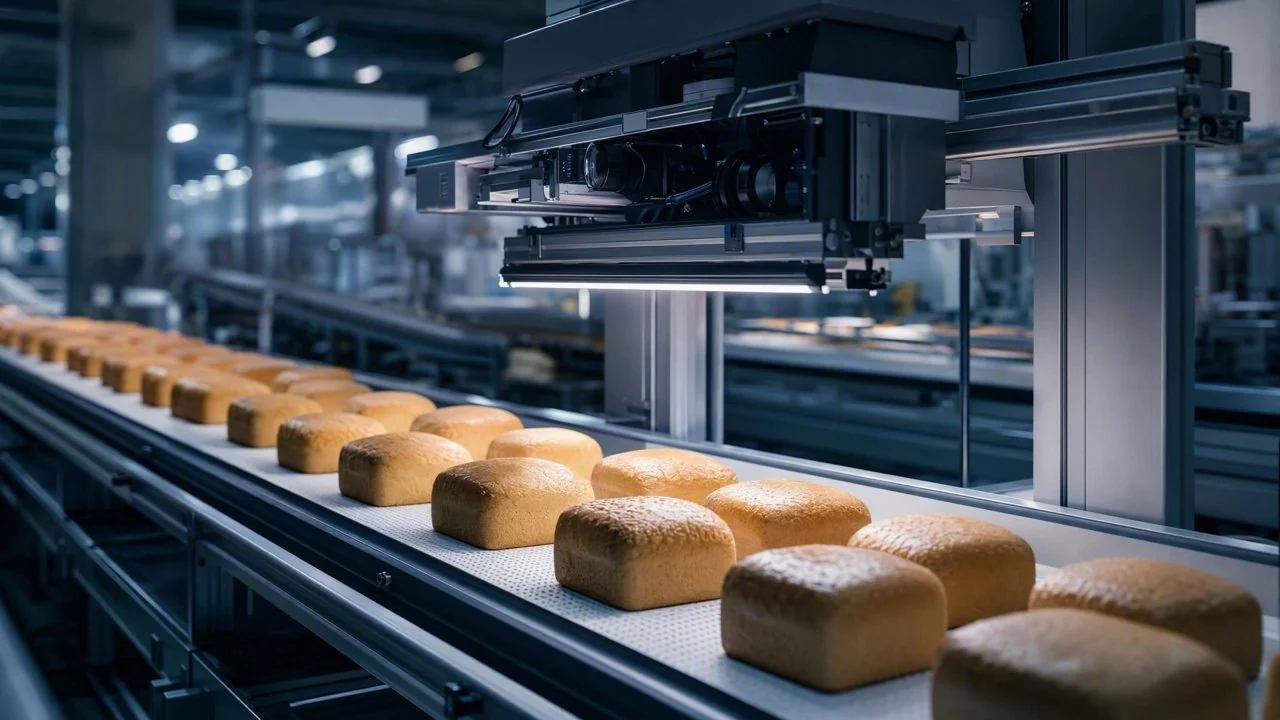
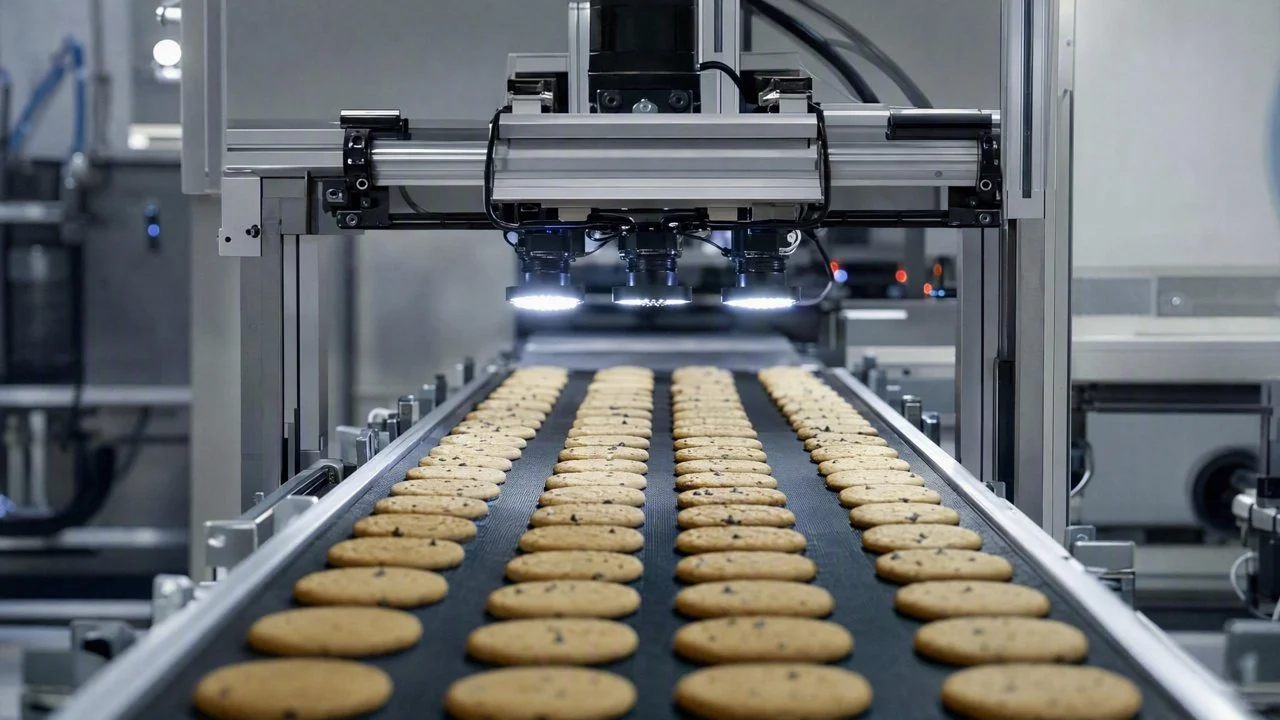
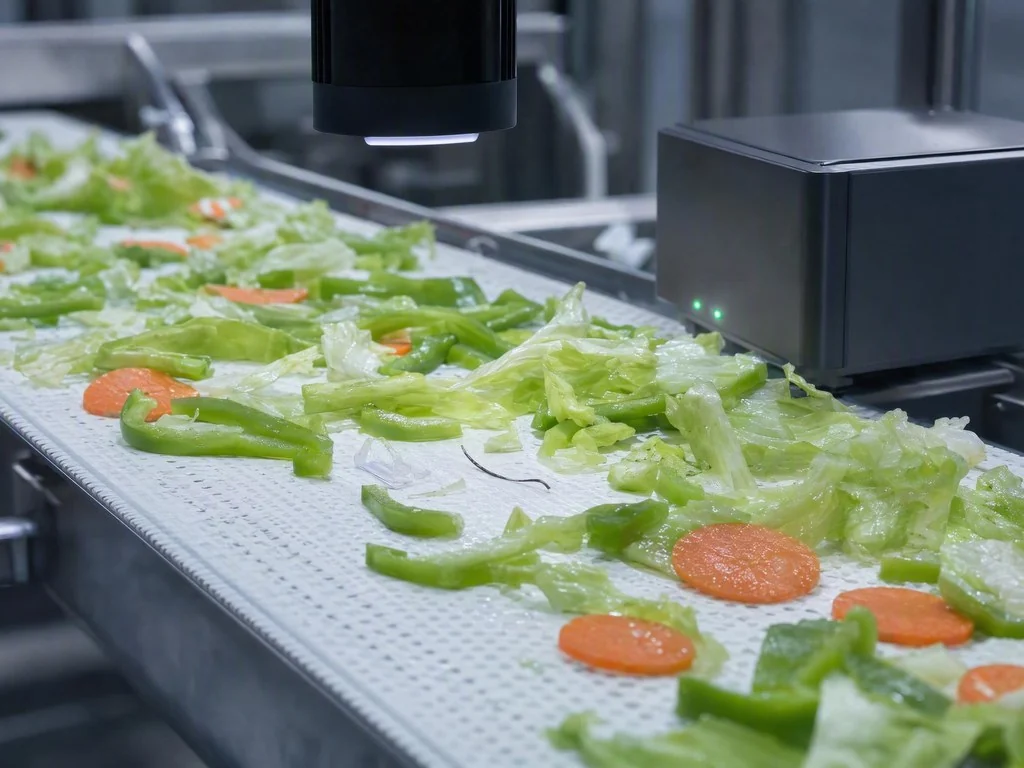
Food and produce inspection carries a difficulty other industries do not have: the product itself is supposed to look different from piece to piece. Size, colour and shape vary naturally within one batch, and real foreign objects — stones, plastic, insects — sit in among that variation. Treat natural variation as a defect and good product is thrown away; loosen the criterion and foreign objects reach the next stage.
In packaging the cost is asymmetric: a bad seal, a label covering the nutrition panel, an unreadable date code — any one of them shipped is recall exposure. Further downstream, whether kitchen staff wear gloves and hairnets, or work against procedure, is not something a person watching camera feeds can keep up with.
2. How the solution is put together
Separate natural variation from real foreign objects: the model learns the normal range of a product category rather than a rule per defect, which is what makes foreign-object rejection stable on highly variable produce.
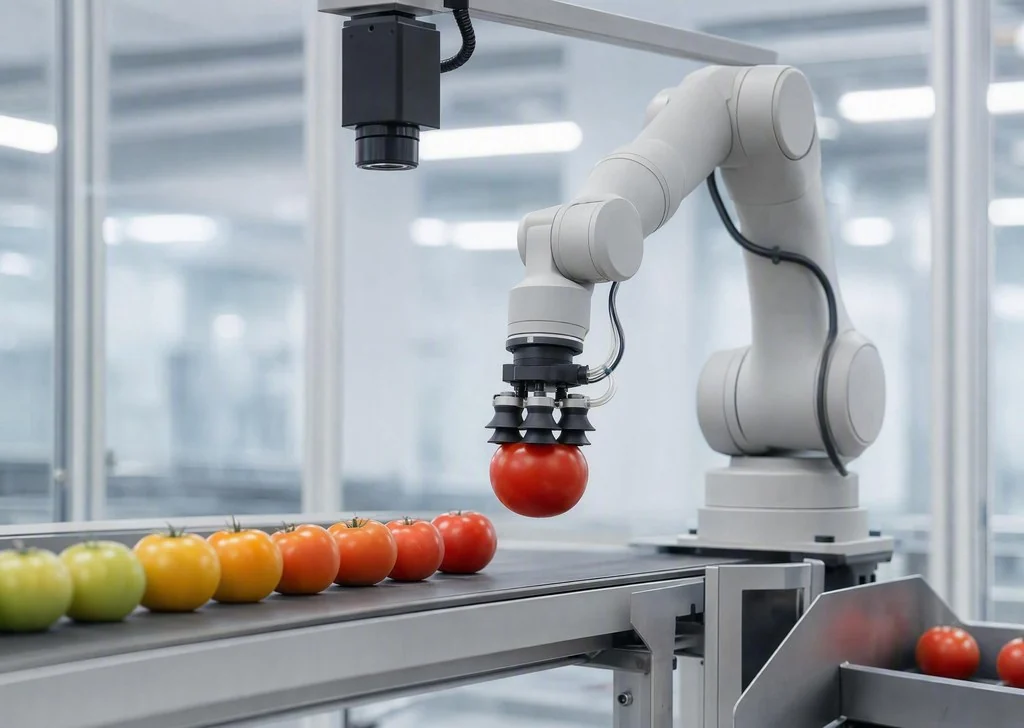
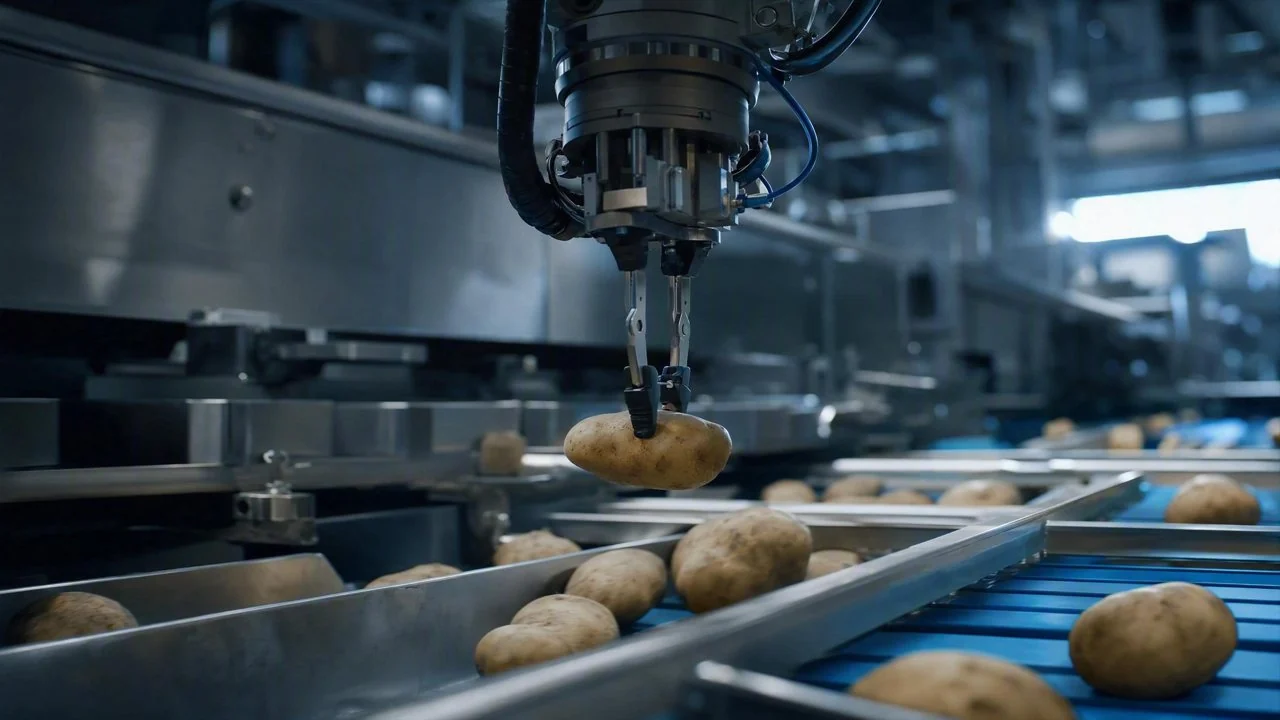
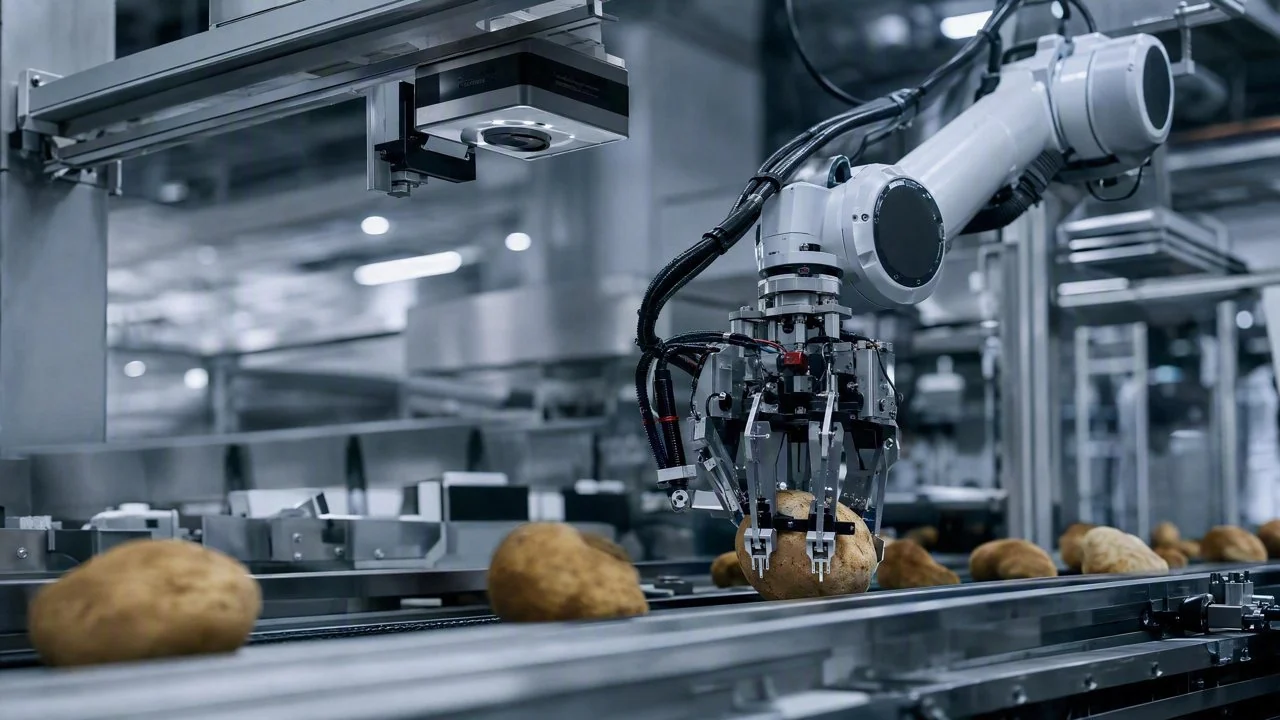
Detecting is not enough — it has to be removed: vision sorting works with robotic picking so rejection and grading happen on the same line.
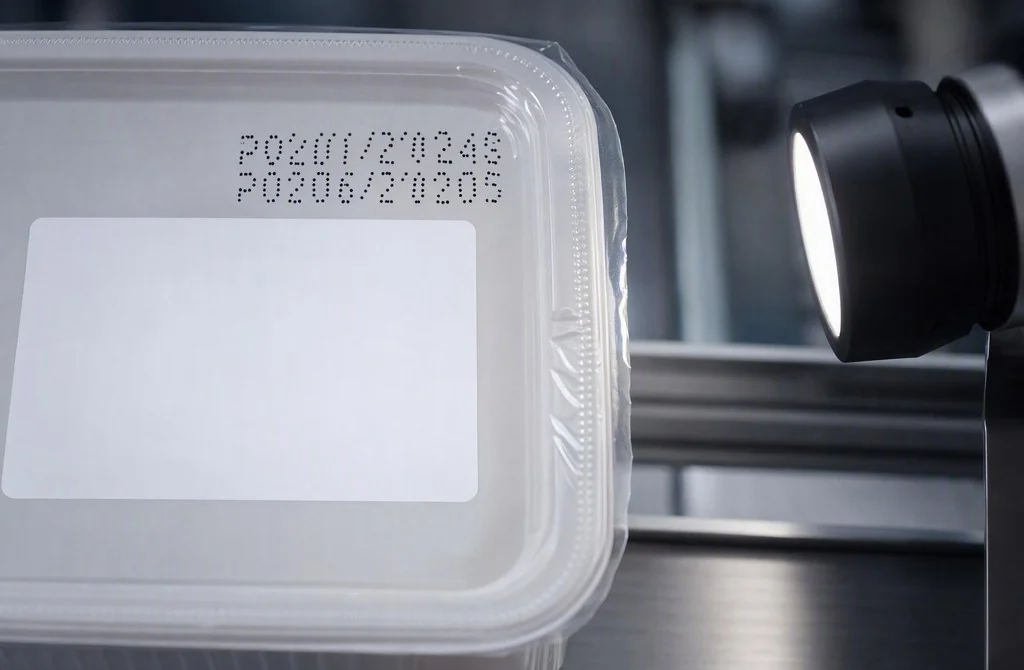
Replace rules with a model in packaging: seals, labels and date codes are judged by deep learning, separating real defects from normal packaging variation instead of template matching.
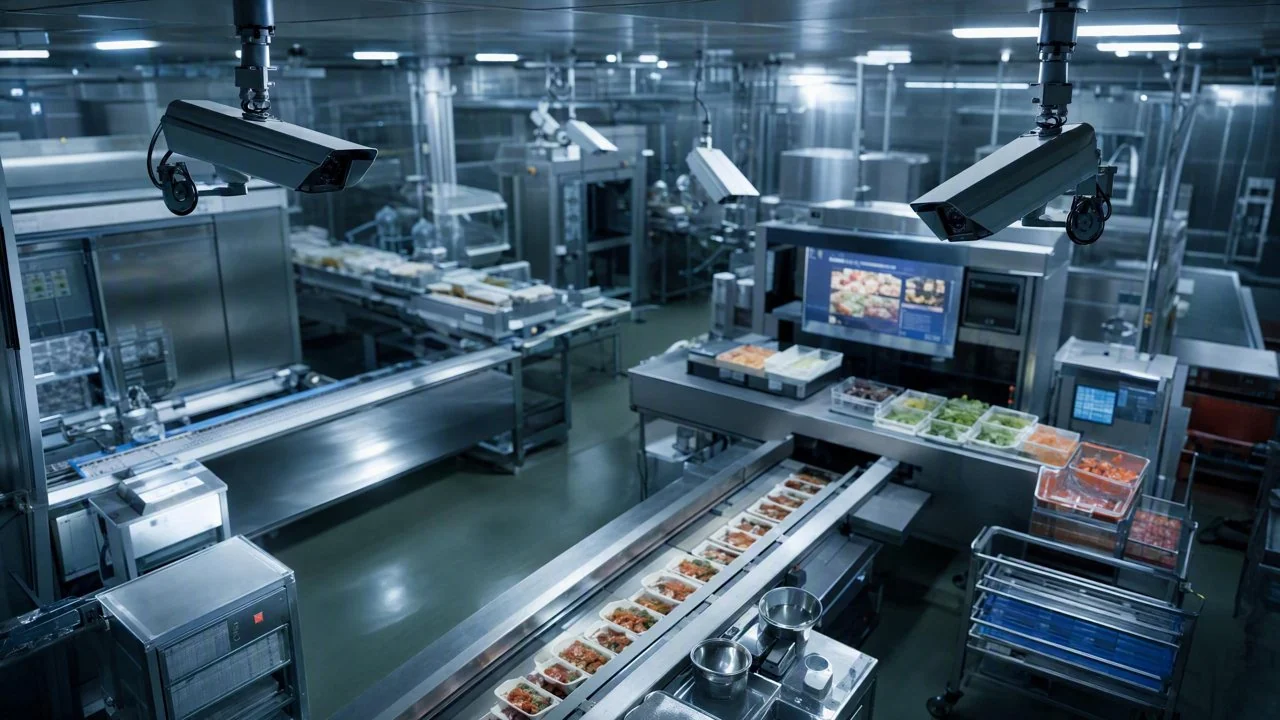
Extend from line to store: SkyVision runs behaviour recognition on the cameras already installed, with real-time alerts and an auditable record. Video and production data stay on site.
3. Choosing the configuration
Stage
Recommended
What it addresses
Foreign objects / grading
2D ACI with robotic vision
Stones, plastic and insects versus natural product variation
Seal / label / date code
2D ACI with OCR / OCV
Open seals, wrinkles, obscured labels, unreadable codes
Produce ripeness sorting
Robotic vision, deployed on-premises
Ripeness grading and gentle handling
Kitchen compliance monitoring
SkyVision
Gloves, hairnets and procedure violations, recognised and logged
4. How deployment runs
DaoAI's deployment runs in four steps. ① Assessment — set the boundary between what must be rejected and what may pass, counting the cost of over-rejection as well. ② Configuration — match systems, conveying and rejection to throughput and product category. ③ On-site deployment — model built from good product and common contaminants; operators are up to speed in about 30 minutes. ④ Feedback — rejection re-checks flow back and the model updates in minutes.
5. What to measure afterwards
On the line: foreign-object detection, over-rejection rate, throughput. In packaging: detection rate and customer complaints. In store: alert latency and traceability. Across DaoAI's deployed food and agriculture operations the typical picture is >97% foreign-object detection with under 1% over-rejection at 6.5 t/h; 99.5%+ detection on packaging with quality rejects down 38% and complaints down 61%; and kitchen compliance recognition on 99% of existing cameras with violation alerts in under a second.
Figures are the typical range our solution reaches in anonymised industry scenarios. Actual values vary with product category, line and camera conditions; on-site measurement governs.
From foreign-object removal and grading to seals and labels, all the way to open-kitchen oversight — ACI plus SkyVision, from the line to the storefront.
Scene · foreign objects & grading
A fresh-produce plant · foreign-object & quality sorting
ChallengeStones, plastic and insects hide among naturally variable produce, and natural variation drives false rejects and stoppages.
SolutionACI optical sorting plus robot-vision picking uses deep learning to tell real foreign objects from natural variation.
>97%FO detection
<1%False reject
6.5t/hThroughput
Scene · seal, label & code
A food-packaging plant · in-line package inspection
ChallengeBad seals, labels covering the nutrition panel and unreadable date codes tie straight to recall cost if they escape.
SolutionACI deep learning replaces rule-based vision, separating real defects from natural packaging variation.
99.5%+Detection
−38%Quality rejects
−61%Complaints
Scene · open-kitchen oversight
A restaurant chain · back-kitchen compliance on video
ChallengeGloves, hairnets and unsafe practices in the kitchen are impossible to watch live across every camera.
SolutionSkyVision runs behaviour recognition on existing cameras — real-time alerts on violations, with an auditable trail.
99%Camera reuse
<1sLive alert
✓Traceable
Cases are anonymised industry scenarios; the figures are typical ranges achievable with our solutions.
In-depth cases · IN-DEPTH
Food & Agriculture · in-depth cases
Each case breaks down the path to deployment in a real scenario — industry context, pain points, our solution and the results.
It covers foreign-object removal and grading, produce ripeness and robotic sorting, packaging seal / label / code inspection, small-object inspection on fresh-cut lines, and SkyVision behavior monitoring in kitchens and lines.
Food foreign objects are highly varied, how does AI remove them reliably?
DaoAI uses feature-cognition anomaly detection to spot known and unknown foreign objects, and with grading models it removes and grades reliably on fast lines, reducing both escapes and false rejects.
Produce varies widely in ripeness and appearance, can it be sorted automatically?
Yes. DaoAI recognizes ripeness, size and appearance, guiding robots to sort produce with consistent grading standards and higher throughput.
How are labels, codes and seals inspected inline on packaging?
DaoAI inspects seal integrity, label placement and code OCR readability inline, catching unsealed packs, mislabels and missing codes to ensure traceability and compliance.