3D capture & modeling
The camera captures once and reconstructs the part's 3D point cloud and pose — no templates, no hand-drawn feature points.

Products · Robot Vision · ROBOTIC INTELLIGENCE
DaoAI Robot Vision — 3D vision guidancepicking, machine tending, assembly and random bin picking. One world-model foundation lets robots understand space, plan their own paths, with sub-millimetre hand-eye coordination.
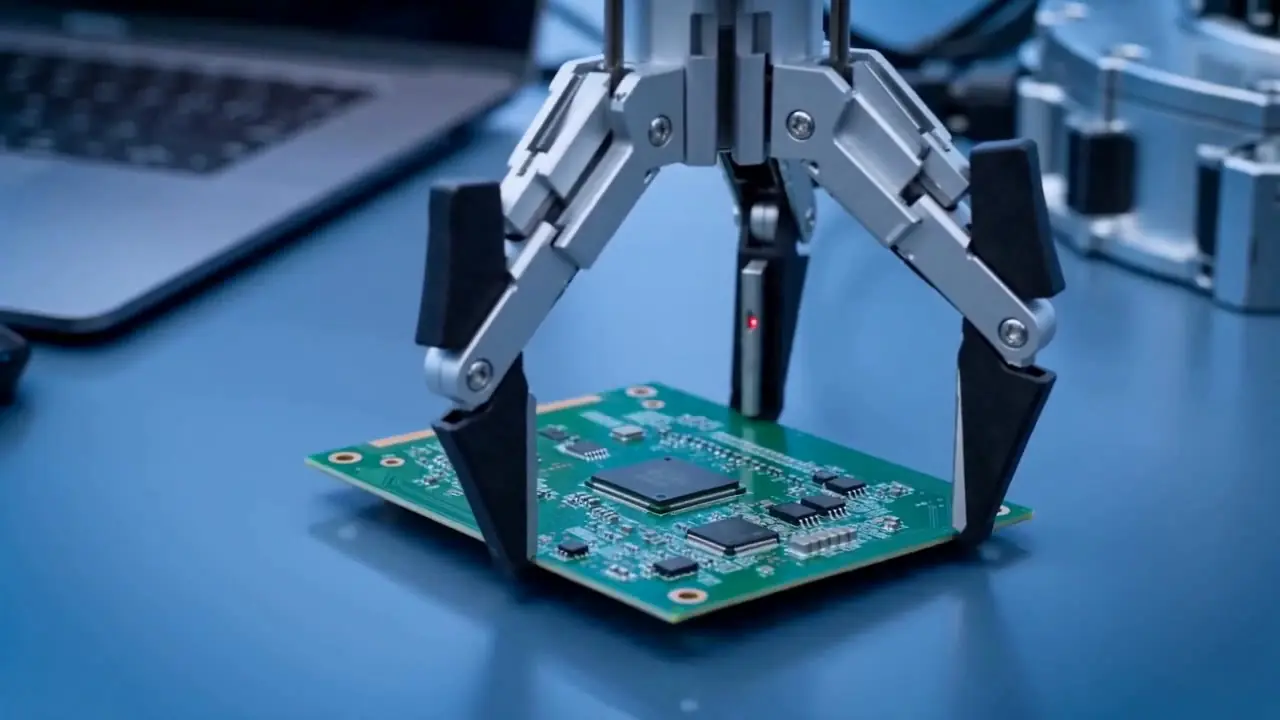
SOVEREIGN AI VALUE
Grasp strategies, cycle times, bin layouts — behind them sits your full process know-how. Under IDC's framework, robotic vision starts with technology sovereignty: core algorithms and hand-eye calibration data run locally, secure and controllable, with real-time performance immune to public-network latency or outages.
Grasp strategies and calibration data stay on-site — never relayed through any external server.
Robot execution is real-time — DaoAI's on-prem deployment removes the risk of line stoppages from network jitter.
Every tuning cycle feeds only your own model — never packaged up and sold to a competitor.
APPLICATION SCENARIOS
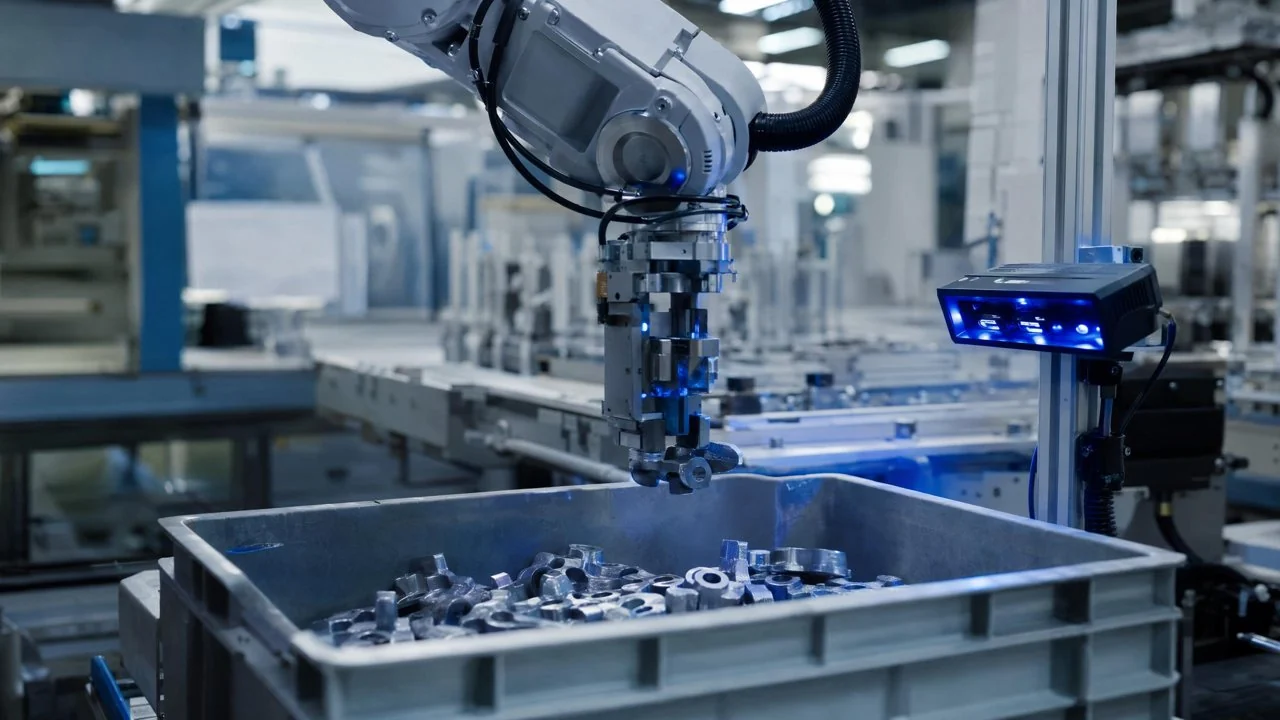
Feeding parts sounds simple, but for randomly stacked, smooth, featureless components, traditional automation often falls short.
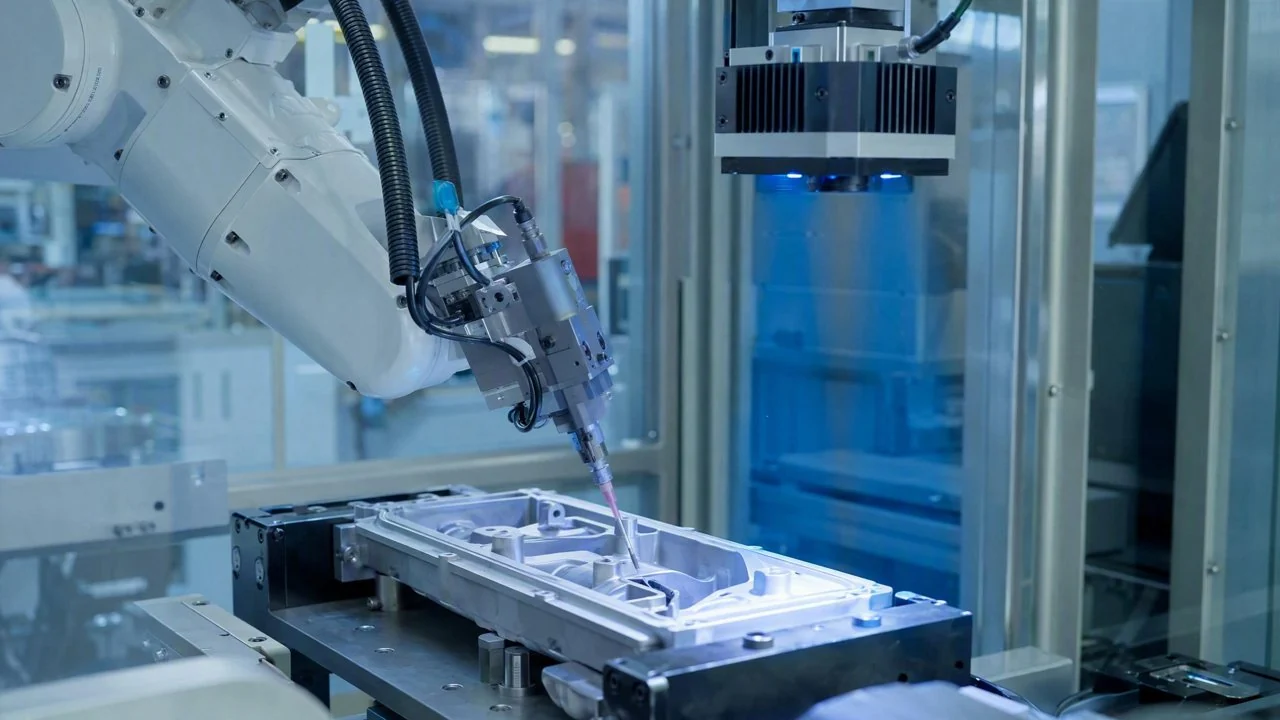
Glue seal quality directly affects a vehicle's water and dust resistance; broken beads, overflow, and gaps are hard to catch with 100% inline coverage using traditional methods.
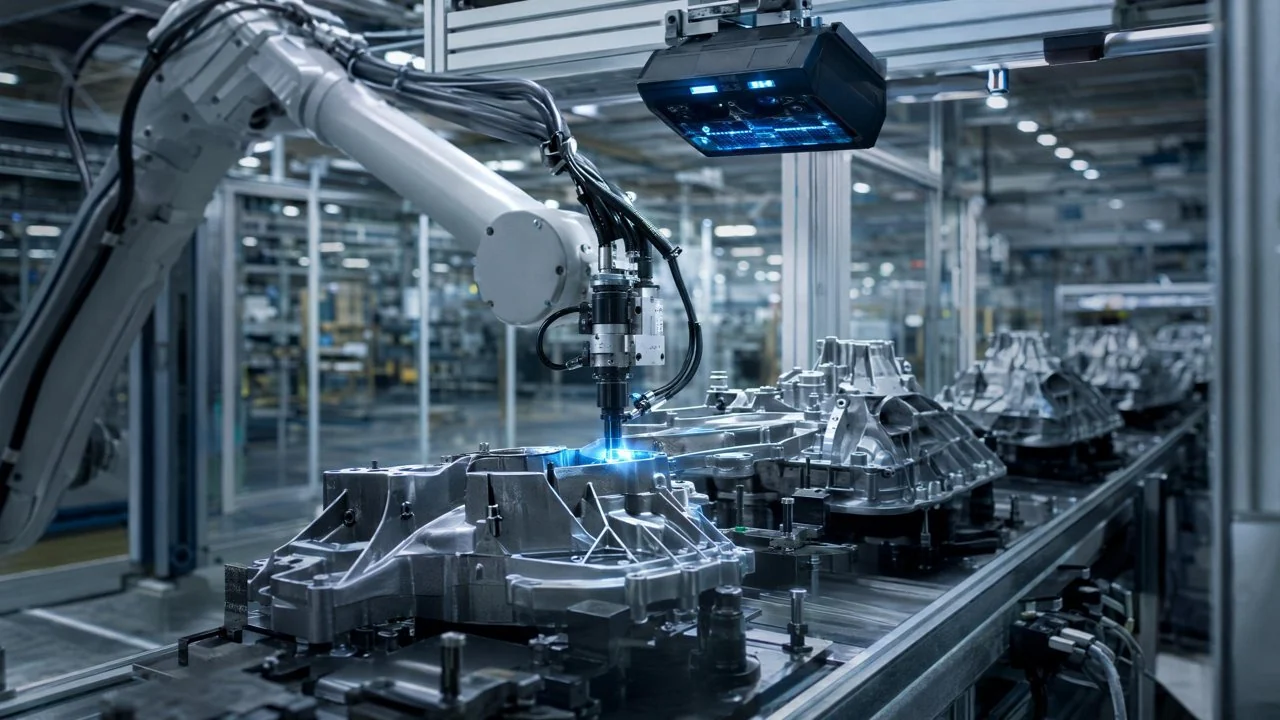
Bolt misassembly and missing bolts are common quality risks in assembly, and manual checks or traditional vision have limited ability to catch them.
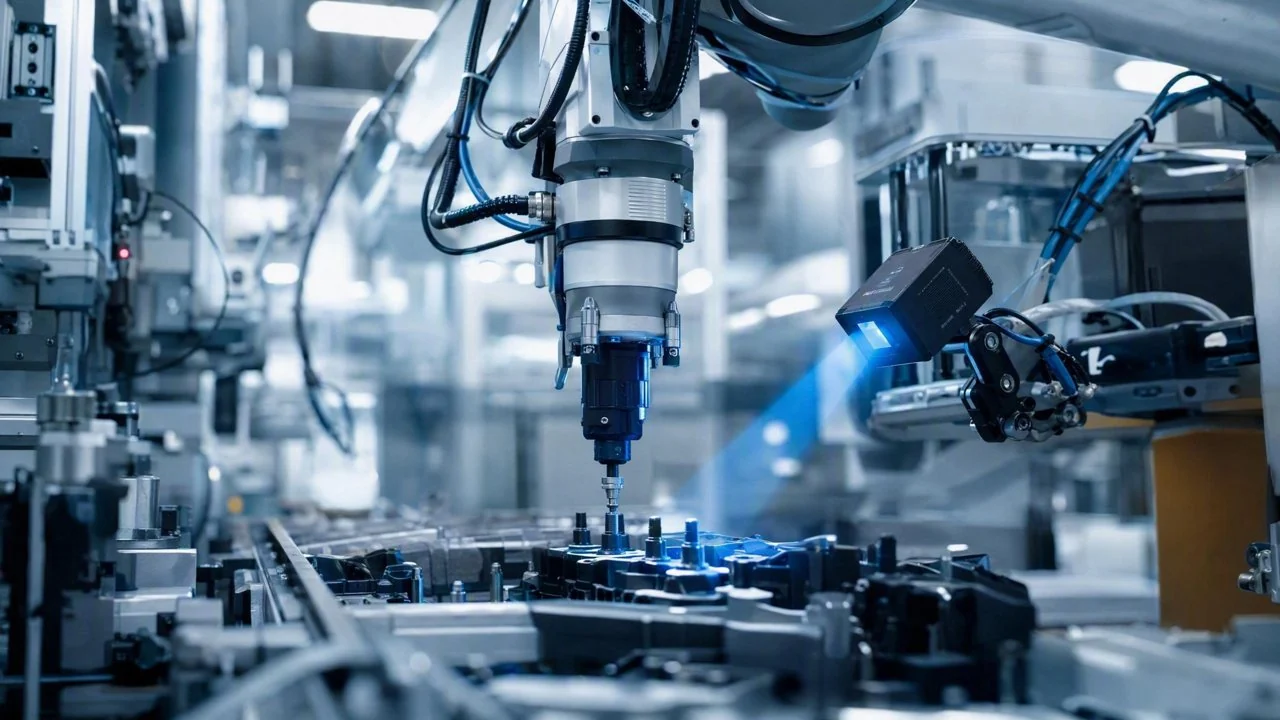
Fastener tightening needs to hit high cycle-time targets while still meeting 100% inspection requirements — traditional approaches struggle to deliver both.
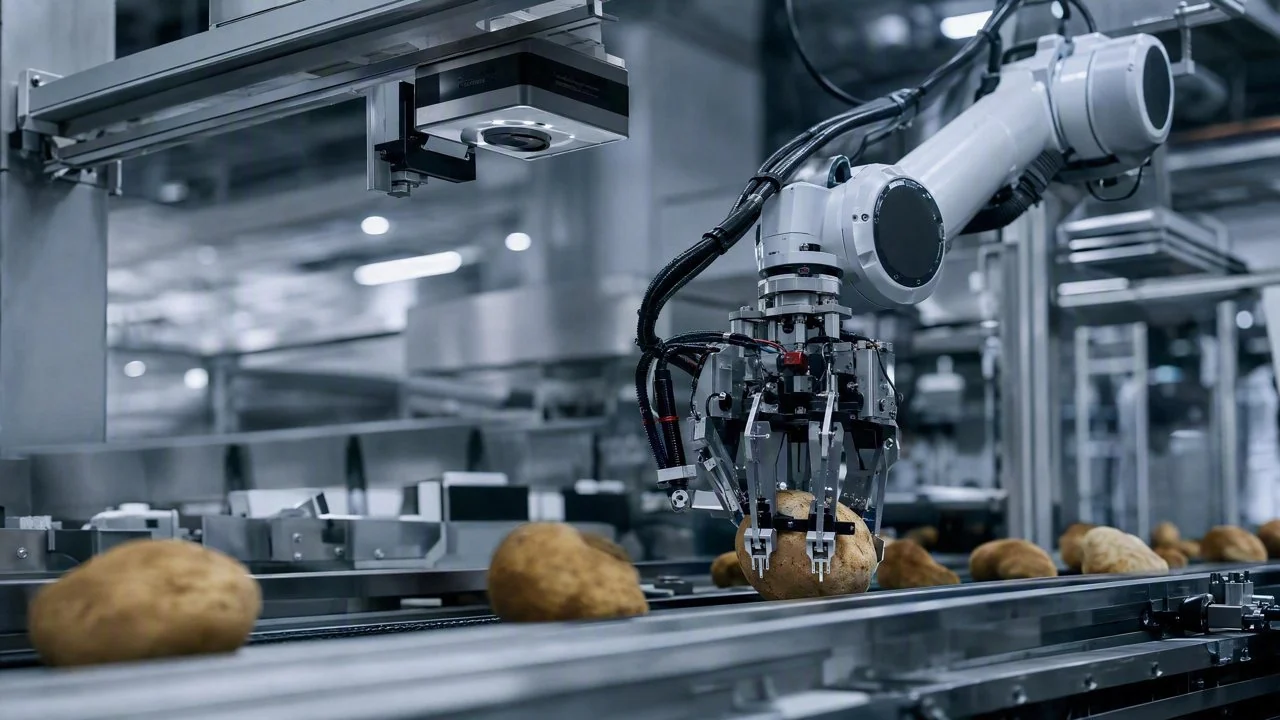
Produce ripeness sorting has long relied on manual judgment, where inconsistent standards and data leaving the site limit scaling.
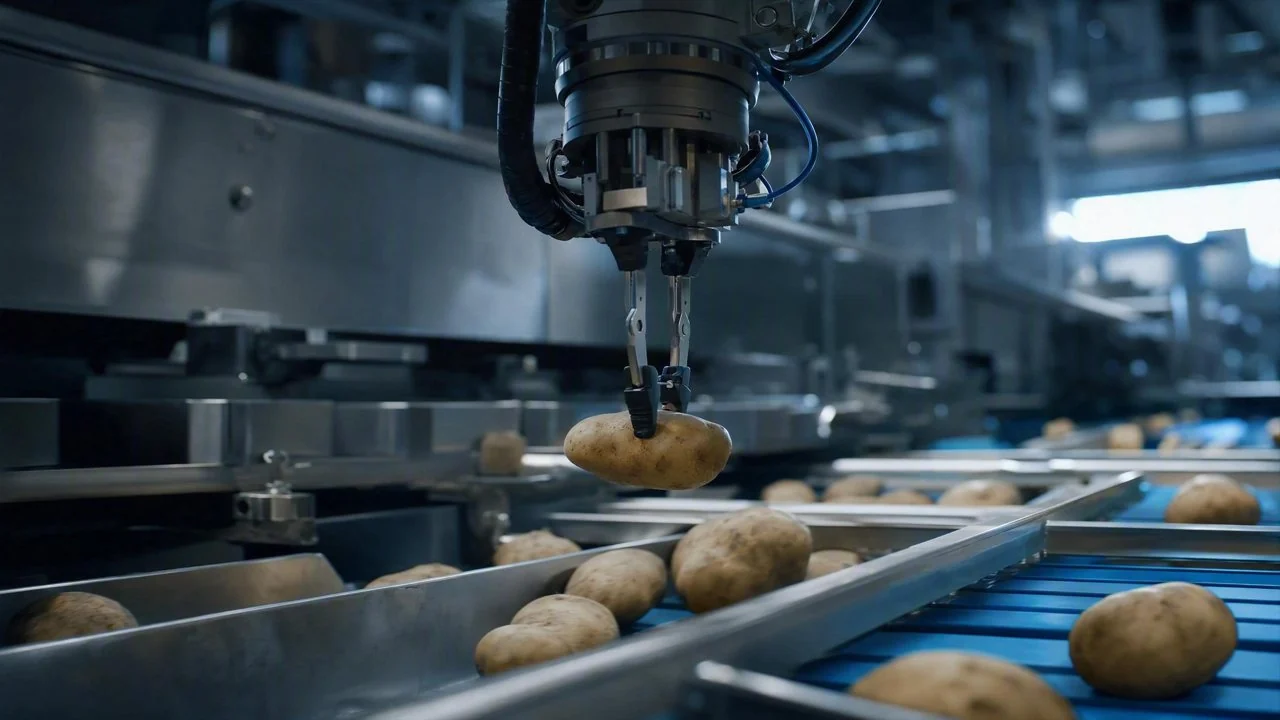
Reducing false positives and re-inspection burden is the key efficiency lever in food foreign-object removal and quality grading.
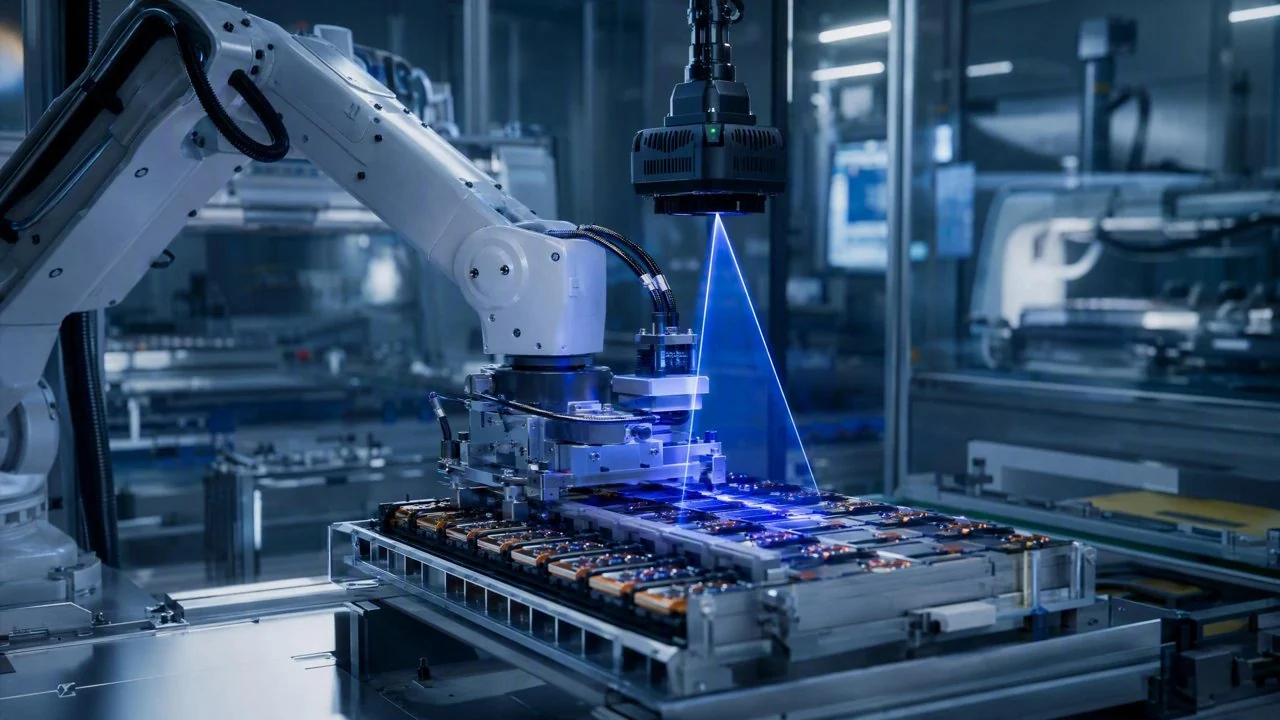
Weld misalignment inside a battery module can raise internal resistance, cause local overheating, or even create a safety hazard.
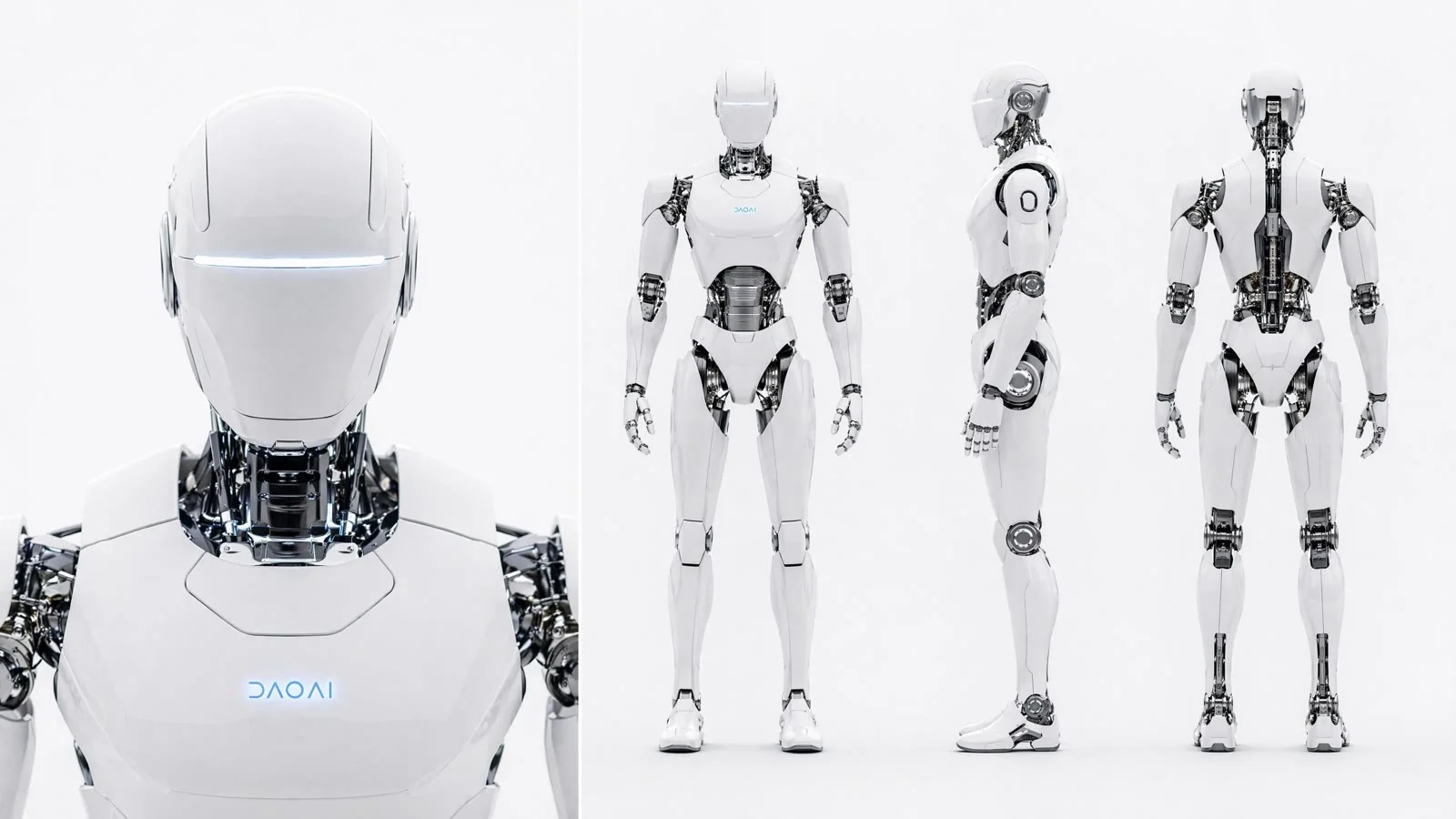
Why we're different · WHY DAOAI
Peers do either vision only or arm integration only. We build from sensor and 3D imaging to world model — Full-stack in-house — inspection and guidance share one foundation, getting smarter the more it's used.
100M+ real industrial data points continuously refine one spatial-understanding model.
Eight years on the factory floor, with deployment engineering experience accumulated line by line.
The camera captures once and reconstructs the part's 3D point cloud and pose — no templates, no hand-drawn feature points.
The world model understands spatial, stacking and occlusion relationships, outputting a graspable pose and priority for every part.
It automatically plans a collision-free path and maps the grasp pose into the arm's coordinate frame — a perceive-reason-act loop.
Even when parts are randomly piled and occluding each other, it recognizes and plans the pick one by one.
Precise alignment even when incoming parts aren't fixed in place — no need for precision fixtures.
No CAD templates; just as stable on reflective, dark and irregular parts.
±0.05mm calibration accuracy — picks precisely, places reliably.
One DaoAI vision system does both inspection and robot navigation, reusing the same foundation.
Connects to ABB / KUKA / FANUC / domestic robots via SDK / API.
Typical applications · APPLICATIONS
Pick bolts, fasteners, castings and other loosely-piled parts straight onto the line.
Automatic clamping and transfer of blanks / finished parts, replacing manual handling.
Vision-aligned guidance for assembly, screwdriving, connector insertion and dispensing.
Recognition and de-palletizing of mixed cartons and mixed-stacked pallets.
High-precision picking of small, reflective and irregular parts.
Adaptively plans the machining path along the part's actual contour.
| Criteria | Traditional 2D vision | Generic 3D solution | DaoAI Robot Vision |
|---|---|---|---|
| Incoming-part requirements | Needs fixed position / fixtures | Limited stacking | Picks straight from random piles |
| Modeling | Hand-drawn ROI / templates | Relies on CAD templates | Point cloud + world model, no templates |
| Reflective / dark parts | Prone to failure | Limited adaptability | Multimodal imaging, stable |
| Data security | — | Often needs the cloud | 100% on-prem, data never leaves |
| Optimization | Fixed algorithm | Needs vendor involvement | Learns continuously from line feedback |
PICKING CAMERAS · BP SERIES SPECS
Five models covering 500–3000mm working distance — eye-in-hand on AMR arms, collaborative picking, and large-part palletising. Dual cameras with structured light, float thermal calibration across 0–40°C, IP65.
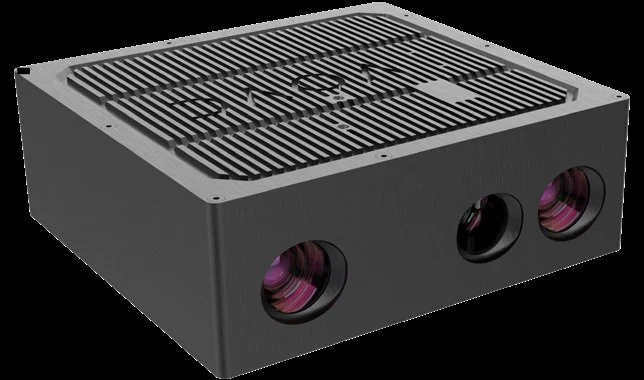
Lightweight body; blue-LED pattern projection resists ambient light. Built for AMR-mounted arms.
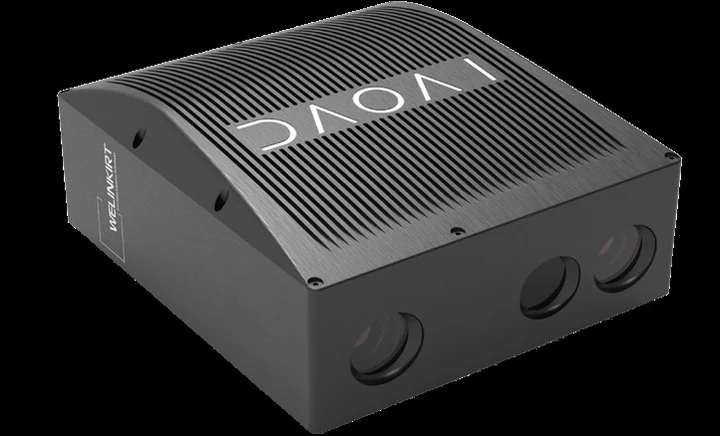
Same body as BP-AMR, on-board GPU cuts acquisition to 0.6–1.1 s.
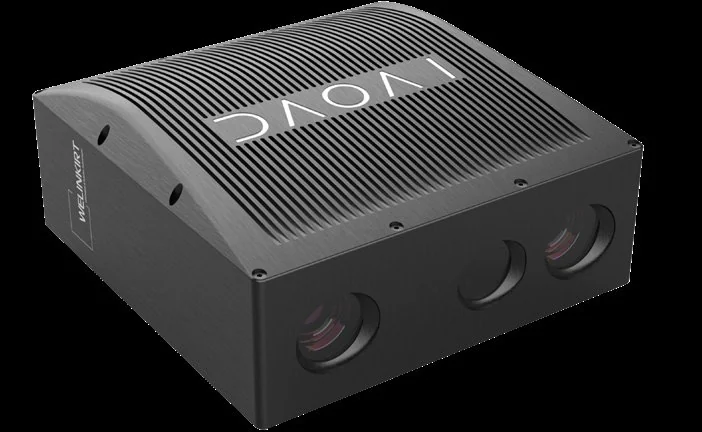
2.3MP white-LED imaging keeps true colour; best repeatability in the range, arm-mountable.
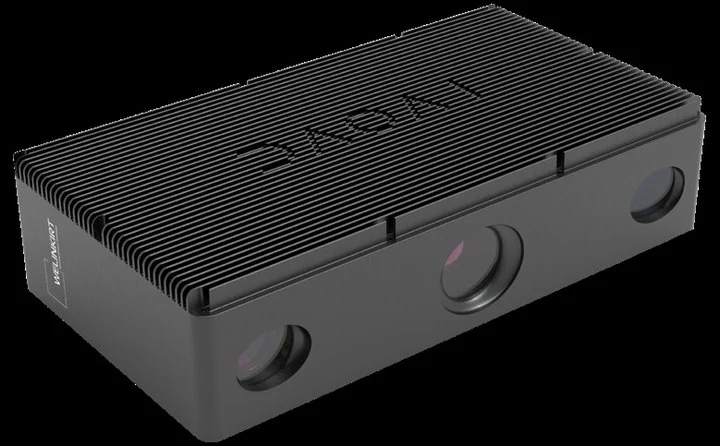
280mm baseline balances accuracy and reach for collaborative picking and machine tending.
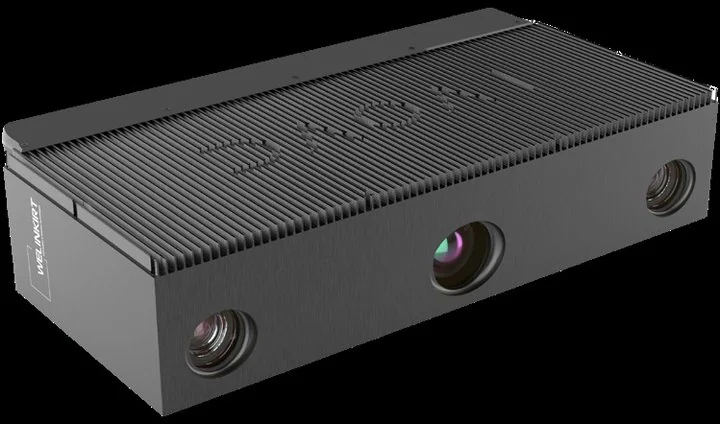
1725 × 971mm field of view for de-palletising and large-part loading.
See all eleven 3D camera models and the selection guide →
| Specification | BP-AMR | BP-AMR-GPU | BP-S | BP-M | BP-L |
|---|---|---|---|---|---|
| Working / measuring distance (mm) | 500–1000 | 500–1000 | 500–1000 | 800–1800 | 1000–3000 |
| Optimal FOV (dia. × length, mm) | 617 × 394 | 617 × 394 | 665 × 394 | 897 × 560 | 1725 × 971 |
| Image resolution | 1.6 MP | 1.6 MP | 2.3 MP | 2.3 MP | 2.3 MP |
| Baseline (mm) | 120 | 120 | 130 | 280 | 360 |
| Calibration accuracy ¹ (mm) | 0.2 | 0.2 | 0.07 | 0.25 | 0.32 |
| Z repeatability ² (mm) | 0.1 | 0.1 | 0.04 | 0.08 | 0.14 |
| 3D acquisition time (s) | 0.8–1.3 | 0.6–1.1 | 0.8–1.3 | 0.8–1.3 | 0.8–1.3 |
| Camera configuration | Dual-cam · blue LED | Dual-cam · blue LED | Dual-cam · white LED | Dual-cam · white LED | Dual-cam · white LED |
| Dimensions (mm) | 180 × 182 × 70 | 180 × 212 × 87 | 200 × 212 × 93 | 360 × 208 × 93 | 440 × 254 × 107 |
| Weight (kg) | 1.5 | 2.1 | 2.3 | 5 | 5.2 |
← swipe to see the full spec table →
Shared specs · 0–40°C operating range · Ethernet · passive cooling · IP65 industrial housing · the dual-camera layout improves thermal stability; every unit passes a 58-hour thermal test and is float-calibrated across 0–40°C · on-board NVIDIA® Jetson TX2 NX captures a 3D point cloud in under a second · Camera Studio configuration software with C# / C++ APIs, running in three minutes.
¹ Calibration accuracy: mean measurement error on a calibration target within the optimal FOV and distance. ² Z repeatability: standard deviation of Z over 15 scans across 100 sample points in the full FOV at the optimal working distance.
The hand-eye calibration accuracy of DaoAI robotic vision can reach ±0.05mm, enabling sub-millimeter hand-eye coordination. This allows the robot to grasp and place accurately, ensuring high precision in operations, suitable for industrial scenarios with high precision requirements.
Traditional 2D vision requires materials to be in fixed positions or use fixtures. In contrast, DaoAI robotic vision can directly grasp materials in disordered stacks without the need for fixed positions or fixtures, greatly improving production flexibility and efficiency.
Yes. DaoAI robotic vision supports local deployment, keeping data within the factory to ensure enterprise data security. We have eight years of deployment engineering experience from on-site factory work to ensure stable and efficient deployment.
The Q&A above was generated with AI assistance and is for reference only; official specifications and commitments are subject to direct consultation.