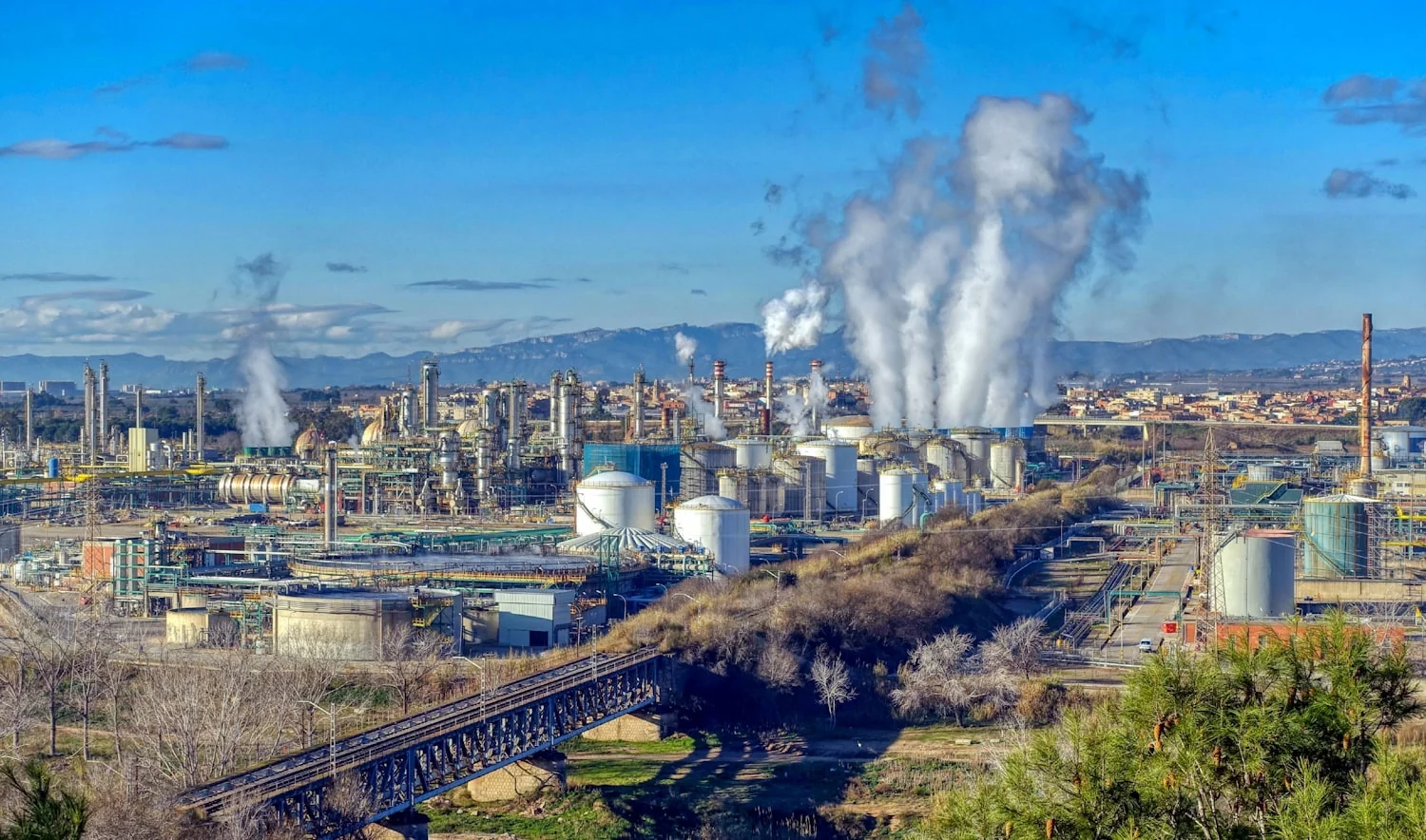
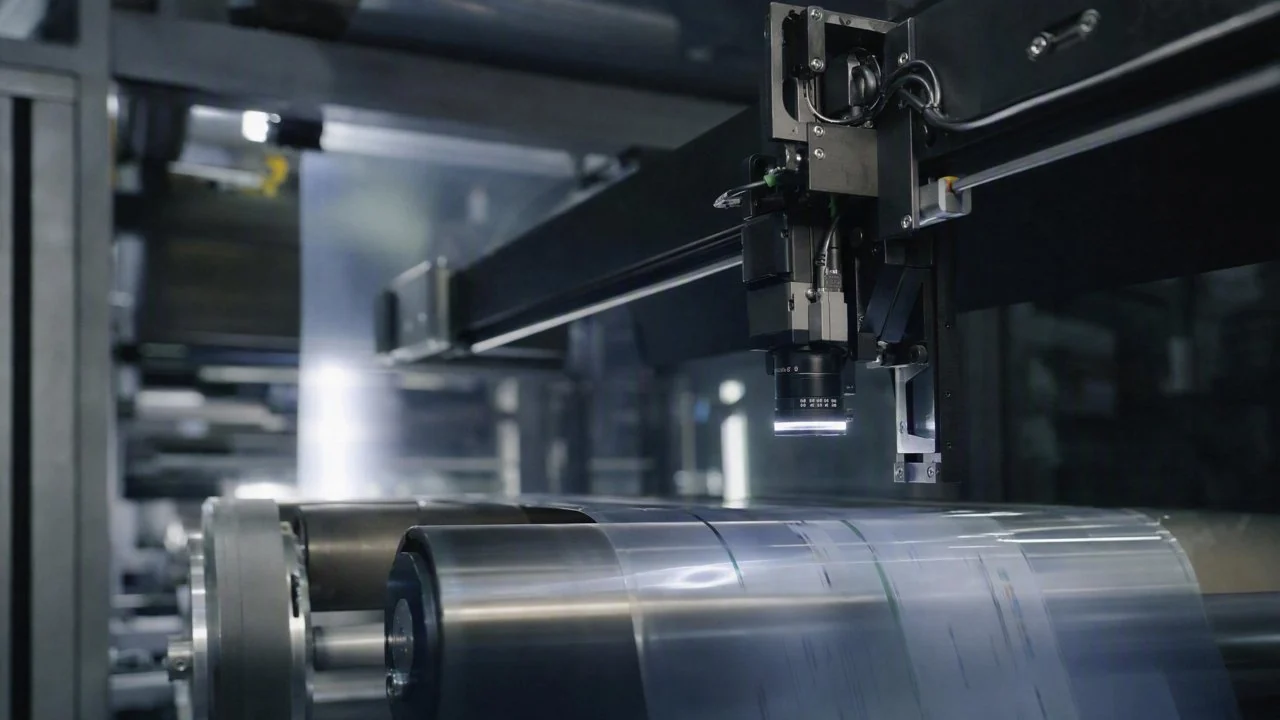
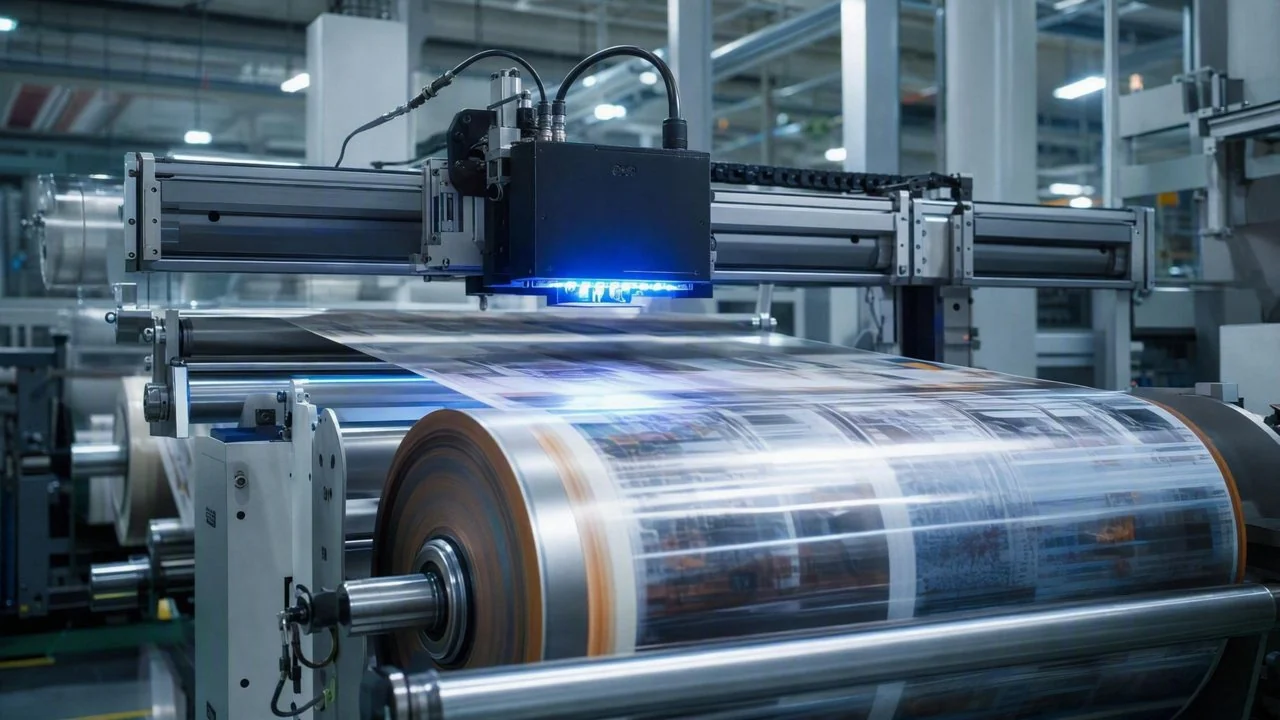
DaoAI's Chemical / materials: 99%+ Image AUROC, 50μm Min defect, 400m/min Line speed. Chemicals and materials — crystal, granule and surface-defect inspection.
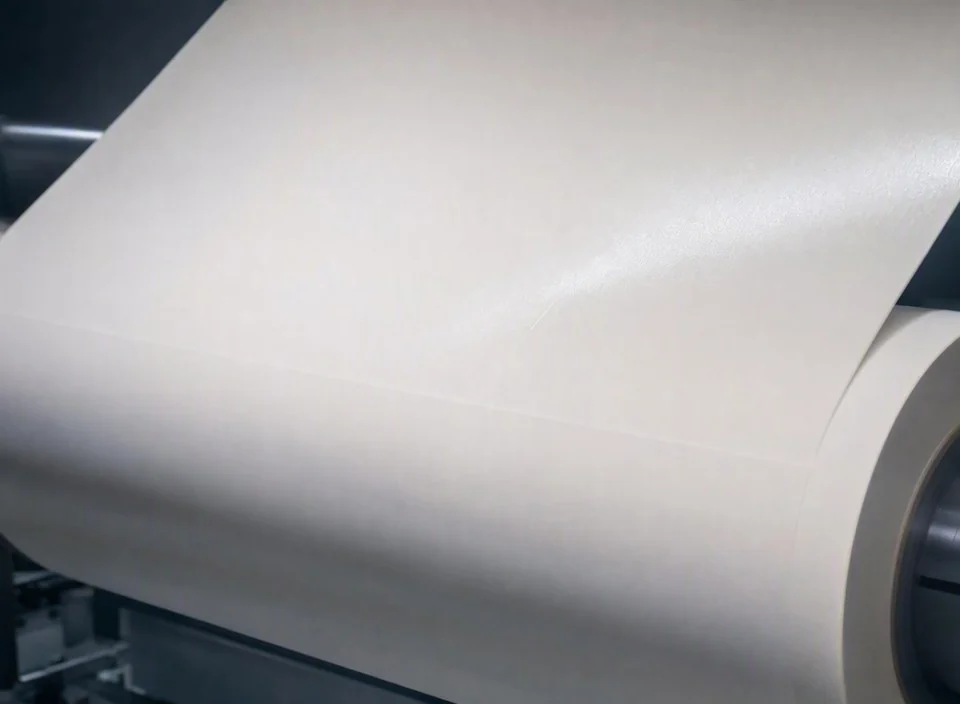
Surface defects in chemicals and materials share one property: their shapes are open-ended. Bubbles, inclusions, colour variation, pinholes, agglomerates, edge waviness — each splits into further variants, and the defect library is never complete. The background is textured in its own right, so small flaws disappear into it, and coating-to-substrate contrast is weak enough that plain 2D imaging cannot read the height difference at all.
Web lines add speed to that. At high line speed, false calls mean stoppages and scrap, and if normal variation across shifts, machines and material batches is treated as a defect, the line drowns in false calls before it catches anything real.
2. How the solution is put together
Learn good product only: APDT positive-sample learning does not require the defect catalogue to be complete, and still localises defect shapes it has never seen — which is the point in open-ended scenarios.
Weak contrast is an imaging problem: coatings and webs use 3D ACI (AI-AOI) with point cloud fusion and weak-contrast channel enhancement to recover the height information 2D cannot.
Teach the model what normal variation looks like: only after the model has seen normal machine-to-machine and batch-to-batch variation can false calls come down — tuning a threshold will not do it.
Line integration: defect positions are returned with web-length coordinates for slitting and traceability. Production data stays inside the plant.
3. Choosing the configuration
Scenario
Recommended
What it addresses
Strongly textured surfaces
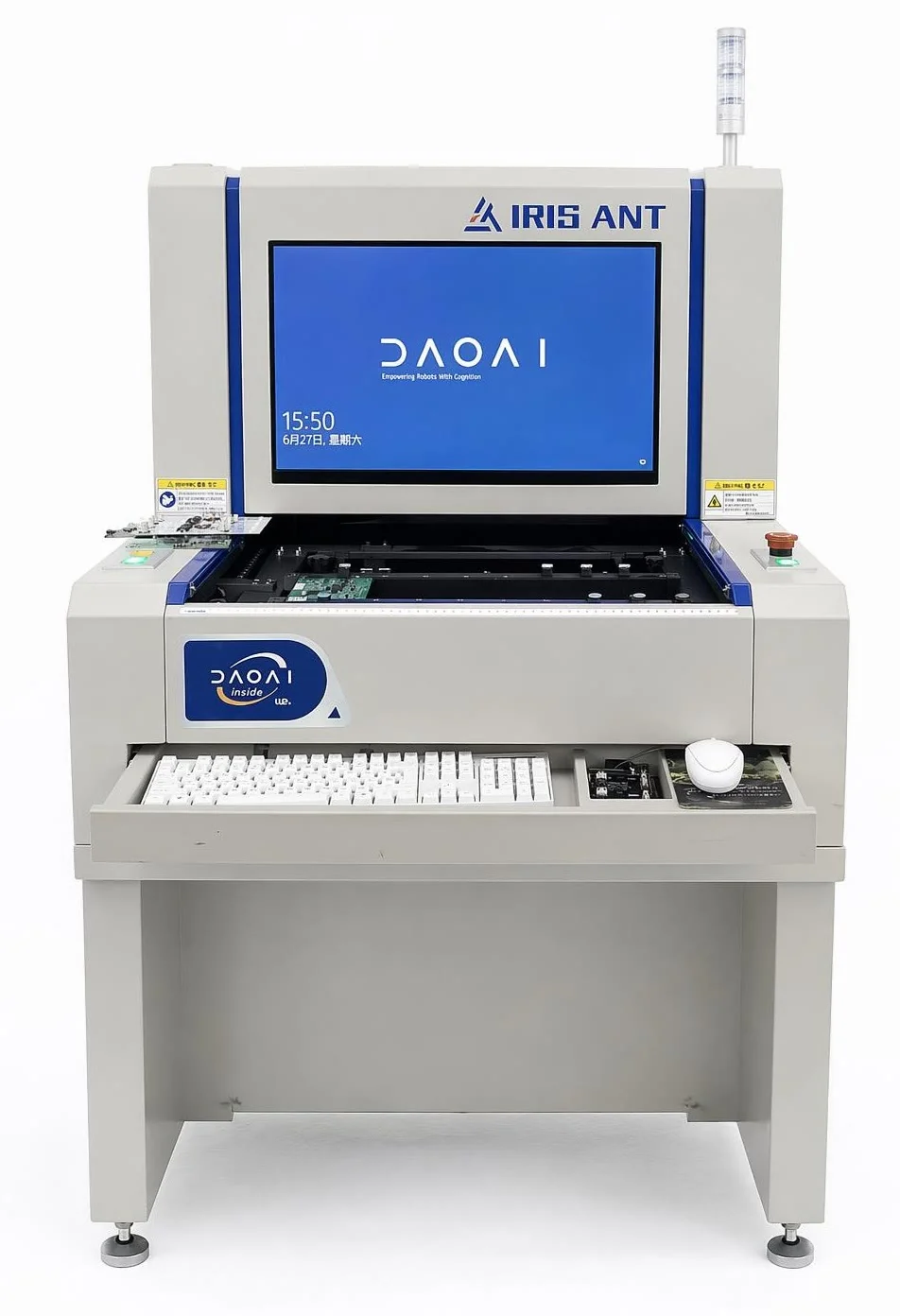
AOI software (unsupervised, good samples)
Open-ended defect shapes with no complete sample set
False calls at speed and consistency across machines
Gauge reading / line patrol
SkyVision
Level and gauge readings, leak and spill monitoring
4. How deployment runs
DaoAI's deployment runs in four steps. ① Assessment — agree where defect ends and normal variation begins; in chemicals that boundary is the main source of false calls. ② Configuration — match systems and lighting to web width, line speed and material. ③ On-site deployment — model built from good product; operators are up to speed in about 30 minutes. ④ Feedback — slitting and QC re-checks flow back, and the model updates in minutes.
5. What to measure afterwards
Three numbers: detection rate, false-call rate, full-width coverage. Across DaoAI's deployed chemicals / materials lines the typical picture is 99%+ detection on textured-surface anomalies trained on good product only; 50 µm smallest detectable feature on coated web at 400 m/min with no speed loss and 97%+ accuracy; and >95% detection on high-speed printed film with false calls down 28% at 100% full-width inline coverage.
Figures are the typical range our solution reaches in anonymised industry scenarios. Actual values vary with material, web width and line speed; on-site measurement governs.
What defects does AI vision detect in chemicals and materials?
It covers 3D inspection of web pinholes and agglomerates, low-contrast coating boundaries, false-call reduction on printed film, few-shot defects on glass and nonwovens, and unsupervised texture anomaly detection.
Material surfaces are continuous textures with formless defects, how does AI inspect them?
DaoAI uses unsupervised anomaly detection to learn the normal texture distribution and flags deviations, finding novel flaws without enumerating defect types.
On fast web lines, how are tiny pinholes and agglomerates kept from escaping?
DaoAI 3D inspection captures pinholes, agglomerates and bumps on fast-moving webs, with real-time localization for continuous full-width coverage.
Low-contrast coatings and printed film generate many false calls, how are they reduced?
DaoAI separates true defects from normal printing and coating variation with deep models, sharply cutting false calls so limited review effort targets real issues.