
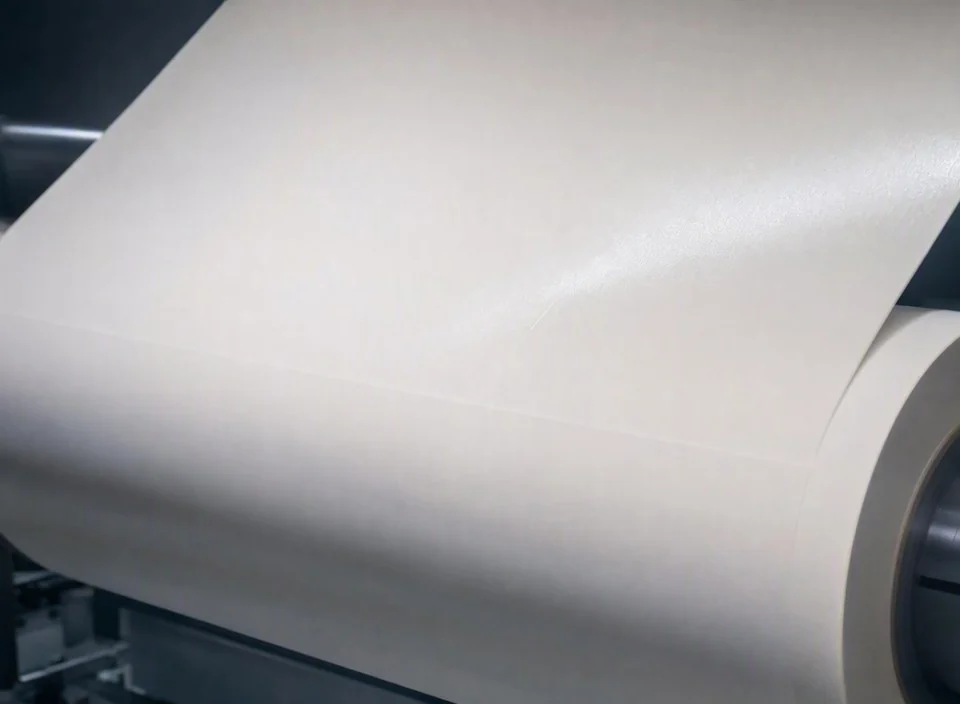
The color difference between the coating and the substrate has always been a key challenge in the quality inspection of the coating industry. DaoAI provides an efficient solution for the industry through innovative technical solutions.
In the coating processing industry, quality control is the core part of enterprise production. With the development of technology and the continuous improvement of market requirements for product quality, the pursuit in the coating process is to minimize the color difference between the coating and the substrate, as this often means higher coating quality. For example, in many application fields such as electronic materials and packaging materials, high-quality coated products can improve the performance, aesthetics, and durability of products. However, this extremely small color difference poses a huge challenge to the detection of coating boundary defects. In some coating coil factories, they coat functional coatings on transparent or light-colored substrates. It is almost impossible to distinguish the color difference between the coating and the substrate with the naked eye, which makes it difficult to detect defects such as coating boundaries, missed coatings, edge shrinkage, and uneven coating under conventional detection methods. These seemingly minor defects, if not detected and processed in time, may lead to a decline in product performance and even cause serious problems in the subsequent production and use processes, bringing huge economic losses to enterprises.
Deep - Dive into Pain Points: Why Is It Difficult?
From a quantitative perspective, the traditional ordinary grayscale threshold detection method has serious problems in detecting weak-contrast boundary defects. In terms of noise level, due to the extremely small color difference between the coating and the substrate, the weak-contrast defect signals are easily submerged by background noise. Statistics show that the intensity of the noise signal may be several times or even dozens of times that of the defect signal, making it difficult to effectively extract the defect signal. In terms of the miss-detection rate, when the grayscale threshold is increased, although some noise interference can be reduced, many weak defect signals will also be filtered out together, and the miss-detection rate may be as high as over 50%. When the threshold is lowered, although more signals can be detected, the false-alarm rate will rise sharply, and the false-alarm rate may exceed 80%. This forces operators to intervene manually frequently, greatly increasing labor costs and detection time.
So, why is it so difficult to detect? The root cause lies in the weak-contrast characteristics of the coating and the substrate. Traditional machine-vision detection mainly relies on grayscale imaging. In the weak-contrast scenario, the difference in grayscale values is very small, and it is almost impossible to distinguish between defective and normal areas. In addition, the high-speed operation of the coil also increases the difficulty of detection. During high-speed movement, the instantaneity and dynamics of image acquisition make it more difficult to capture the weak color-difference changes. The human eye cannot stably observe and judge the subtle differences at the boundary, which further reduces the accuracy and reliability of detection.
Technical Principle
DaoAI's ACI (AI-AOI) primary color channel enhancement solution fundamentally solves the problem of weak-contrast boundary detection. The core of this solution is to amplify the weak-contrast signal in the most sensitive color channel according to the specific spectral differences between the coating and the substrate. In traditional grayscale processing, the image only contains single grayscale information, and it is difficult to effectively distinguish the weak-contrast color-difference changes. The primary color channel enhancement solution takes advantage of the diversity of color channels. Different color channels have different sensitivities to different spectra. By analyzing the spectral characteristics of the coating and the substrate, the most sensitive primary color channel is automatically selected, and the color difference that is almost indistinguishable to the human eye is converted into clearly distinguishable features.
Compared with traditional methods, the primary color channel enhancement solution has significant advantages. Traditional methods mainly rely on increasing the contrast of hardware to enhance the signal, but this method is costly and has limited effectiveness. DaoAI's solution does not require the replacement of high-cost imaging hardware. It only needs to upgrade the software on the existing cameras. It processes the color channels through algorithms, amplifies the weak contrast from the signal channel itself, can more effectively extract defect signals, and suppresses background noise at the same time, greatly improving the detectability of weak-contrast boundaries.
Typical Application Scenarios
- Coating boundary detection: In the coating process, accurately detecting the boundary of the coating is the key to ensuring that the coating size and position meet the requirements. Due to the small color difference between the coating and the substrate, it is very difficult to clearly define the boundary by conventional methods. The primary color channel enhancement solution can accurately identify the position of the coating boundary by amplifying the weak-contrast signal, and even small deviations can be detected in time. The difficulty lies in that the signal at the boundary is very weak and is easily interfered with by the surrounding environment and noise.
- Missed-coating detection: Missed coating is one of the common defects in the coating process. If it is not detected in time, it will cause some areas of the product to be without coating protection, affecting the product performance. The primary color channel enhancement solution can accurately determine whether there is a missed-coating phenomenon by detecting the color-difference change between the area without coating and the normal area. The difficulty lies in that the missed-coating area may be small and the color difference is not obvious, requiring a highly sensitive detection algorithm.
- Edge-shrinkage detection: Edge shrinkage refers to the phenomenon that the coating shrinks at the edge, which will affect the appearance and sealing performance of the product. This solution can effectively detect edge-shrinkage defects by analyzing the color and shape changes at the coating edge. The difficulty lies in that the degree of edge shrinkage may vary, and the signal at the edge is easily affected by the coating thickness and the surface characteristics of the substrate.
- Uneven-coating detection: Uneven coating thickness will lead to unstable product performance. The primary color channel enhancement solution can determine whether the coating thickness is uniform by detecting the color differences in different areas. The difficulty lies in that the color difference corresponding to the slight change in coating thickness is also very small, requiring precise signal amplification and analysis algorithms.
Implementation Case
A medium-sized coating coil factory is mainly engaged in the coating production of electronic materials. The factory coats functional coatings on transparent substrates. Due to the extremely small color difference between the coating and the substrate, it has always faced the problem of detecting coating boundary defects. Before introducing DaoAI's ACI primary color channel enhancement solution, the factory used the ordinary grayscale threshold detection method, with a miss-detection rate as high as 40% and a false-alarm rate of over 70%. Operators had to spend a lot of time on manual intervention and threshold adjustment.
DaoAI's solution has brought significant improvements to the factory, making the previously difficult-to - detect weak-contrast boundary defects clearly distinguishable.
During the implementation process of the solution, DaoAI's technical team conducted a detailed evaluation and analysis of the factory's existing equipment and completed the software upgrade and debugging without replacing the existing cameras. After a period of trial operation and optimization, the solution was officially and stably put into operation. After the implementation, the detection rate of weak-contrast boundary defects of the factory's coatings was stably increased to over 95%, the miss-detection rate was reduced to below 5%, and the false-alarm rate was significantly reduced to below 10%. At the same time, the early-detection rate of missed coatings and edge shrinkage was significantly improved. Abnormal coating parameters could be flagged at the beginning of the coil, reducing the situation of whole-roll scrap and improving production efficiency and product quality.
DaoAI's Solution and Product
DaoAI's ACI primary color channel enhancement solution is a complete solution for detecting weak-contrast boundaries of coatings. Based on advanced artificial-intelligence algorithms and image-processing technologies, this solution can automatically analyze the spectral characteristics of the coating and the substrate and select the most sensitive primary color channel for signal amplification. The product has high flexibility and adaptability and can be customized according to different coating processes and product requirements. At the same time, this solution does not require the replacement of high-cost imaging hardware. It only needs to upgrade the software on the existing camera equipment, greatly reducing the transformation cost of enterprises.
In terms of quantitative results, this solution has brought significant benefits to enterprises. In terms of the defect detection rate, the detection rate of weak-contrast boundary defects of coatings has been increased from less than 60% to over 95%, effectively reducing the miss-detection situation. In terms of the false-alarm rate, it has been reduced from over 70% to below 10%, greatly reducing the workload of operators. In terms of production efficiency, since abnormal coating parameters can be detected in time, the situation of whole-roll scrap has been reduced, and the production efficiency has been improved by over 30%. In addition, the quality-inspection efficiency and stability have also been improved simultaneously. Operators have changed from frequently staring at the screen to adjust the threshold to processing confirmed defects, and both work efficiency and accuracy have been significantly improved.
FAQ
What problems will a small color difference between the coating and the substrate bring, and how does DaoAI solve them?
A small color difference between the coating and the substrate improves the coating quality but makes it difficult to see boundary defects. Traditional detection methods are prone to miss-detection or false-alarm. DaoAI's ACI introduces primary color channel enhancement, amplifies the weak-contrast signal according to the spectral differences, increases the detection rate of hidden defects to over 95%, and does not require hardware replacement.
What are the advantages of DaoAI's primary color channel enhancement solution?
This solution can select the most sensitive channel according to the color difference, amplify the weak-contrast signal, and improve the defect detection rate. At the same time, it suppresses background noise, reducing false-alarm and miss-detection. It can also be upgraded on existing cameras without replacing high-cost imaging hardware, reducing the transformation cost of enterprises.
What effects will the implementation of the solution bring?
After the implementation of the solution, the detection rate of weak-contrast boundary defects of coatings is stably over 95%. It improves the early-detection rate of missed coatings and edge shrinkage, can flag abnormal coating parameters, and reduces whole-roll scrap. In addition, it also improves the quality-inspection efficiency and stability and reduces the burden on operators.
Full solution for this scenario: the full inspection solution for Chemical / materials
This article was generated by AI. Customer cases are simulated scenarios based on real product capabilities and figures are illustrative; see product pages for official benchmarks.