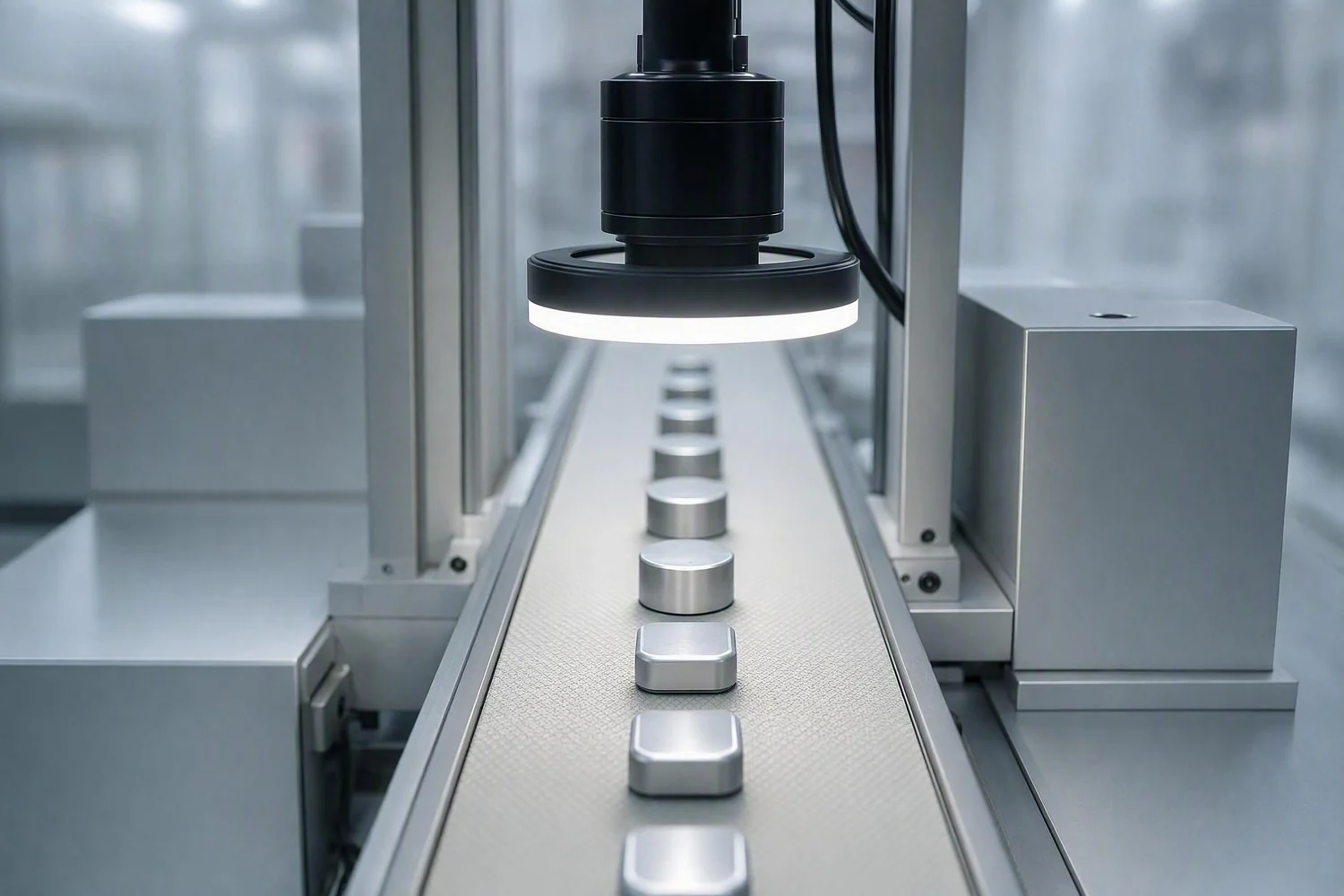
INDUSTRY

New-energy batteries

DaoAI's New-energy batteries: 50μm Min defect, 97%+ Accuracy, 100% Inline 100%. From cell to module — visual inspection for new-energy battery manufacturing.

EV-battery line inspection
Back to Industries

Cell appearance, electrodes, weld seams and module-assembly inspection.

On this page: the solution · 7 scenario deep-dives · case studies · long-form articles

Recommended systems: 2D ACI (AI-AOI) · 3D ACI

Book a Demo Explore Products

THE SOLUTION

Battery manufacturing, in detail

1. What is actually hard on this line

Almost nothing on a battery line photographs well. Electrode coating is low-contrast and uneven, and its dark spots and exposed foil are micron-scale. Cylindrical cells have mirror-finish metal cans, where reflections are read as defects while real scratches and dents disappear into the glare. Tab-welding burrs, misalignment and cold joints hide between layers, which 2D radiography struggles to separate.

What makes it harder is the asymmetry of cost: a missed cold joint is a thermal-runaway safety risk, so lines tighten the criterion — and pay for it in false calls and stoppages. The goal here is never "catch a bit more". It is to drive escapes toward zero without letting false calls rise.

2. How the solution is put together

  • Imaging first: electrode coating uses 3D ACI, fusing point cloud with deep learning to read height differences in a low-contrast layer; cylindrical cells use multi-light computational imaging to suppress specular reflection before any judgement is made.

  • Model handles sample scarcity: APDT positive-sample learning trains on good parts only — 1–20 good samples to go live, so a new line does not have to collect a defect library first.

  • Quality gate on the existing line: critical steps such as tab welding run a 100% automatic gate that identifies weld defects layer by layer, with no added cycle-time penalty.

  • Line integration: results, defect images and coordinates return to MES / SPC and stay traceable by cell ID. Production data stays inside the plant.

3. Choosing the configuration

Process stepRecommendedWhat it addresses
Electrode coating3D ACI (point cloud + deep learning)Micron-scale dark spots, scratches, exposed foil, material drop-out
Tab weldingACI quality gate, retrofittedBurrs, misalignment and cold joints, identified layer by layer
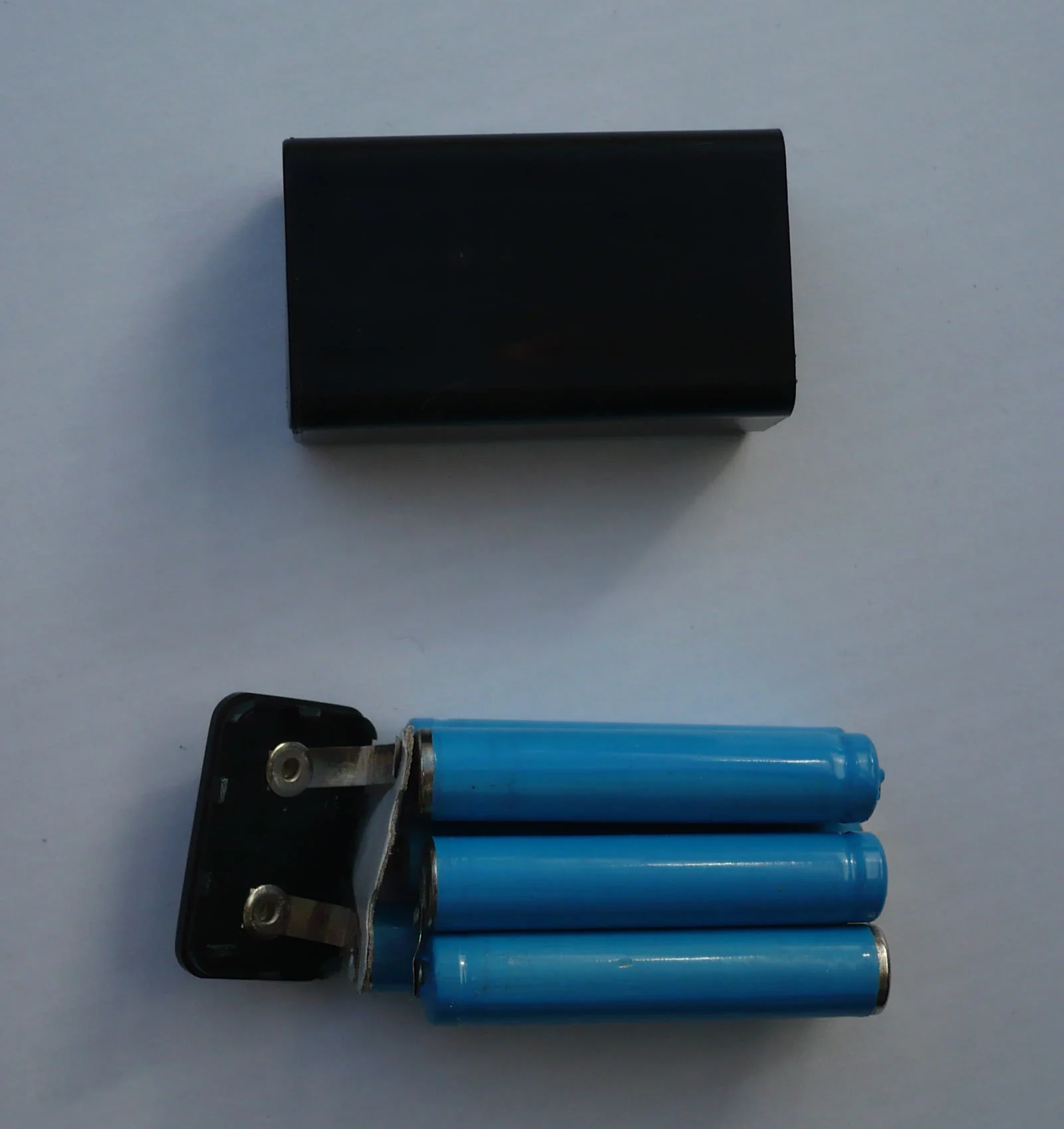
Cell appearance2D ACI with multi-light imagingWrinkles, leakage, bulging and scratches on mirror-finish cans
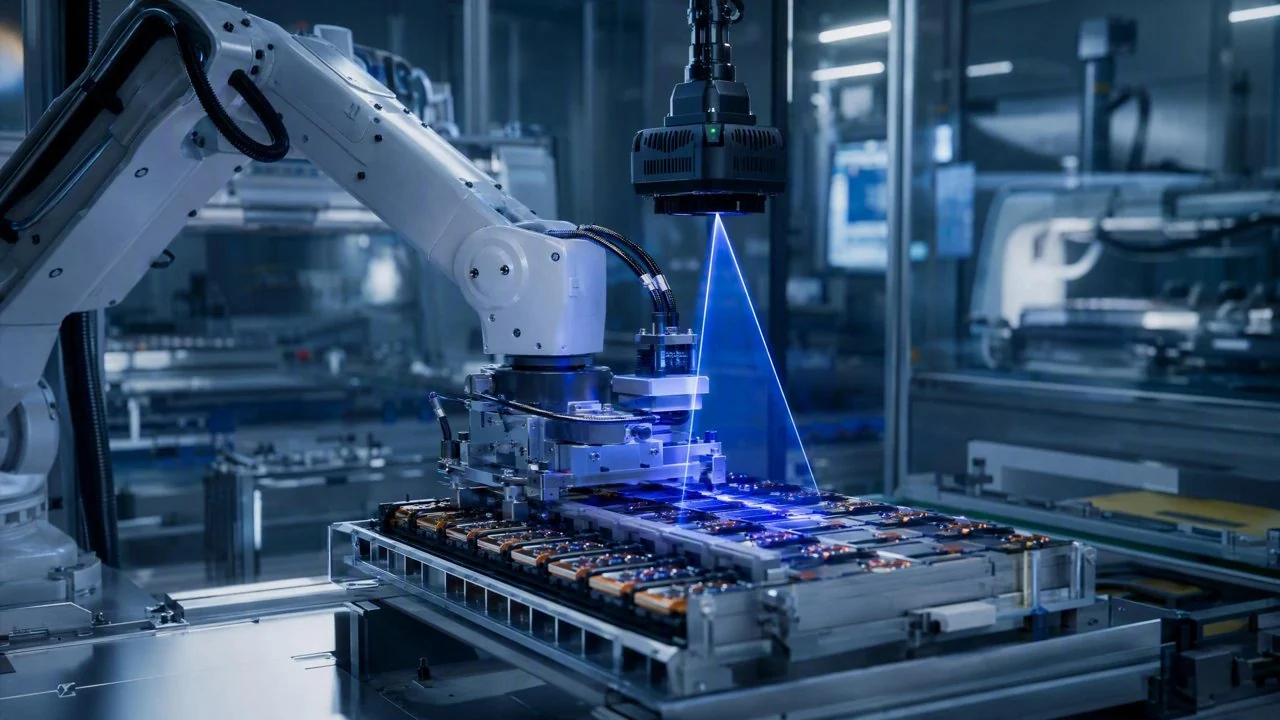
Module / pack assembly2D / 3D ACI with robotic visionWeld-point misalignment, missing parts, dimensional deviation

4. How deployment runs

DaoAI's deployment runs in four steps. ① Assessment — set the decision boundary separately for safety-related defects (cold joints, burrs) and cosmetic ones; their tolerances differ. ② Configuration — match systems and lighting to each process step, with a quote and a delivery plan. ③ On-site deployment — one good part programs the system automatically in 30 seconds to 5 minutes; operators are up to speed in about 30 minutes. ④ Feedback — re-inspection results flow back and the model updates in minutes.

5. What to measure afterwards

Track two groups separately: escape and detection rates on safety-related steps, accuracy and false-call rate on cosmetic ones. Across DaoAI's deployed battery lines the typical picture is 50 µm smallest detectable feature on electrode coating at 97%+ accuracy with 100% inline inspection and no speed loss; >99% detection on tab welding with cold-joint escapes close to zero and no cycle-time penalty; and 98%+ judgement accuracy with 99%+ defect detection on cylindrical cell appearance.

Figures are the typical range our solution reaches in anonymised industry scenarios. Actual values vary with process step, material and cadence; on-site measurement governs.

Keep reading: scenario deep-dives · case studies · long-form articles

APPLICATION SCENARIOS

7 real-world scenarios, one at a time

Cylindrical Cell Reflective-Shell InspectionCell Appearance: Wrinkles / Leakage / Bulging

Cylindrical Cell Reflective-Shell Inspection

Appearance anomalies on cylindrical cells are directly tied to battery safety and consistency — the last visual checkpoint before shipment.

Inline Electrode Coating InspectionElectrode: Uneven Coating / Dark Spots / Scratches

Inline Electrode Coating Inspection

Electrode coating uniformity directly determines cell capacity consistency and safety — the most upstream quality checkpoint in battery manufacturing.

Battery Module Weld Spot InspectionModule Assembly & Dimensions

Battery Module Weld Spot Inspection

Weld spot quality in battery module assembly is directly tied to electrical connection performance and overall safety.

New-Energy Battery Module Weld Misalignment DetectionBattery Module Weld Misalignment Detection (Robot Vision)

New-Energy Battery Module Weld Misalignment Detection

Weld misalignment inside a battery module can raise internal resistance, cause local overheating, or even create a safety hazard.

Separator Pinhole & Coating Defect DetectionSeparator Foreign Matter & Alignment

Separator Pinhole & Coating Defect Detection

The separator is the last physical barrier between a cell's positive and negative electrodes — even a tiny pinhole can trigger an internal short circuit.

Tab Welding Quality GateTab Welding & Folding

Tab Welding Quality Gate

Tab welding quality is a critical safety line for batteries — burrs or cold welds can pierce the separator and trigger thermal runaway.

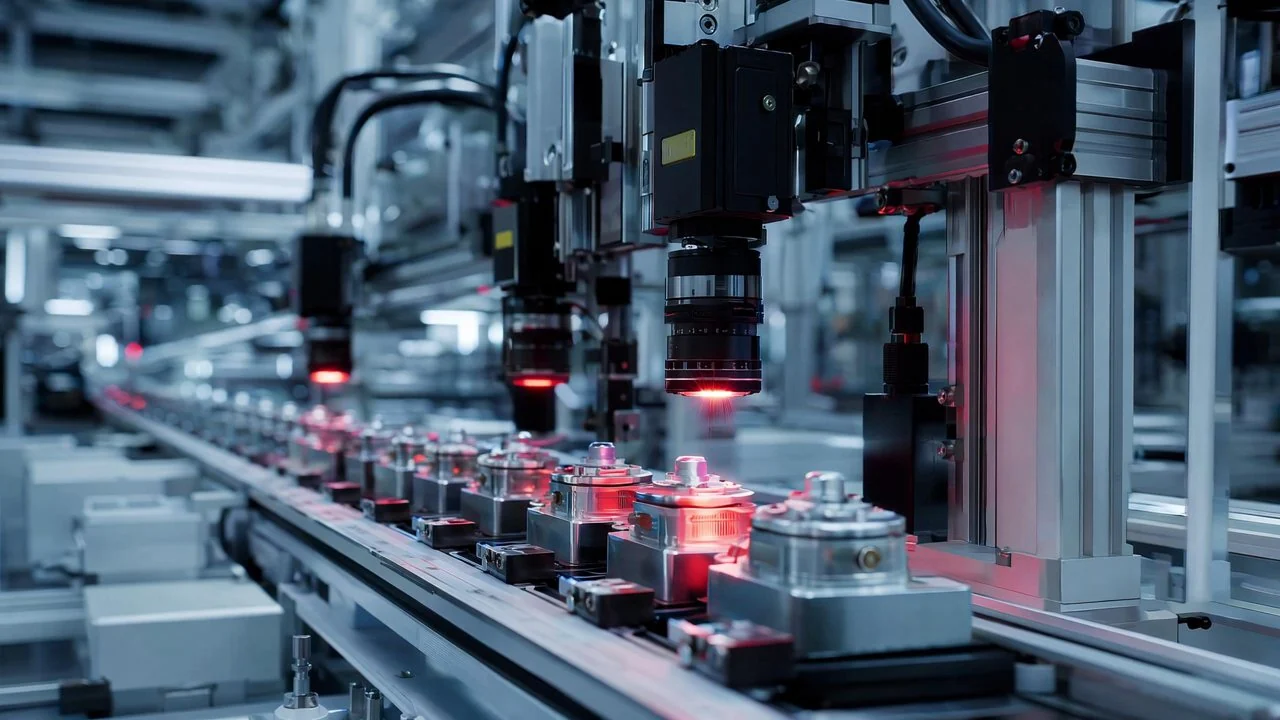
Battery Post / Top-Cap Appearance InspectionTop Cap & Seal Inspection

Battery Post / Top-Cap Appearance Inspection

The surface integrity and sealing of posts and top caps directly affect battery safety — a critical checkpoint before shipment.

Case studies

New-energy battery · electrode to pack

From electrode coating and tab welding to reflective cylindrical cans and winding alignment — micron-grade ACI even reads mirror-finish metal.

Scene · electrode coating

A leading EV-battery maker · electrode-coating defects

ChallengeDark spots, scratches, exposed foil and drop-off are micron-scale; low-contrast, uneven coatings defeat pure 2D imaging.

Solution3D ACI fuses point clouds with deep learning for micron-grade, full-line in-line inspection.

50μmMin defect
97%+Accuracy
100%Inline 100%

Scene · tab welding

A cell plant · intercepting tab-weld defects

ChallengeTab slivers, shift and cold welds tie straight to thermal-runaway risk; 2D X-ray cannot resolve layers and escapes are costly.

SolutionACI turns the existing line into a 100% automated quality gate, reading tab-weld defects layer by layer.

>99%Detection
→0missed escapes
0Cycle loss

Scene · reflective cell surface

A battery plant · final inspection of cylindrical cells

ChallengeMirror-finish cans easily turn reflections into false defects while masking real scratches and dents.

SolutionACI with multi-light computational imaging suppresses specular glare — built for tough reflective metal.

98%+Pass accuracy
99%+Defect detection
✓Reflective

Cases are anonymised industry scenarios; the figures are typical ranges achievable with our solutions.

In-depth cases · IN-DEPTH

New-energy Battery · in-depth cases

Each case breaks down the path to deployment in a real scenario — industry context, pain points, our solution and the results.

EV battery cell production and inspection Battery · 2026-05-27

Inline Full Inspection of Electrode Coating: 3D ACI Securing Cell Consistency at the Source

A leading power-battery manufacturer deployed DaoAI 3D ACI at the coating stage, fusing point cloud and image data to detect dark spots, scratches, exposed foil and material drop-off below 50μm, holding accuracy above 97% with 100% inline inspection.

Read more
DaoAI smart factory with robotic visual inspection Battery · 2026-05-25

Tab-Welding Quality Gate: Stopping Burrs and Cold Welds Before Thermal Runaway

A cell manufacturer added a DaoAI ACI automated quality gate to an existing tab-welding line, identifying burrs, misalignment and cold welds tied to thermal runaway, building 100% automated judgment toward a zero-escape goal.

Read more
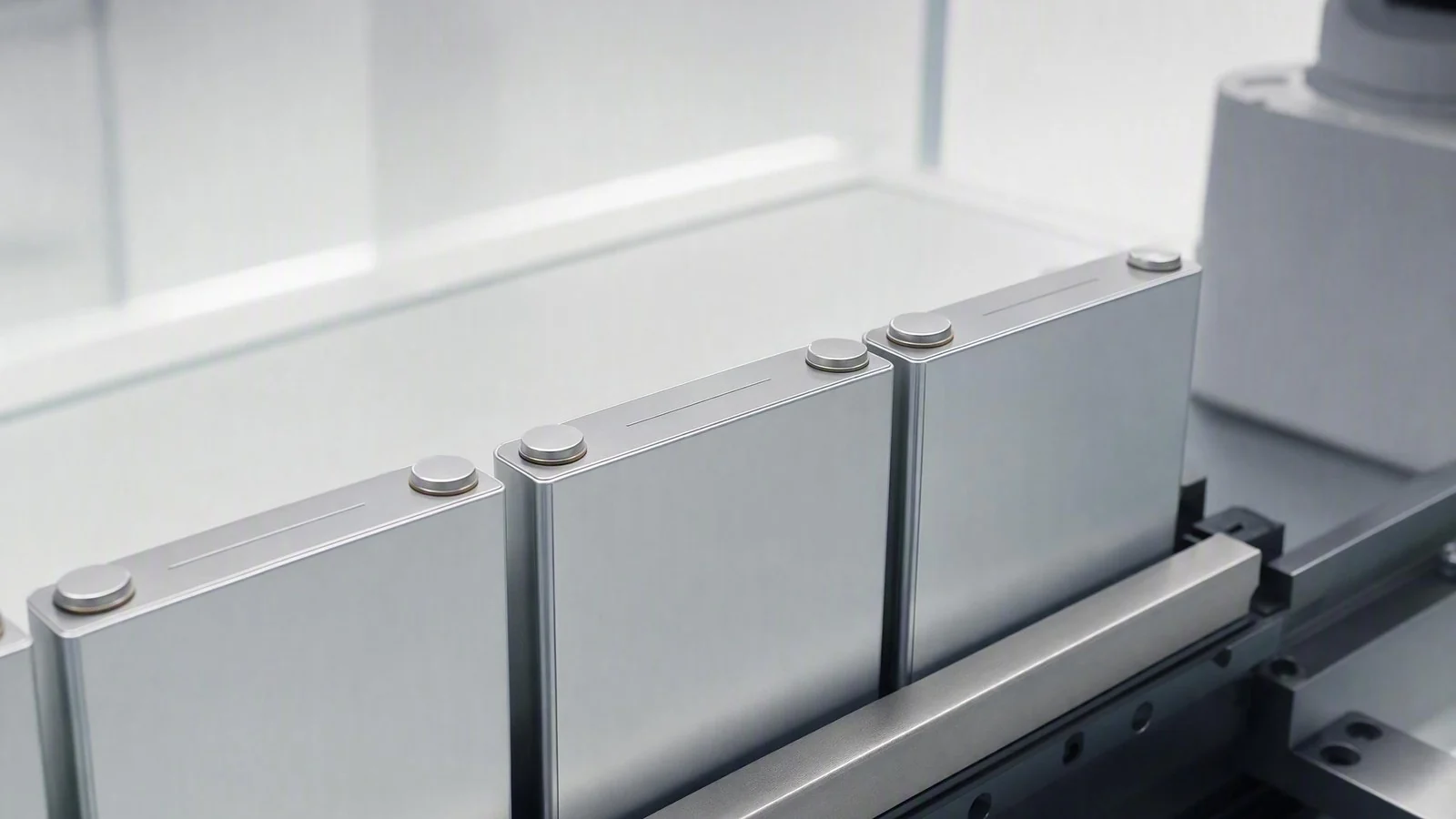
Prismatic battery cells on a conveyor under inline vision inspection Battery · 2026-05-23

Cylindrical Cell Reflective Can-Surface Inspection: Taming Glare with Computational Imaging

A battery plant's cylindrical-cell steel cans are highly reflective with strong curvature; DaoAI's multi-light computational imaging suppresses glare, reaching judgment accuracy above 98% and defect detection above 99%.

Read more
Smart manufacturing line with AI visual inspection Battery · 2026-05-21

Anode-Cathode Alignment in Winding and Stacking: 3D X-ray CT plus AI Layer Analysis at ~90x Speed

A leading power-battery manufacturer used DaoAI 3D X-ray CT with AI layer-by-layer analysis to replace manual reading, raising anode-cathode alignment and bend-inspection efficiency by about 90x.

Read more
AI inspection control and monitoring console Battery · 2026-05-19

Inline Inspection of Separator Pinholes and Coating Defects: Micron-Level Control on High-Speed Web

A battery plant's separator line runs fast and wide; DaoAI's high-speed web inline ACI detects pinholes, coating scratches and thickness non-uniformity, achieving micron-level inline full inspection.

Read more

FAQ

EV Battery · AI Visual Inspection FAQ

Which key battery production steps does AI vision inspect?

It covers inline electrode coating, separator pinholes, tab-welding quality, X-ray / CT electrode alignment, and reflective cylindrical-can inspection, protecting consistency and safety gates.

Coating defects are tiny and lines run fast, can AI keep up?

Yes. DaoAI models are optimized for high-speed coating, detecting exposed foil, dark spots and thickness variation in real time to match high-throughput continuous production.

How are safety-critical items like tab welding and electrode alignment gated?

DaoAI inspects tab-weld morphology with 2D vision and checks internal electrode alignment via X-ray / CT, serving as a safety gate that lowers thermal-runaway risk.

Cylindrical cans are highly reflective and prone to false judgments, what helps?

DaoAI suppresses metallic glare with feature-cognition models and optimized lighting, reliably finding scratches, dents and stains on curved cylindrical cells while reducing false calls.