
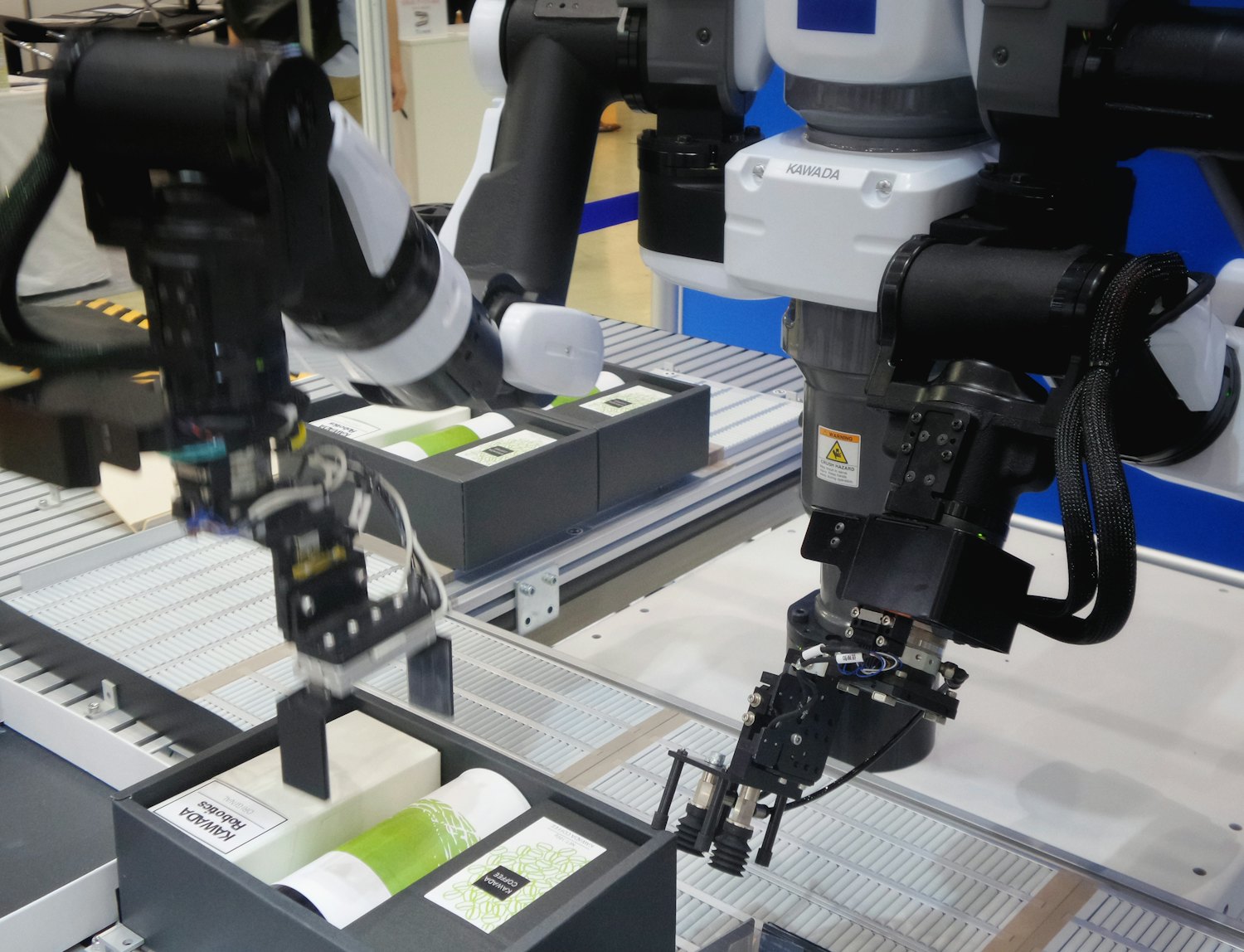
In consumer product manufacturing, missing or misplaced components during assembly directly impact product quality, brand reputation, and even consumer safety. Traditional manual inspection is inefficient and prone to human fatigue, while rule-based 2D machine vision struggles with complex 3D structures and varying lighting conditions. Under the stringent demands for high production line beat and 100% full inspection, achieving precise, efficient, and adaptable automated inspection has become a pressing challenge for the industry.
WeLinkirt DaoAI 3D Robot Vision (proprietary 3D camera + 6D pose estimation, bin picking, glue dispensing/assembly/loading/unloading guidance, brain-eye-body closed-loop, sub-millimeter hand-eye coordination) reduces the escape rate of missing/misplaced components in consumer product assembly from an industry average of 2.5% to <0.5% through high-precision 3D reconstruction and transfer learning, while ensuring 100% full inspection capacity at production line beat. In the consumer product manufacturing industry, product structures are becoming increasingly complex, with a wide variety of components, such as small electronic products, internal components of white goods, and daily chemical packaging. The assembly processes for these products often involve precise assembly of numerous small parts, where any missing or misplaced component can lead to product malfunction, safety hazards, or cosmetic defects. A mid-sized consumer goods manufacturer, whose product line includes various home appliances, has dozens of components in each product on the assembly line, requiring extremely high assembly quality. The production line beat reaches 30 pieces per minute, and traditional inspection methods can no longer meet these demands.
Pain Points: Why This Hurdle Is Difficult to Overcome
This manufacturer faced multiple challenges in detecting missing/misplaced components during assembly. Firstly, the **high escape rate** was a persistent issue; manual inspection on a high-speed production line is prone to fatigue, leading to an industry average escape rate of around 2.5%, especially for components with similar colors or tiny sizes. Secondly, **false positive rates were difficult to control**; traditional rule-based 2D machine vision systems often generated numerous false positives when encountering surface reflections, shadows, slight component deformations, or positional deviations, resulting in up to 40% of manual re-inspection time, severely slowing down production efficiency. Furthermore, **long changeover downtime** was a problem; with numerous product SKUs, each product changeover required several hours to readjust vision parameters, directly impacting production flexibility and uptime. Additionally, **data security and compliance risks** were a concern, as some sensitive product or core process data could not be uploaded to the cloud for analysis or model training.
The root cause of these pain points lies in the **complexity and dynamic nature** of consumer product assembly. For instance, 3D structures like multi-layer stacking, irregular components, and dense arrangements prevent 2D vision from acquiring depth information, making it difficult to distinguish between actual missing parts and visual obstructions. Simultaneously, the extremely high production line beat demands that the inspection system complete high-precision judgments within a very short time, imposing stringent requirements on image acquisition speed, data processing capabilities, and algorithm real-time performance. Traditional solutions often misjudge due to minor component deviations, uneven lighting, or even slight human touch causing component movement. These are common challenges that humanoid robot general motion control systems need to address to improve adaptability and operational precision in complex environments, i.e., how to enable the “cerebellum” to maintain accurate environmental perception and feedback during rapid decision-making. WeLinkirt DaoAI 3D Robot Vision is specifically designed to address these core challenges.
Technical Principles
The WeLinkirt DaoAI 3D Robot Vision system, with its **proprietary high-precision 3D camera**, acquires complete 3D topographical data of the inspected object with sub-millimeter accuracy, completely solving the misjudgment problems caused by the lack of depth information in traditional 2D vision. This 3D camera utilizes structured light or laser triangulation principles, combined with high-resolution sensors, to rapidly generate high-density point cloud data in a high-speed production line environment. Based on this precise 3D data, **DaoAI employs advanced 6D pose estimation algorithms** to accurately identify and locate the 3D position and orientation (X, Y, Z, Roll, Pitch, Yaw) of assembled components in space. Even with slight tilting or rotation of components, it can accurately determine if they are in place. Furthermore, **DaoAI integrates a deep learning-based transfer learning model**, which can quickly learn the normal assembly features of components with only a few good samples, and generalize to identify various missing, misplaced, or deformed defects. This reduces model training time to minutes, significantly improving changeover efficiency. The system also features **brain-eye-body closed-loop capabilities**, where the vision system, upon detecting a defect, provides real-time precise correction commands to the robot controller, guiding the robotic arm for gripping, placing, or adjusting, achieving seamless integration from perception to execution and ensuring sub-millimeter hand-eye coordination accuracy.
Compared to traditional rule-based AOI, the advantage of WeLinkirt DaoAI 3D Robot Vision lies in its **powerful generalization capabilities and robustness**. Rule-based AOI relies on manually set thresholds and feature extraction rules, making it extremely sensitive to environmental factors such as lighting, background, and component deformation. Each product changeover requires significant time for parameter adjustment and rule writing. In contrast, DaoAI 3D Vision's deep learning model can **automatically learn complex features from data**, inherently immune to lighting changes and component deformations, greatly reducing false positive rates. Its 3D imaging capability enables the system to detect **hidden defects or minute height differences** that traditional 2D vision cannot reach, such as gaps between tightly stacked components or whether screws are fully tightened, thereby reducing the escape rate of missing assembly components to <0.5%, far below the industry average. In a high-speed production line environment, the system can achieve 100% full inspection at a beat of 30-60 pieces per minute, which is unattainable by manual inspection and traditional 2D vision.
Typical Application Scenarios
- **Detection of Missing Components in Multi-Layer Stacks**: In consumer electronics, motherboards often have multiple connectors or chips stacked. DaoAI 3D Vision can accurately measure the height and position of each component, identifying missing spacers, uninstalled connectors, or misaligned chips, which are difficult for traditional 2D vision to detect due to occlusion.
- **Misplaced/Stripped Irregular Clasps/Screws Detection**: Many plastic casings are secured by clasps or screws. DaoAI 3D Robot Vision, through 3D topographical reconstruction, can not only determine if clasps are fully engaged and screws are in place but also detect if screws are stripped, causing protrusion or tilting, as well as the misplacement of different screw specifications.
- **Cable/Flex Cable Connection Status Detection**: Inside electrical appliances, cable insertion and flex cable connections are crucial. DaoAI 3D Vision can detect if cables are fully inserted into slots, and if flex cables are flatly connected without warping, preventing functional failures due to poor contact.
- **Missing Tiny Functional Parts (e.g., Buttons, Springs)**: Tiny functional parts like buttons and springs in consumer products are easily overlooked. DaoAI 3D Vision, with sub-millimeter accuracy, can accurately identify the presence and correct installation position of these small parts, ensuring complete product functionality.
- **Packaging Content Integrity Detection**: For transparent or semi-transparent packaged consumer goods, DaoAI 3D Vision can penetrate the packaging to detect if internal components (e.g., manuals, accessories, small tools) are complete, avoiding customer complaints due to missing packaging contents.
Case Study
A mid-sized white goods manufacturer had a high-speed assembly line producing a smart kitchen appliance, with each device containing over 40 internal components. Previously, this line relied mainly on manual inspection and a few 2D vision systems for assembly quality checks. However, as product complexity increased and line beat accelerated, the **manual inspection escape rate reached up to 2.8%**, and the **false positive rate was 15%**, leading to significant rework and customer complaints. To address this challenge, the manufacturer introduced the WeLinkirt DaoAI 3D Robot Vision system. In the initial phase, the WeLinkirt team conducted on-site surveys and performed data collection and model training for specific assembly defect patterns on this production line. Before implementation, the actual production capacity was limited due to inefficient inspection. **In this case, after the WeLinkirt DaoAI 3D Robot Vision system was deployed**, by performing 100% full inspection at critical assembly points, the **escape rate for missing/misplaced components was significantly reduced to <0.5%**, far below the industry average. Simultaneously, the **false positive rate was reduced by −88%**, to just 1.8%, greatly decreasing the workload of manual re-inspection. **Production line data showed** that changeover time was reduced from 2 hours to 15min, improving production flexibility. This system not only enhanced product quality but also consistently maintained a production line beat of 35 pieces per minute, achieving 100% full inspection capacity.
WeLinkirt DaoAI 3D Robot Vision, with its exceptional precision and intelligence, has ensured our production line's zero-defect goal at high speeds, truly achieving a dual leap in quality and efficiency.
WeLinkirt Solutions and Products
The core solution provided by WeLinkirt for consumer product assembly missing/misplaced component detection is the DaoAI 3D Robot Vision system. This system is centered around a proprietary high-precision 3D camera, combined with advanced 6D pose estimation algorithms and deep learning models, enabling precise detection of complex 3D assembly defects. During the modeling phase, WeLinkirt utilizes few-shot learning capabilities, requiring only 10-20 good samples to complete model training, significantly shortening the deployment cycle. For multi-variety, small-batch production, DaoAI 3D Vision supports **0-code rapid changeover**, allowing users to simply configure in a graphical interface to adapt to new product models, controlling changeover time within 5min. For deployment, WeLinkirt offers various integration methods such as SDK / API / Docker, supporting 100% local private deployment to ensure customer data security. Furthermore, the system can be seamlessly integrated with existing robot controllers, PLCs, and MES systems, forming a **brain-eye-body closed-loop** intelligent inspection and correction process. Combined with the WeLinkirt DaoAI World world model unified foundation, the system possesses semantic understanding and cross-scenario generalization capabilities, continuously learning from production line feedback to optimize detection accuracy and adaptability.
Through the WeLinkirt DaoAI 3D Robot Vision system, this consumer goods manufacturer achieved significant business value. **The system successfully reduced the escape rate of missing/misplaced assembly components from 2.8% to <0.5%**, greatly improving product quality and customer satisfaction. **Production line data showed that the false positive rate was reduced by −88%**, significantly decreasing the workload of manual re-inspection and optimizing human resource allocation. **Changeover time was shortened to 15min**, enhancing production flexibility and uptime. More importantly, while maintaining a high production line beat of 35 pieces per minute, 100% full inspection was achieved, completely eliminating the fatigue and uncertainty of manual inspection, bringing tens of thousands of direct cost savings per month and millions in potential brand value enhancement to the enterprise.
FAQ
What is the approximate cost of the DaoAI 3D Robot Vision system?
The cost of the DaoAI 3D Robot Vision system is influenced by various factors, including the number of 3D cameras required, robot model, integration complexity, and customization needs. Typically, we provide customized quotes based on the client's specific production line environment, inspection accuracy, and beat requirements. We recommend contacting our sales team to schedule an on-site evaluation and receive a detailed solution proposal and accurate budget estimation.
What is the fundamental difference between DaoAI 3D Vision and traditional 2D machine vision for assembly inspection?
The core advantage of DaoAI 3D Vision lies in its ability to acquire depth information of objects, enabling 3D topographical reconstruction, thereby overcoming the limitations of 2D vision in detecting complex structures, lighting variations, and minute height differences. 2D vision primarily relies on planar features like color and texture, is susceptible to reflections and shadows, and cannot determine if components are fully seated or tilted. DaoAI 3D Vision, however, can precisely measure the 3D position and orientation of components, accurately identifying even hidden defects or micron-level height deviations, significantly enhancing detection robustness and accuracy.
How long does it take to deploy the DaoAI 3D Robot Vision system, and how extensive are the modifications to existing production lines?
The deployment cycle for the DaoAI 3D Robot Vision system is relatively short, typically completed within a few weeks. This is due to our few-shot learning and 0-code rapid changeover capabilities, which significantly reduce model training and system configuration time. For existing production line modifications, we offer flexible integration solutions. It can be seamlessly connected to existing robot controllers, PLCs, and MES systems via SDK/API. Hardware installation usually only requires adding 3D cameras and computing units at key inspection points, with minimal impact on the existing production line layout.
This article was generated by AI. Customer cases are simulated scenarios based on real product capabilities and figures are illustrative; see product pages for official benchmarks.