
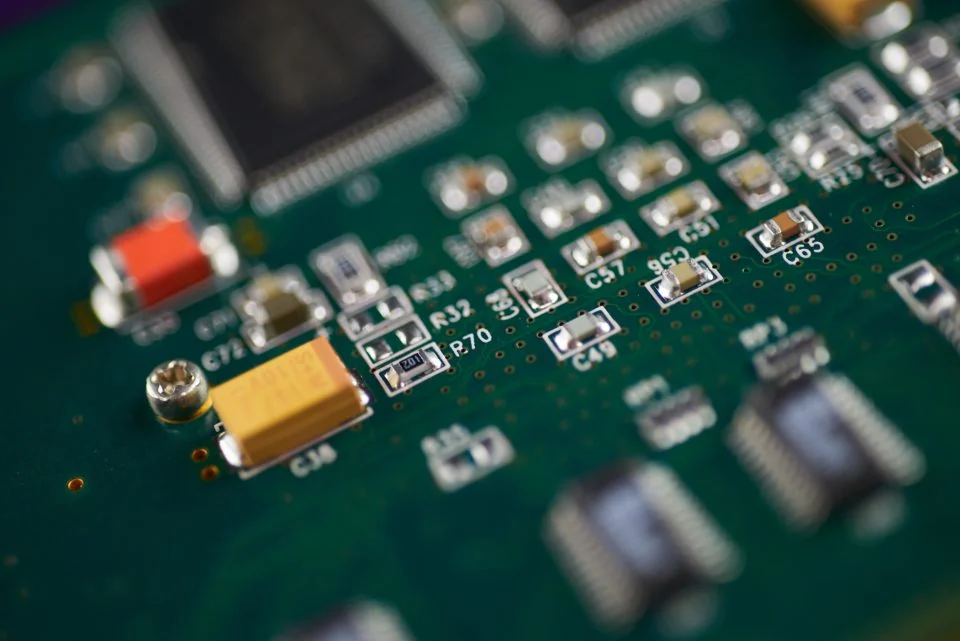
In the electronics/PCBA industry, solder paste printing quality inspection is of great importance. WeLinkirt's AI vision technology brings new solutions to this process.
User scenario: A leading electronics/PCBA manufacturer's solder paste printing production line, which mainly produces printed circuit boards (PCBs) for various electronic products. The inspection objects are PCBs after solder paste printing, including key parameters such as the thickness, area, shape, and position of the solder paste. These parameters directly affect the quality of subsequent soldering and the performance of electronic products.
Pain points: Traditional solder paste printing quality inspection methods mainly rely on manual inspection and rule-based machine vision systems. Manual inspection is inefficient and prone to missed detections and misjudgments, and the labor cost is also high. Rule-based machine vision systems need to write complex rule manuals according to different products and inspection requirements. The changeover time is long, generally taking several hours or even days, and it is difficult to adapt to the rapidly changing production requirements. In addition, the rule manuals are difficult to cover all possible situations, resulting in a missed detection rate of about 2% and a false alarm rate as high as 15%. This not only increases the re-inspection volume but also affects the production efficiency and product quality. At the same time, with the continuous improvement of the industry's requirements for product quality and compliance, traditional inspection methods are difficult to meet the needs of predictive quality control.
Technical Principle
WeLinkirt's AI vision technology uses advanced deep learning algorithms and self-developed 3D cameras. The deep learning algorithm is trained with a large amount of sample data and can automatically learn the features and patterns of solder paste printing, thereby achieving accurate judgment of solder paste printing quality. The self-developed 3D camera can obtain the three-dimensional morphology information of the solder paste and achieve high-precision detection at the micron level. The principle is that the deep learning model has powerful feature extraction and classification capabilities, which can extract key features from complex images and classify and judge based on these features. The 3D camera can provide more abundant information to make up for the deficiencies of 2D images and can more accurately detect problems such as hidden solder joints and coplanarity.
- The deep learning algorithm can quickly adapt to new products and inspection requirements through positive sample/few sample learning (1 - 20 good samples), reducing the training time and cost.
- The semantic false alarm filtering function can filter false alarms according to the semantic information of the image, improving the accuracy of detection.
- The three-dimensional morphology reconstruction technology can reconstruct the information obtained by the 3D camera and visually display the three-dimensional structure of the solder paste, which is convenient for inspectors to analyze and judge.
WeLinkirt's Solution and Products
WeLinkirt provides the DaoAI ACI (AI-AOI) software system and the DaoAI 2D / 3D ACI equipment. The DaoAI ACI OS has the feature recognition ability of the visual basic model. One good product can be automatically programmed with 0 code in 5 minutes. The APDT positive sample/few sample learning function can quickly adapt to new products and inspection requirements. The semantic false alarm filtering function can effectively reduce the false alarm rate. The DaoAI 2D / 3D ACI equipment uses self-developed 3D cameras and three-dimensional morphology reconstruction technology, which can detect hidden solder joints, coplanarity, and micron-level morphology. In the implementation process, first, data is collected and analyzed from the production line. Then, the DaoAI ACI OS is used for model training and optimization. Finally, the trained model is deployed on the DaoAI 2D / 3D ACI equipment for real-time detection.
AI vision technology transforms solder paste printing quality inspection from passive detection to predictive quality control, improving production efficiency and product quality.
Quantitative results: By using WeLinkirt's AI vision solution, the detection rate of the manufacturer's solder paste printing quality inspection has increased to 98.5%, and the missed detection rate has been reduced to <1.5%. The false alarm rate has been reduced by 70%, from the original 15% to 4.5%. The changeover time has been shortened from several hours or even days to 5 minutes, greatly improving the production efficiency.
FAQ
What pain points in solder paste printing quality inspection in the electronics/PCBA industry can Microchain DaoAI's AI vision technology solve?
Microchain DaoAI's AI vision technology can address the pain points of traditional inspection methods. These include low efficiency, frequent missed and false detections, and high labor costs in manual inspection. Rule-based machine vision systems have long change-over times, high missed and false detection rates, and it can also meet the demand for predictive quality control.
What is the principle of Microchain DaoAI's AI vision technology?
It uses advanced deep-learning algorithms and self-developed 3D cameras. The deep-learning algorithms are trained with a large number of samples to automatically learn features and patterns. The 3D cameras can obtain three-dimensional morphology information for high-precision detection and have functions like positive-sample learning.
What solutions and products does Microchain DaoAI offer?
Microchain DaoAI offers the DaoAI ACI OS and DaoAI 2D / 3D ACI equipment. The software can achieve zero-code automatic programming and reduce false-alarm rates. The equipment can detect hidden solder joints. The solutions are implemented through data collection and other steps.
Full solution for this scenario: the full inspection solution for Electronics / PCBA
This article was generated by AI. Customer cases are simulated scenarios based on real product capabilities and figures are illustrative; see product pages for official benchmarks.