
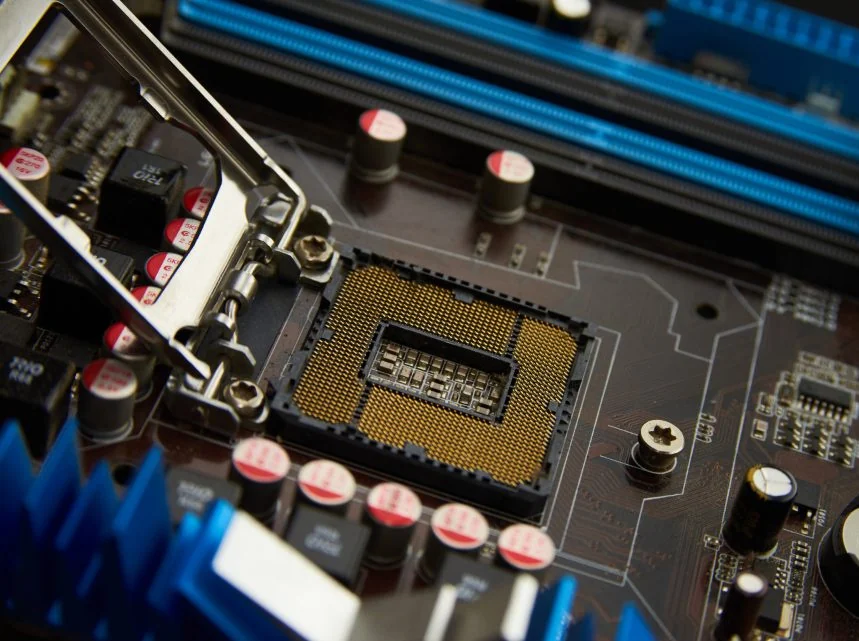
The electronic/PCBA industry has extremely high requirements for product quality. Component offset and tombstoning problems are key factors affecting product quality. WeLinkirt has successfully solved this industry problem through advanced AI visual technology, bringing significant benefits to enterprises.
In the era of rapid technological development, the electronic/PCBA industry, as an important foundation of the technology industry, directly affects the product quality and performance of many downstream industries. The trend of miniaturization and integration of electronic devices is intensifying, which puts forward higher requirements for the installation accuracy and stability of components on circuit boards. Against this industry background, the SMT production line of a leading electronic/PCBA manufacturer is responsible for the production of various circuit board products. These circuit boards are widely used in consumer electronic products such as smartphones, tablets, and smart wearables, as well as in automotive electronics, industrial control, and other fields. The main inspection objects on the production line are surface-mount components on the circuit boards, including resistors and capacitors. Among them, component offset and tombstoning, two common defects, have become key factors affecting product quality. Component offset may lead to unstable circuit connections and affect the performance of electronic products; tombstoning may directly cause circuit breakage, making the product unable to work properly.
Pain Points: Why It's Difficult
Traditional inspection methods face many challenges when dealing with component offset and tombstoning problems. From a quantitative perspective, the miss-detection rate of component offset and tombstoning is as high as 2.5%. This means that for every 1000 circuit boards produced, 25 may have potential quality problems and flow into the market. These defective products in the market may bring huge after-sales costs to the enterprise, including repair and replacement expenses, and also cause serious damage to the brand reputation. At the same time, the false-alarm rate reaches 15%. A large number of false alarms not only increase the workload of manual re-inspection, as inspectors need to spend a lot of time and energy to verify each alarm, but also reduce the production efficiency of the production line, slowing down the operation speed of the production line and affecting the overall production capacity. Moreover, when changing the production line model, the traditional programming method takes more than 30 minutes, which seriously affects the production flexibility of enterprises that need to frequently change product models and cannot respond to the diverse market demands in a timely manner.
The root cause of these difficult-to - solve problems lies in the limitations of traditional detection technologies. Traditional detection mainly relies on manual visual inspection and machine vision inspection based on fixed rules. Manual visual inspection is affected by subjective factors. Fatigue and inattention of inspectors can lead to miss-detection and false-detection. In addition, manual detection is slow and cannot meet the needs of large-scale production. Machine vision inspection based on fixed rules lacks flexibility. For different types and specifications of components, complex detection programs need to be pre-written. When the characteristics of components change, reprogramming is required, which not only consumes time and manpower but also is prone to program errors. In addition, traditional detection technologies often have difficulty accurately detecting some minor component offsets and hidden tombstoning problems.
Technical Principle
The advanced AI algorithm and self-developed 3D camera technology adopted by WeLinkirt provide an effective means to solve the problems of component offset and tombstoning. The AI algorithm can accurately identify the normal features and positions of components through learning a large number of good-quality samples. It has a powerful feature-learning ability, which can automatically extract features such as the color, shape, and texture of components and establish corresponding feature models. When a component is detected, the system compares the actual features of the component with the learned normal features and judges whether the component has defects by calculating the similarity. For component offset, the system calculates the deviation value between the actual position and the standard position of the component. When the deviation exceeds the set threshold, it is judged as an offset defect. For tombstoning problems, according to the height information of the component obtained by the 3D camera, if the height of the component increases abnormally, it is judged as a tombstoning defect.
The self-developed 3D camera can realize three-dimensional shape reconstruction and obtain the accurate height and shape information of components. Compared with traditional 2D cameras, 3D cameras can provide more abundant information, making it possible to clearly detect hidden defects. Through high-precision imaging technology, it presents the three-dimensional structure of components in the form of a digital model, and the system can conduct detailed analysis and processing on this model. This detection method based on feature comparison and 3D information greatly improves the detection accuracy. Compared with traditional methods, the AI algorithm has stronger adaptability and can meet the detection needs of different types of components without writing complex detection programs for each type of component separately. The high-precision imaging of the 3D camera makes up for the deficiency of traditional detection technologies in obtaining three-dimensional information of components, making the detection more comprehensive and accurate.
Typical Application Scenarios
- Detection of surface-mount resistor offset: The installation position of surface-mount resistors on the circuit board is very critical. A slight offset can affect the circuit performance. During detection, the system first identifies the normal features of the resistor through the AI algorithm, and then uses the 3D camera to obtain the actual position and height information of the resistor. The actual position is compared with the standard position to calculate the deviation value. The difficulty lies in the small size and unobvious features of the resistor, which requires high-precision imaging and accurate feature-extraction algorithms.
- Detection of surface-mount capacitor tombstoning: Tombstoning of surface-mount capacitors is a common problem, which can cause circuit breakage. During detection, the 3D camera obtains the height information of the capacitor and compares it with the normal height. If the height increases abnormally, it is judged as a tombstoning defect. The difficulty lies in the fact that the height change of the capacitor may be very small, which requires the 3D camera to have high-precision measurement ability.
- Detection of multi-pin component offset: For multi-pin components such as integrated circuit chips, the offset of pins will affect the connection with the circuit board. During detection, the system identifies the normal position and shape of each pin through the AI algorithm, and the 3D camera obtains the actual pin information. Each pin's actual position is compared with the standard position to determine whether there is an offset. The difficulty lies in the large number of pins and high detection accuracy requirements, which require processing a large amount of data.
- Detection of special-shaped components: Special-shaped components have irregular shapes, and it is difficult for traditional detection methods to accurately detect them. WeLinkirt learns the features of special-shaped components through the AI algorithm and uses the 3D camera to obtain their three-dimensional shape information. During detection, the actual features obtained are compared with the learned features to determine whether there are defects. The difficulty lies in the complex features of special-shaped components, which requires the AI algorithm to have a strong learning ability.
- Detection of hidden solder joints: Some solder joints on the circuit board may be blocked by other components, and it is difficult for traditional detection technologies to detect them. WeLinkirt uses the three-dimensional shape reconstruction function of the 3D camera to obtain the depth information of the solder joints. By analyzing the three-dimensional shape and height of the solder joints, it determines whether there are defects in the solder joints. The difficulty lies in the difficulty of obtaining information about hidden solder joints, which requires the 3D camera to have good penetration ability and high-precision imaging effects.
Implementation Case
A large-scale electronic/PCBA manufacturing enterprise with multiple SMT production lines has an annual production volume of millions of circuit boards. The enterprise has been troubled by component offset and tombstoning problems, and traditional detection methods cannot meet its requirements for product quality and production efficiency. After learning about WeLinkirt's solution, it decided to introduce the DaoAI ACI (AI-AOI) software system and DaoAI 2D / 3D ACI equipment. The implementation process was relatively smooth. The technical team of WeLinkirt first conducted a detailed investigation and analysis of the enterprise's production line and customized the software system according to the enterprise's actual needs. Then the equipment was installed in a suitable position on the SMT production line and debugged and optimized. Before the implementation, the miss-detection rate of component offset and tombstoning in the enterprise was 2.5%, the false-alarm rate was 15%, and the production line model-changing time was more than 30 minutes. After the implementation, the detection rate of component offset and tombstoning increased to 97.5%, the miss-detection rate decreased to <2.5%, the false-alarm rate decreased by 60%, and the production line model-changing time was shortened to 5 minutes.
WeLinkirt's AI visual technology has brought new breakthroughs to the quality inspection of the electronic/PCBA industry.
WeLinkirt's Solutions and Products
WeLinkirt provides the DaoAI ACI OS and DaoAI 2D / 3D ACI equipment. The DaoAI ACI OS has the feature-recognition ability of a visual basic model. With only 1-20 good-quality samples, it can achieve 0-code automatic programming within 5 minutes. This greatly reduces the difficulty and time cost of programming, enabling enterprises to quickly adapt to the detection needs of different products. Moreover, it uses APDT positive-sample/few-sample learning and semantic false-alarm filtering technology to effectively reduce false alarms. The APDT positive-sample/few-sample learning technology can quickly and accurately learn the normal features of components with a small number of samples. The semantic false-alarm filtering technology can filter false alarms according to the semantic information of components, improving the detection accuracy.
The DaoAI 2D / 3D ACI equipment is equipped with a self-developed 3D camera, which can perform three-dimensional shape reconstruction and detect hidden solder joints, coplanarity, and micron-level shapes. It has extremely high accuracy in detecting component offset and tombstoning defects. In the implementation process, the equipment is installed in a suitable position on the SMT production line, and the software system interacts with the equipment to process the detection data in real-time, achieving efficient and accurate detection. The combination of the high-precision imaging of the equipment and the intelligent analysis of the software system provides enterprises with a comprehensive quality inspection solution.
Quantitative Results
After adopting WeLinkirt's solution, the detection rate of component offset and tombstoning increased to 97.5%, and the miss-detection rate decreased to <2.5%, effectively preventing a large number of products with potential quality problems from flowing into the market. This not only reduces the enterprise's after-sales costs but also enhances the brand reputation. The false-alarm rate decreased by 60%, greatly reducing the workload of manual re-inspection, allowing inspectors to focus more on truly problematic products and improving the production efficiency of the production line. The production line model-changing time was shortened to 5 minutes, improving the production flexibility and response speed, enabling the enterprise to adapt to market demand changes more quickly and launch new products.
FAQ
What problems in the electronic/PCBA industry can WeLinkirt solve?
With advanced AI visual technology, WeLinkirt can solve the problems of component offset and tombstoning in the electronic/PCBA industry. It can improve the detection rate of component offset and tombstoning, reduce the false-alarm rate, and shorten the production line model-changing time, ensuring product quality and production efficiency, and reducing the enterprise's after-sales costs and brand reputation losses.
What is the principle of WeLinkirt's detection of component offset and tombstoning?
WeLinkirt uses advanced AI algorithms and self-developed 3D camera technology. The AI algorithm learns the normal features of components and establishes a feature model through a large number of good-quality samples. The 3D camera obtains accurate height information of components and realizes three-dimensional shape reconstruction. The system compares the actual features of components with the normal features to determine whether there are offset or tombstoning defects.
What solutions and products does WeLinkirt provide?
WeLinkirt provides the DaoAI ACI OS and DaoAI 2D / 3D ACI equipment. The software system has feature-recognition ability, can achieve 0-code automatic programming, and reduce false alarms. The equipment is equipped with a self-developed 3D camera, which can perform three-dimensional shape reconstruction and has high detection accuracy, capable of detecting various defects.
Full solution for this scenario: the full inspection solution for Electronics / PCBA · PCBA Component Shift & Tombstoning Inspection
This article was generated by AI. Customer cases are simulated scenarios based on real product capabilities and figures are illustrative; see product pages for official benchmarks.