
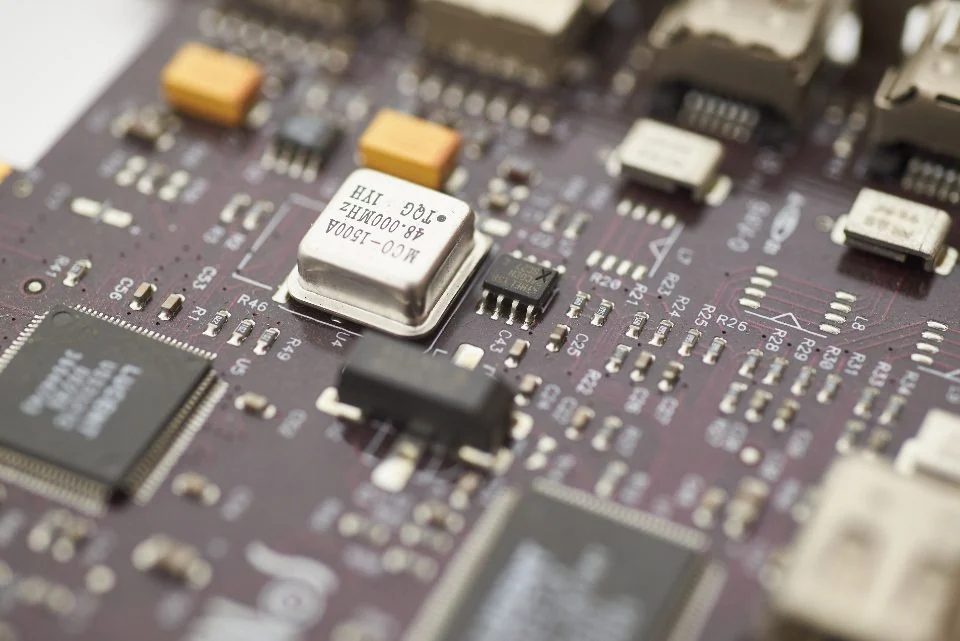
In the electronics manufacturing industry, the quality inspection of PCBA assembly is crucial. However, traditional methods have many deficiencies. WeLinkirt's AI vision inspection solution emerges as the times require, bringing new changes to the industry.
In the electronics manufacturing industry, PCBA (Printed Circuit Board Assembly) assembly is a crucial step, and its quality directly affects the performance and reliability of electronic products. The PCBA assembly line of a leading electronics/PCBA manufacturer mainly produces printed circuit board assemblies for various electronic products, covering multiple fields such as mobile phones, computers, and smart home devices. This production line needs to process a large number of PCBA boards every day, and strictly inspect whether there are missing components on the electronic components and whether the connectors are installed correctly, including the direction and position of the connectors. However, traditional inspection methods have gradually exposed many problems when dealing with these inspection tasks, and it is difficult to meet the growing production needs and quality requirements.
Pain Points: Why is it Difficult?
Traditional PCBA inspection methods have obvious pain points in multiple dimensions. In terms of missed inspections, due to the limitations of manual inspection, long-term work can easily cause inspectors to become fatigued, and it is difficult to maintain concentration for a long time. This leads to a missed inspection rate of about 3% for missing components and incorrect connector installation during the inspection process. This means that for every 100 products produced, about 3 may have quality problems and flow into the market, bringing huge hidden dangers to the product's brand image and after-sales service. Analyzing from the root cause, manual inspection mainly relies on human vision and experience. Human vision will have fatigue and errors after long-term work, and the experience and judgment standards of different inspectors also vary, which makes missed inspections inevitable.
The false alarm rate is also a major problem of traditional inspection methods, about 20%. A large number of false alarms disperse limited re-inspection resources, increasing the workload and cost of manual re-inspection. Production line workers need to spend a lot of time verifying these false alarm information, resulting in low production efficiency. The main reason for the high false alarm rate is that the algorithms of traditional inspection equipment are not intelligent enough to accurately distinguish real defects from normal product features. When there are certain fluctuations in the appearance or size of the product, traditional equipment is prone to misjudging it as a defect, resulting in a large number of false alarms.
In addition, the production line change-over is also a bottleneck for traditional inspection methods. Since different types of PCBA boards have differences in the layout of electronic components, the types and positions of connectors, traditional inspection equipment needs to carry out complex programming and debugging to adapt to new products. This process takes about 30 minutes, seriously affecting production efficiency. The root cause is that the programming method of traditional inspection equipment is relatively complex, requiring professional technicians to operate, and the equipment has poor flexibility and is difficult to quickly adapt to the inspection needs of different products.
Technical Principle
WeLinkirt's AI vision inspection solution is based on advanced algorithms and imaging technologies, and has significant advantages compared with traditional methods. In terms of algorithms, the feature recognition technology of the visual foundation model is adopted, which can accurately identify the features of electronic components and connectors on the PCBA. Through APDT positive sample/few-sample learning, only 1-20 good samples are needed to let the model learn the correct features of components and connectors. This greatly reduces the workload of sample collection and improves the efficiency of model training. In contrast, traditional methods often require a large number of samples for training, which not only consumes time and energy but also has poor model adaptability.
In terms of imaging, the self-developed 3D camera of the DaoAI 2D/3D ACI (AI-AOI) device combined with the three-dimensional shape reconstruction technology can obtain the three-dimensional information of the PCBA. This can not only detect surface components but also hidden solder joints, coplanarity, and micron-level topography, and can also conduct a more comprehensive inspection of the installation of connectors. Traditional inspection equipment usually can only obtain two-dimensional images of products and is difficult to detect defects hidden under or inside components. WeLinkirt's 3D imaging technology analyzes the PCBA from multiple dimensions and uses deep learning algorithms to continuously optimize the model, improving the accuracy and reliability of detection. Deep learning algorithms can automatically learn and extract product features. As the detection data accumulates, the performance of the model will also be continuously improved to adapt to different production environments and product types.
Typical Application Scenarios
- Missing component detection: Use the feature recognition technology of the visual foundation model to accurately identify the position of each component on the PCBA. The difficulty lies in that the component size may be small and the layout is relatively dense, requiring high-precision image acquisition and recognition algorithms.
- Connector direction detection: Use the 3D camera to obtain the three-dimensional information of the connector and judge whether its direction is correct. The difficulty lies in that the appearance of connectors may be relatively similar, and their features need to be accurately extracted for differentiation.
- Hidden solder joint detection: Use the 3D camera and three-dimensional shape reconstruction technology to detect whether there are defects in the solder joints hidden under the components. The difficulty lies in that the position of the solder joints is relatively hidden, requiring high-resolution imaging and analysis capabilities.
- Coplanarity detection: Analyze the three-dimensional topography of the PCBA surface to detect whether the coplanarity of the components meets the requirements. The difficulty lies in accurately measuring micron-level height differences.
- Connector position detection: Analyze the position of the connector and the relative position of the surrounding components to judge whether its installation position is correct. The difficulty lies in considering the design differences of different products.
Implementation Case
A large-scale electronics manufacturing enterprise has a large-scale PCBA assembly line and needs to process thousands of PCBA boards every day. Before introducing WeLinkirt's AI vision inspection solution, the enterprise used traditional manual and equipment inspection methods and faced problems such as high missed inspection rates, high false alarm rates, and long production line change-over times. During the implementation process, the WeLinkirt team deployed the DaoAI ACI OS and the DaoAI 2D/3D ACI device to the customer's production line. Through SDK/API/Docker and other methods, 100% local private deployment was realized to ensure that the data did not leave the factory and guarantee the customer's data security. At the same time, systematic training was provided to the production line workers to enable them to operate the new inspection equipment and system proficiently.
WeLinkirt's AI vision inspection solution has brought significant benefits to the enterprise.
Before the implementation, the missed inspection rate of missing components and incorrect connector installation of the enterprise was about 3%, the false alarm rate was about 20%, and the production line change-over time was about 30 minutes. After the implementation, the detection rate of missing components and incorrect connector installation increased to 98%, the missed inspection rate decreased to <2%, the false alarm rate decreased by 60%, and the production line change-over time was shortened from the original 30 minutes to 5 minutes. This not only greatly improved product quality, reduced the workload of manual re-inspection, but also significantly improved production efficiency, bringing considerable economic benefits to the enterprise.
WeLinkirt Solution and Products
WeLinkirt provides the DaoAI ACI OS and the DaoAI 2D/3D ACI device. The DaoAI ACI OS has strong feature recognition capabilities. It only takes 5 minutes to complete zero-code automatic programming for a good product, greatly shortening the production line change-over time. At the same time, the system also has a semantic false alarm filtering function, which can effectively reduce the false alarm rate. The self-developed 3D camera and three-dimensional shape reconstruction technology of the DaoAI 2D/3D ACI device can realize all-around inspection of PCBA, including the inspection of hidden solder joints and micron-level topography. In terms of implementation, through SDK/API/Docker and other methods, 100% local private deployment is supported to ensure that the data does not leave the factory and guarantee the customer's data security.
In terms of quantitative results, after adopting WeLinkirt's solution, the detection rate of missing components and incorrect connector installation increased to 98%, and the missed inspection rate decreased to <2%. The false alarm rate decreased by 60%, greatly reducing the workload of manual re-inspection. The production line change-over time was shortened from the original 30 minutes to 5 minutes, significantly improving production efficiency.
FAQ
What problems in PCBA assembly can WeLinkirt's AI vision inspection solution solve?
WeLinkirt's solution can solve the problems of missing components and incorrect connector installation in PCBA assembly. It can achieve a 98% detection rate, a <2% missed inspection rate, and reduce the false alarm rate by 60%. It can also shorten the production line change-over time from 30 minutes to 5 minutes and ensure data security.
What pain points does the traditional PCBA inspection method have?
The traditional inspection method has a missed inspection rate of about 3%, which may cause some products with quality problems to flow into the market. The false alarm rate is about 20%, which disperses re-inspection resources and increases the cost of manual re-inspection. When changing the production line, the programming and debugging time is long, about 30 minutes, which affects production efficiency.
What guarantees does WeLinkirt's solution and products have in terms of data security?
WeLinkirt supports 100% local private deployment through SDK/API/Docker and other methods to ensure that the data does not leave the factory, effectively guaranteeing the customer's data security. Customers don't need to worry about data leakage during use.
Full solution for this scenario: the full inspection solution for Electronics / PCBA
This article was generated by AI. Customer cases are simulated scenarios based on real product capabilities and figures are illustrative; see product pages for official benchmarks.