
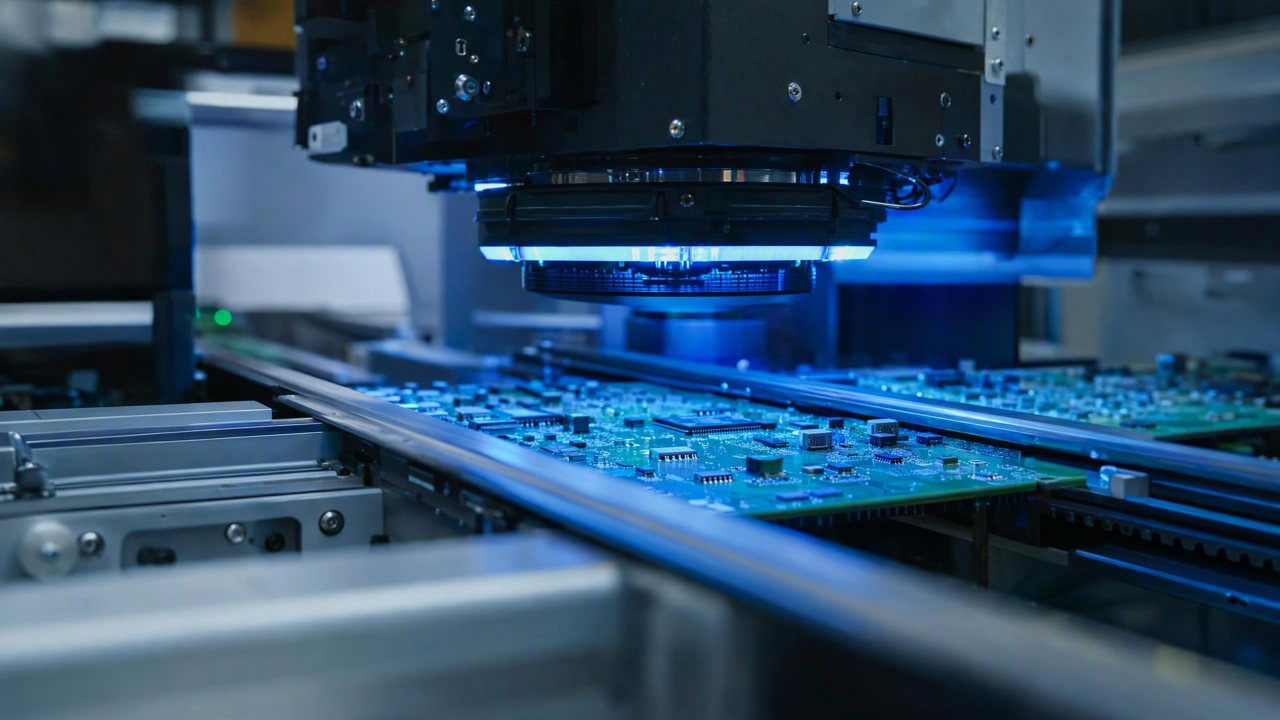
WeLinkirt's DaoAI 2D AI AOI equipment (high-resolution 2D imaging + deep learning secondary judgment, for surface/print/OCR/assembly defects, high-speed inline full inspection, micron-level, semantic false positive filtering) integrated intelligent quality traceability and data closure, reducing rework rates due to misjudgment from 1.8% to 1.1% in SMT solder joint inspection for a mid-sized electronics manufacturer. In the electronics / PCBA manufacturing sector, SMT solder joint quality is a critical factor affecting product reliability. As electronic products trend towards miniaturization and higher density, solder joint sizes on PCBA continually shrink, and density increases, posing higher demands on the precision and efficiency of solder joint inspection. Especially common defects like cold solder joints, bridging, and insufficient solder, if not detected promptly and traced effectively, will directly lead to product functional failure and even safety hazards.
WeLinkirt's DaoAI 2D AI AOI equipment (high-resolution 2D imaging + deep learning secondary judgment, for surface/print/OCR/assembly defects, high-speed inline full inspection, micron-level, semantic false positive filtering) integrated intelligent quality traceability and data closure, reducing rework rates due to misjudgment from 1.8% to 1.1% in SMT solder joint inspection for a mid-sized electronics manufacturer. In the electronics / PCBA manufacturing sector, SMT solder joint quality is a critical factor affecting product reliability. As electronic products trend towards miniaturization and higher density, solder joint sizes on PCBA continually shrink, and density increases, posing higher demands on the precision and efficiency of solder joint inspection. Especially common defects like cold solder joints, bridging, and insufficient solder, if not detected promptly and traced effectively, will directly lead to product functional failure and even safety hazards. In a typical PCBA production workshop, the reflow soldering process after SMT placement is a critical step in solder joint formation. Subsequent Automatic Optical Inspection (AOI) serves as the first quality gate, aiming to eliminate early defective products and prevent defects from flowing into subsequent processes, causing greater losses. This case focuses on SMT solder joint inspection, introducing WeLinkirt's DaoAI 2D AI AOI equipment to address deficiencies in quality traceability and data closure within traditional inspection solutions, thereby enhancing overall production quality management.
Pain Points: Why This Hurdle Was Difficult to Overcome
In SMT solder joint inspection, traditional AOI or manual visual inspection faces multiple challenges. Firstly, a [high false positive rate] has long plagued the industry. Traditional rule-based AOI systems, unable to understand semantic information in images, are prone to misjudging subtle variations in solder joint appearance, environmental lighting interference, or differences in component luster. Statistics from a mid-sized electronics manufacturer showed that traditional AOI's false positive rate once reached 8-12%, leading to a large number of good products being mistakenly identified as defective, requiring manual secondary re-inspection, severely consuming human resources and time, and slowing down production line takt time. Secondly, [difficulty in quality traceability] is another core pain point. When defects are found, traditional solutions often only pinpoint the defective product but struggle to quickly and accurately trace the specific process, equipment parameters, or even batch raw materials that caused the defect. This lack of traceability capability makes defect analysis and process improvement slow and inefficient, failing to form an effective quality feedback loop. Finally, [low data utilization] also restricts quality improvement. Detection data generated by traditional AOI is often discrete and unstructured, making deep analysis and mining difficult, and unable to provide strong support for process optimization. This is particularly prominent in the current context of Industry 4.0, which emphasizes intelligence and data-driven approaches. Similar to the AI large model-driven complex defect detection and quality traceability system construction in automotive seat production, there is also a clear need in the electronics manufacturing industry for refined, traceable quality management.
The root causes of these difficulties are multifaceted. From a process perspective, the complexity of solder joint morphology (e.g., fillet shape, wetting angle, solder volume) and minute morphological differences make it challenging for traditional image processing to accurately distinguish between good and defective products. In terms of imaging, high reflectivity of PCBA surfaces, shadows, and varying optical properties of different component materials pose challenges for stable and high-quality image acquisition. Regarding takt time, high-speed SMT lines require inspection systems to complete full board inspection and judgment within extremely short periods, further compressing the processing window for traditional algorithms. Simultaneously, in traditional solutions lacking deep learning capabilities, the judgment thresholds for defects like cold solder joints, bridging, and insufficient solder often require repeated manual tuning and struggle to adapt to minor product and process fluctuations, leading to poor robustness.
Technical Principles
WeLinkirt's DaoAI 2D AI AOI equipment effectively addresses the aforementioned pain points through its unique technical principles. The core of this equipment lies in the tight integration of [high-resolution 2D imaging] and [deep learning secondary judgment]. Firstly, the high-resolution 2D imaging system employs customized industrial cameras and light source modules, capable of capturing micron-level solder joint details, ensuring the quality of image input. For defects like solder joints, which have complex surface textures and morphologies, high-quality raw images are fundamental for accurate deep learning model judgment. Secondly, and most crucially, is its embedded WeLinkirt DaoAI AI AOI software system. This system utilizes advanced deep learning algorithms, particularly feature recognition capabilities based on visual foundation models, to perform secondary judgment on the acquired high-resolution images. Unlike traditional AOI, which judges based on preset rules (e.g., area, color, shape thresholds), the deep learning model of DaoAI 2D AI AOI can autonomously learn normal and abnormal features of solder joints from vast amounts of data, understanding the [semantic information] of the image. This means it can distinguish between lighting variations and genuine defects, significantly reducing the false positive rate. For instance, for cold solder joints and insufficient solder, the model can identify poor wetting characteristics between the solder joint and pad; for bridging, it can precisely identify non-existent solder bridges. Furthermore, the system supports APDT (Automatic Parameter-free Defect Training) positive/few-shot learning, requiring only 1–20 good samples to complete 0-code automatic programming within 5 minutes, rapidly adapting to new products or process changes, greatly improving changeover efficiency. In actual production, WeLinkirt's DaoAI 2D AI AOI can reduce the false positive rate to less than 1/5 of traditional AOI, significantly easing the burden of manual re-inspection. Production line data shows that manual re-inspection hours were reduced by over 60%.
Compared to traditional AOI methods, the advantage of WeLinkirt's DaoAI 2D AI AOI lies in its [semantic false positive filtering] capability. Traditional AOI cannot understand 'this is a solder joint' or 'this is a scratch'; it can only detect pixel-level brightness or color anomalies. When encountering non-defect interferences such as component edge reflections, slight oxidation discoloration of pads, or residual flux on the board surface, traditional AOI often misidentifies them as defects. The deep learning model of DaoAI 2D AI AOI, however, can differentiate these visual 'noises' from true solder joint defects. For example, it can accurately identify insufficient solder caused by poor solder paste printing, rather than just a shadow caused by insufficient solder volume. This intelligent judgment mechanism is key to achieving high precision and low false positives. Compared to manual visual inspection, WeLinkirt's DaoAI 2D AI AOI possesses 100% inline full inspection capability, with detection consistency far superior to human eyes, avoiding missed detections and misjudgments due to eye fatigue and subjective judgment, while also supporting high-speed production line takt times, ensuring production efficiency is not affected.
Typical Application Scenarios
- **SMT Solder Joint Quality Inspection (Cold Solder, Bridging, Insufficient Solder)**: WeLinkirt's DaoAI 2D AI AOI captures solder joint morphology through high-resolution imaging, and its deep learning model identifies poor wetting in cold solder joints, abnormal connections in bridging, and insufficient solder volume. The challenge lies in the variable optical properties of solder joints and subtle morphological differences.
- **PCBA Surface Scratches and Foreign Object Detection**: The equipment precisely identifies minute scratches, stains, dust, and other foreign objects on the circuit board surface, ensuring board cleanliness. The challenge is detecting micron-level scratches and distinguishing them from background textures.
- **Component Missing, Offset, and Polarity Reversal Detection**: Comprehensive inspection of mounted components to determine if there are missing components, positional offsets, or incorrect polarity (orientation). The challenge lies in accurate identification in high-density placements and adaptability to different component shapes.
- **Character OCR and Barcode Recognition**: WeLinkirt's DaoAI 2D AI AOI can be used to recognize silkscreen characters, batch numbers, serial codes, and QR codes on PCBAs, verifying information correctness and clarity. The challenge is robust recognition under varying fonts, print quality, and background interference.
- **Pre-judgment of Bottom Defects for BGA/QFN Packages**: While 2D AOI cannot directly inspect BGA bottom solder joints, it can serve as an early warning for potential bottom defects by detecting solder balls at package edges, pad contamination, or defects within the package body itself. The challenge is the correlational identification of indirect defect features.
Implementation Case Study
A mid-sized electronics manufacturer, primarily producing consumer electronics PCBAs, faced long-standing challenges in solder joint inspection on its SMT production line. Prior to introducing WeLinkirt's DaoAI 2D AI AOI equipment, the factory relied heavily on traditional rule-based AOI and extensive manual re-inspection. Production line data showed that the traditional AOI's false positive rate remained stubbornly high, averaging 9.5%, leading to 4-5 inspection personnel being dedicated for 6-8 hours daily for manual re-inspection. This not only increased operational costs but also constrained production capacity. More critically, the lack of an effective quality traceability system meant that once a solder joint-related defect was found in a final product, it took a significant amount of time for batch traceability and problem localization, averaging 2-3 days per trace, severely impacting after-sales response speed and customer satisfaction. After implementing WeLinkirt's DaoAI 2D AI AOI, the situation changed significantly. The system first leveraged its deep learning secondary judgment capability to reduce the SMT solder joint inspection false positive rate from 9.5% to below 1.5%, with an actual average weekly false positive rate of only 1.2% in production. This drastically reduced the need for manual re-inspection; in this case, re-inspection personnel were reduced from 4-5 to 1-2, primarily for spot checks or verification of difficult cases, cutting manual re-inspection hours by approximately 70%. Most importantly, the WeLinkirt DaoAI 2D AI AOI system was deeply integrated with the factory's MES system. Every inspection result, whether good or defective, was tagged with a unique product serial number and inspection image data, uploaded in real-time to the database. When a defect was found, the system could quickly retrieve relevant solder joint inspection images and historical data via the product serial number, achieving [second-level defect traceability]. This allowed the manufacturer to rapidly pinpoint defective batches, analyze defect causes, and provide feedback to SMT engineers for process adjustments, forming a data-driven quality management closed loop. For example, when a continuous occurrence of insufficient solder defects was observed, the WeLinkirt DaoAI 2D AI AOI traceability system quickly enabled engineers to identify that a specific batch of solder paste printing parameters had a slight deviation, allowing for timely adjustments and preventing larger-scale quality issues.
WeLinkirt's DaoAI 2D AI AOI not only improved inspection accuracy but also built a data-driven quality traceability system, making every defect traceable and providing a solid foundation for process optimization.
WeLinkirt Solution and Products
The core solution provided by WeLinkirt to this mid-sized electronics manufacturer was based on its 2D AI AOI equipment, combined with the powerful functionalities of the DaoAI AI AOI software system, to build a comprehensive SMT solder joint quality traceability and data closure system. In terms of equipment deployment, WeLinkirt's DaoAI 2D AI AOI equipment features a modular design, allowing for seamless integration into existing SMT production lines, supporting high-speed inline full inspection. For model building, leveraging the APDT positive sample learning capability of the DaoAI AI AOI software, engineers only needed to provide 10-15 good product images, and the system could automatically train a high-precision solder joint defect detection model within minutes. This '0-code' programming capability significantly reduced the difficulty of model deployment and changeover, making it quickly usable even for non-professional production line personnel. The WeLinkirt DaoAI 2D AI AOI system also possesses a powerful [semantic false positive filtering] function, using deep learning for secondary judgment of inspection results, keeping the false positive rate at an extremely low level. Furthermore, as part of WeLinkirt's overall solution, the system supports 100% local private deployment, ensuring that customer production data remains within the factory, meeting strict requirements for data security and privacy. By integrating with the customer's MES system via API interfaces, WeLinkirt's DaoAI 2D AI AOI achieved real-time upload and association of inspection data, defect images, and product serial numbers, providing a data foundation for subsequent quality traceability and analysis. This data closure mechanism ensures that every inspection result is transformed into traceable quality information, supporting continuous process optimization.
The implementation of WeLinkirt's DaoAI 2D AI AOI equipment not only significantly improved the precision and efficiency of SMT solder joint inspection but, more importantly, established a complete quality management closed loop for this electronics manufacturer, from detection to traceability, from analysis to improvement. In this case, WeLinkirt's DaoAI 2D AI AOI successfully [reduced solder joint defect escape rate to <0.4%] and simultaneously [reduced the overall rework rate due to misjudgment by 35%], greatly enhancing product quality stability. Through real-time data feedback, production line engineers can quickly adjust reflow soldering temperature profiles, solder paste printing parameters, etc., based on inspection results, achieving lean manufacturing. This data-driven quality management model not only reduced production costs and scrap rates but also significantly enhanced the customer's brand reputation and market competitiveness. WeLinkirt will continue to leverage its advanced AI vision technology to assist more manufacturing enterprises in achieving intelligent and digital quality transformation.
FAQ
How does WeLinkirt's DaoAI 2D AI AOI equipment achieve quality traceability for SMT solder joint defects?
WeLinkirt's DaoAI 2D AI AOI equipment links high-resolution image inspection results to unique product serial numbers and uploads them in real-time to MES or databases. When a defect is found, the system can quickly retrieve historical inspection data and images based on the serial number, enabling second-level defect traceability to support root cause analysis.
What advantages does WeLinkirt's DaoAI 2D AI AOI equipment offer in false positive control compared to traditional AOI?
WeLinkirt's DaoAI 2D AI AOI utilizes deep learning for secondary judgment and semantic false positive filtering. Unlike traditional rule-based AOI, it understands image semantics, distinguishing real defects from non-defect interferences like shadows or reflections, thus significantly reducing the false positive rate to less than 1/5 of traditional AOI.
What is the budget required to deploy WeLinkirt's DaoAI 2D AI AOI equipment, and how is data security ensured?
The budget for WeLinkirt's DaoAI 2D AI AOI equipment is influenced by configuration and integration complexity; please contact our sales team for a customized quote. To ensure data security, the equipment supports 100% local private deployment, guaranteeing that all production data remains on-site and strictly adheres to corporate data security policies.
Full solution for this scenario: 2D AI AOI Equipment industry solutions
This article was generated by AI. Customer cases are simulated scenarios based on real product capabilities and figures are illustrative; see product pages for official benchmarks.