
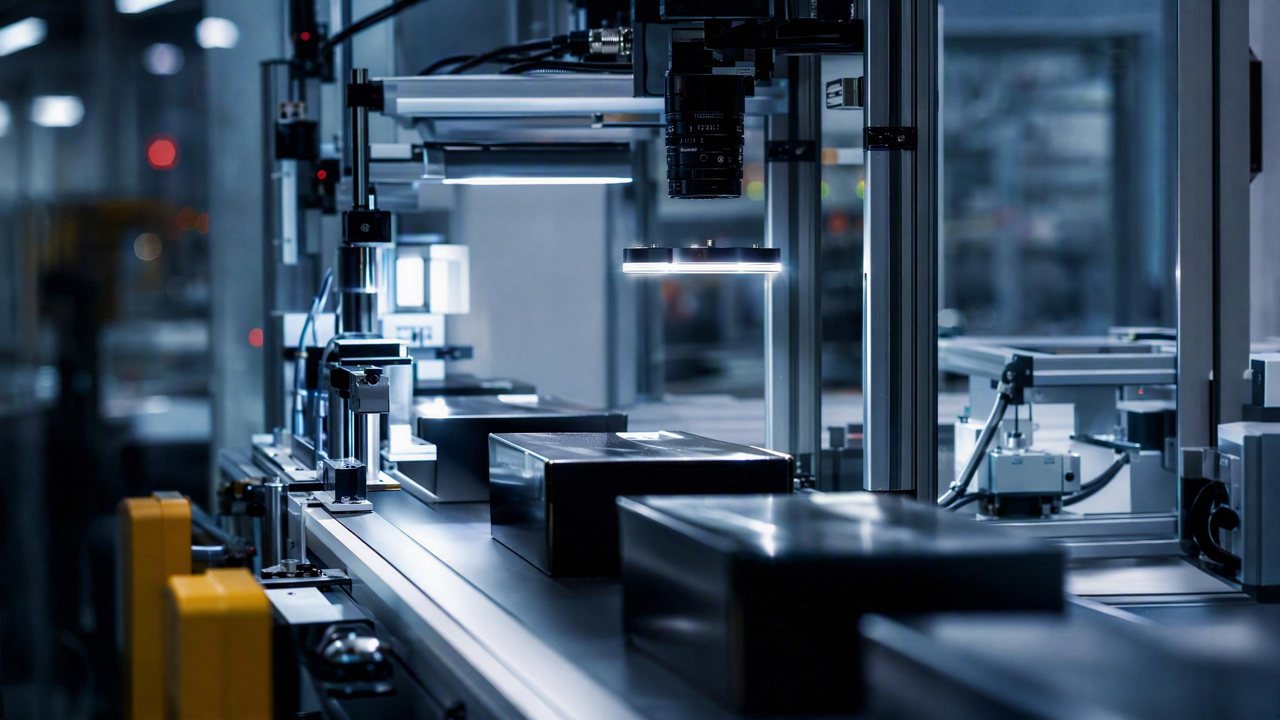
DaoAI 2D AI AOI equipment (high-resolution 2D imaging + deep learning secondary judgment, targeting planar defects such as surface/printing/character OCR/assembly omissions, high-speed online full inspection, micron-level, semantic false positive filtering) significantly reduced the omission rate of consumer product body silkscreen printing defects from a typical 3-5% for traditional manual inspection to below 0.4%, thereby greatly improving product quality and production line efficiency.
In consumer goods manufacturing, the brand logo, model information, and decorative silkscreen printing on product bodies are the first touchpoints for consumers to perceive product quality. These printed contents not only embody brand image but also serve as crucial identifiers for product functionality and compliance. However, ensuring flawless silkscreen printing on every product in mass production presents significant challenges. Traditionally, such planar defect detection heavily relies on manual visual inspection, which is inefficient and highly susceptible to subjective factors in high-tempo, large-volume production environments, leading to persistently high omission rates. DaoAI 2D AI AOI equipment was developed precisely to address this core pain point. By combining high-resolution 2D imaging with advanced deep learning secondary judgment, it has achieved a qualitative leap in detecting silkscreen printing defects on consumer product bodies, reducing the omission rate to an unprecedented low level, and greatly enhancing the stability and reliability of product quality.
Pain Points: Why This Hurdle Is So Difficult to Overcome
The difficulty in detecting silkscreen printing defects on product bodies primarily manifests in several dimensions: Firstly, there's a “high omission rate.” In the actual production of a mid-sized consumer electronics OEM, manual visual inspection for subtle silkscreen defects like breaks, ink spots, or misalignments typically results in an omission rate between 3% and 5%, sometimes even higher during night shifts or when workers are fatigued. Secondly, “false positives” are a persistent issue. Traditional rule-based AOI systems are extremely sensitive to lighting changes, material nuances, and complex textures on reflective surfaces, leading to a large number of good products being misidentified as defective. Production line data shows false positive rates often exceeding 15%, directly causing significant wasted labor hours for manual re-inspection. Lastly, “inconsistent detection standards.” Different operators often have varying judgment criteria for defects, blurring the line between good and defective products and making it difficult to establish a unified and traceable quality standard. These issues collectively contribute to low production efficiency, increased manufacturing costs, and risks to brand reputation.
Delving into the root causes, the challenges in detecting silkscreen printing defects on consumer product bodies are highly aligned with the current industry hot topic: “Imaging difficulties and multimodal fusion solutions for reflective surface defect detection in Vision AI.” Many consumer product casings feature high-gloss, matte, or curved designs. These reflective surfaces are prone to highlights, shadows, or diffuse reflections under traditional fixed lighting, resulting in low image contrast and blurred defect features. For example, when inspecting silkscreen logos on phone back panels, minor ink bleed or scratches might be “submerged” or “distorted” by reflections. Furthermore, silkscreen defects are diverse in type and form, ranging from tiny ink spots, bubbles, and frayed edges to large areas of color deviation or broken lines, with significant variations in size and appearance, posing immense challenges for traditional feature-extraction-based vision algorithms. These complex factors make it difficult for traditional rule-based vision to establish a universal and robust detection model, while manual visual inspection is limited by the physiological constraints of human eyes and subjective judgment, making accurate, consistent full inspection on high-tempo production lines unattainable.
Technical Principles
DaoAI 2D AI AOI equipment fundamentally solves these challenges by combining high-resolution 2D imaging technology with an advanced deep learning secondary judgment engine. Firstly, at the imaging level, the equipment employs a combination of multi-angle annular/coaxial lighting and polarizers, effectively suppressing highlight interference and shadows caused by reflective surfaces, ensuring uniform and high-contrast image acquisition. For instance, for silkscreen on brushed metal or high-gloss plastic surfaces, the DaoAI system can clearly present the texture and defect details of the silkscreen itself through intelligent dimming and image fusion technology. Secondly, the core lies in its integrated DaoAI AI AOI software system, which is based on DaoAI's self-developed vision foundation model, possessing powerful feature recognition and semantic understanding capabilities. It utilizes an APDT positive/few-shot learning mechanism, requiring only 1–20 good sample images to automatically generate a high-precision detection model within 5 minutes, greatly reducing programming difficulty and time. More importantly, the deep learning model can learn and understand the “semantic” information of silkscreen defects, distinguishing genuine defects from non-critical interferences like background textures, dust, or minor scratches, thereby achieving micron-level precise defect detection and reducing the false positive rate to levels unattainable by traditional AOI.
Compared to traditional rule-based AOI, the advantage of DaoAI 2D AI AOI lies in its adaptability and intelligence. Traditional AOI relies on engineers manually writing complex rule algorithms, which requires significant time for parameter tuning for each defect type and product model, and lacks generalization capabilities for newly emerging defect types. In contrast, DaoAI 2D AI AOI, leveraging the powerful feature extraction capabilities of deep learning, can autonomously learn defect patterns from a large amount of data, exhibiting higher robustness and detection rates for complex silkscreen defects (such as broken strokes, uneven ink, blurred characters, etc.). Furthermore, its semantic false positive filtering function is unique to DaoAI, enabling it to identify and exclude “benign” textures or lighting variations that do not affect product functionality or appearance. Production line data shows that this has reduced the false positive rate by over −80% compared to traditional solutions, greatly alleviating the burden of manual re-inspection. Compared to manual visual inspection, the DaoAI equipment achieves 100% online full inspection, completely eliminating the risk of omissions caused by human eye fatigue and subjective judgment, ensuring that every product leaving the factory meets strict quality standards.
Typical Application Scenarios
- **Body Logo Silkscreen Defect Detection:** Detecting brand logo silkscreen defects on the casings of various consumer electronic products (e.g., mobile phones, tablets, smart wearables), including ink spots, broken lines, misalignments, blurriness, ink overflow, and omissions. The challenge lies in the small size of logos, fine lines, and their frequent placement on curved or reflective surfaces. DaoAI achieves precise localization and identification of these minute defects through high-resolution imaging and feature learning.
- **Product Model/Parameter Character OCR Recognition and Defect Detection:** Performing Optical Character Recognition (OCR) on printed characters such as model numbers, serial numbers, and production batches on the back or sides of products, while simultaneously detecting character defects like incomplete, ghosting, smudges, or misprints. The difficulty stems from diverse character fonts and complex backgrounds. The DaoAI system leverages its powerful integrated character recognition and defect detection capabilities to ensure accurate information.
- **Decorative Pattern Silkscreen Defect Detection:** Inspecting complex decorative silkscreen patterns on consumer product packaging and casings for integrity, color uniformity, scratches, smudges, or misalignments. Such patterns are often highly artistic and rich in detail. DaoAI 2D AI AOI can learn the intricate textures of these patterns, effectively distinguishing between normal textures and defects.
- **Button/Indicator Light Area Silkscreen Detection:** Detecting the clarity, completeness, and positional accuracy of silkscreen on buttons and indicator light labels. These areas are typically smaller and closely integrated with physical structures, requiring extremely high imaging and recognition precision. DaoAI equipment ensures the quality of these critical operational markings.
- **Packaging Box/Instruction Manual Printing Defect Detection:** Extending to the quality inspection of printing on consumer product packaging boxes and instruction manuals, including color deviation, misregistration, ink spots, scratches, and blurry text. Despite being planar printing, the high volume and strict requirements mean the DaoAI solution can achieve efficient full inspection, preventing packaging issues from affecting consumer experience.
Case Study
A leading consumer goods manufacturer, whose flagship product is a best-selling smart home appliance, features a brand logo and key functional indicators silkscreened on its top body. Previously, this production line relied on 8 workers in three shifts for manual visual inspection of silkscreen defects. However, with surging product sales and increasing production tempo, the bottleneck of manual inspection became increasingly prominent. Production line data showed that the omission rate reached 4.5% during peak periods, leading to an increase in customer complaints. Concurrently, due to the high false positive rate of traditional rule-based AOI (up to 18%), significant labor was expended daily on re-inspection, severely hindering overall production efficiency. Faced with this predicament, the manufacturer introduced DaoAI 2D AI AOI equipment. After two weeks of on-site deployment and model training, the DaoAI system was successfully launched and quickly demonstrated exceptional performance. In the first month after implementation, production line data indicated that the detection rate for silkscreen defects consistently improved to 99.6%, while the omission rate was significantly reduced to below 0.4%. Simultaneously, thanks to DaoAI's unique semantic false positive filtering technology, the false positive rate dropped significantly to 2.8%, reducing manual re-inspection labor hours by −85%.
“DaoAI 2D AI AOI not only resolved our persistent silkscreen detection issues but also elevated our product quality to an unprecedented level. The dual improvement in efficiency and quality far exceeded our expectations.”
DaoAI Solution and Products
The core solution provided by DaoAI to this consumer goods manufacturer centers around its 2D AI AOI equipment, integrated with the DaoAI AI AOI software system. This equipment incorporates high-resolution industrial cameras, an adjustable multi-angle lighting system, and a high-performance edge computing unit. During the modeling phase, customers only need to provide 1–20 good sample images, and the DaoAI AI AOI software system can leverage its APDT positive/few-shot learning capabilities to automatically complete model training within 5 minutes, greatly simplifying programming difficulty and time. For product changeovers of different batches or models, the DaoAI system requires only a few minutes for model switching and parameter adjustments, ensuring uninterrupted production. For deployment, DaoAI supports 100% on-premise private deployment, with all detection data and models processed within the customer's factory, ensuring data security and privacy. Furthermore, the DaoAI World Model, serving as a unified foundation, enables semantic understanding and cross-scenario generalization, continuously learning and optimizing from production line feedback, making the detection model increasingly accurate and capable of self-iterative evolution. The DaoAI team also provides comprehensive technical support and on-site integration services, ensuring seamless integration of the system with the customer's existing production lines for high-speed online full inspection.
Through the implementation of the DaoAI 2D AI AOI solution, this consumer goods manufacturer achieved significant quantifiable results. Production line data shows that the detection rate for body silkscreen defects stabilized above 99.6%, with the omission rate effectively reduced to <0.4%. Concurrently, the false positive rate decreased significantly by −85%, drastically reducing manual re-inspection workload and optimizing the original 8-person inspection team to 2 people, achieving substantial savings in labor costs. In terms of production tempo, the DaoAI equipment achieved 100% full inspection perfectly synchronized with the production line tempo, eliminating bottlenecks caused by manual inspection, and increasing overall production efficiency by −20%. These improvements not only directly reduced manufacturing costs but also enhanced product quality stability, strengthening brand competitiveness and delivering tangible business value to the enterprise.
FAQ
How does DaoAI 2D AI AOI equipment overcome imaging challenges when detecting silkscreen defects on reflective surfaces?
DaoAI 2D AI AOI equipment utilizes a combination of multi-angle annular/coaxial lighting and polarizers to effectively suppress reflections, highlights, and shadows, ensuring high-contrast image acquisition. Combined with deep learning algorithms, the system can precisely extract defect features from complex backgrounds, overcoming the imaging challenges faced by traditional vision on reflective surfaces.
What are the main advantages of DaoAI 2D AI AOI over traditional rule-based AOI for silkscreen defect detection?
The core advantage of DaoAI 2D AI AOI lies in its deep learning-based adaptability and semantic understanding capabilities. Unlike traditional rule-based AOI, which requires manual programming and has poor generalization, DaoAI can quickly build models with only a few good samples, effectively distinguishing true defects from benign interferences, significantly reducing false positive rates, and improving micron-level defect detection accuracy and robustness.
What is the approximate cost and time required to deploy DaoAI 2D AI AOI equipment?
The cost of DaoAI 2D AI AOI equipment depends on specific configurations, detection requirements, and the complexity of production line integration. Typically, model training takes only minutes, and on-site deployment and integration can be completed within a few weeks. We offer customized solutions; please contact our sales team for a detailed assessment of specific quotations and return on investment.
This article was generated by AI. Customer cases are simulated scenarios based on real product capabilities and figures are illustrative; see product pages for official benchmarks.