
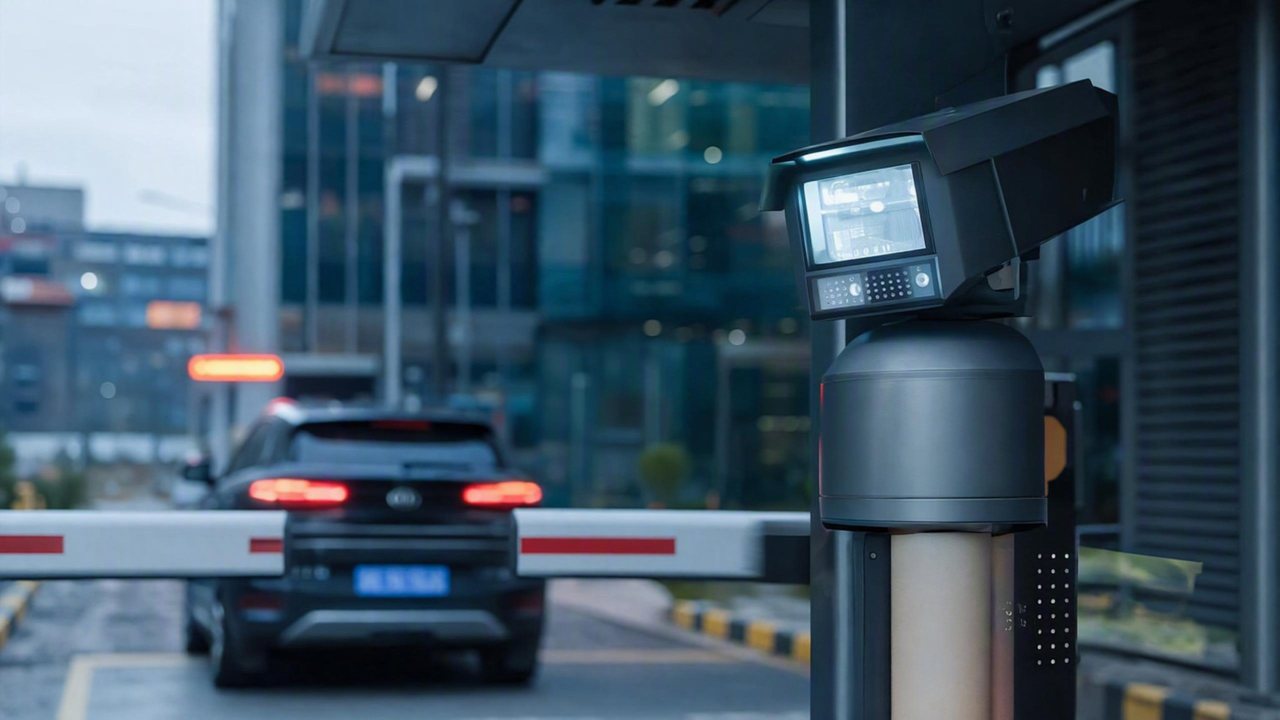
In practical applications of parking lot vehicle recognition, traditional solutions face multiple challenges: First, high false alarm rates, edge box real-time alerting, 100% local data processing, DaoAI World semantic understanding) efficiently recognizes vehicle license plates under complex lighting, occlusion, and damage, and processes them in real-time at the edge, reducing false alarm rates for parking lot vehicle recognition from 20% to less than 5%, significantly improving traffic efficiency and security.
In practical applications of parking lot vehicle recognition, traditional solutions face multiple challenges: First, high false alarm rates, edge box real-time alerting, 100% local data processing, DaoAI World semantic understanding) efficiently recognizes vehicle license plates under complex lighting, occlusion, and damage, and processes them in real-time at the edge, reducing false alarm rates for parking lot vehicle recognition from 20% to less than 5%, significantly improving traffic efficiency and security. In the current video surveillance and smart monitoring industry, vehicle recognition is a core requirement, especially in scenarios such as parking lots, park entrances/exits, and highway checkpoints. These scenarios demand stringent accuracy, real-time performance, and environmental adaptability. Traditional vehicle recognition systems based on rules or early machine learning algorithms often struggle in complex and varied environments. For example, in large corporate campuses, with thousands of vehicle movements daily, rapid and accurate verification of vehicle identities is crucial for ensuring security and improving management efficiency. However, existing access control systems are often fragmented, with vehicle recognition, personnel access, visitor management, and parking billing systems operating independently, leading to severe data silos. This not only introduces security risks but also drives up operational and maintenance costs, highlighting the urgent need for integrated smart solutions.
Pain Points: Why This Hurdle Is Difficult to Overcome
In practical applications of parking lot vehicle recognition, traditional solutions face multiple challenges: First, high false alarm rates, especially at night, in adverse weather conditions like rain, snow, or fog, or under backlight, where recognition accuracy drops significantly. This leads to system misidentification of vehicles, with an average false alarm rate potentially as high as 15%–20%, causing frequent incorrect gate openings or failures to open, resulting in congestion and manual intervention. Second, missed recognition issues for damaged, deformed, or special material license plates, as well as fast-moving vehicles. Traditional systems may fail to effectively capture and recognize these, with a typical missed detection rate of 5%–10%, directly impacting the integrity and security of traffic records. Furthermore, traditional systems often require significant human effort for rule updates and model adjustments when dealing with non-standard license plates (e.g., new energy vehicle plates, military/police plates) or specific vehicle model recognition. Each adjustment can lead to several days or even weeks of downtime, resulting in high operational and maintenance costs. These issues collectively contribute to the security risks posed by fragmented enterprise access control systems, as any recognition error can be exploited maliciously, threatening campus security.
The root cause of these difficulties lies in traditional recognition technologies' reliance on predefined rules or fixed models based on large amounts of annotated data. At the image level, license plate size, angle, lighting, occlusion, and damage vary greatly, making it difficult for traditional algorithms to adapt. For example, overexposure or underexposure of license plates in backlight, partial occlusion by the vehicle body, and coverage by rain or mud all hinder feature extraction. At the engineering level, multiple independent recognition systems are often deployed for different scenarios and requirements, each with its own data format and interfaces, leading to significant integration challenges and data silos. This fragmented deployment makes it difficult to ensure the overall security and reliability of the system; a failure or attack on any subsystem can affect the normal operation of the entire access control system. DaoAI understands these challenges and is committed to providing an integrated, intelligent solution through the SkyVision platform.
Technical Principles
The core of the DaoAI SkyVision platform lies in its “0-code” AI model training capability and powerful semantic understanding function. It employs a deep learning-based visual foundation model combined with the DaoAI World global model for semantic understanding and cross-scenario generalization. In vehicle recognition scenarios, SkyVision first uses an optimized image pre-processing module to perform real-time noise reduction and adaptive brightness/contrast enhancement on video streams, effectively handling complex lighting and adverse weather. Subsequently, the platform leverages its robust object detection network to precisely locate license plate regions in images, accurately framing them even when plates are tilted, deformed, or partially occluded. For license plate character recognition, SkyVision adopts a multi-stage recognition strategy: first, convolutional neural networks (CNNs) extract character features, then recurrent neural networks (RNNs) or Transformer architectures are used for sequence recognition. The DaoAI World global model then semantically validates the recognition results, for example, by checking the legality of the plate format and the rationality of character combinations, thereby significantly reducing misidentification rates. The DaoAI SkyVision platform enables on-site hourly training of proprietary models, meaning enterprises do not need professional AI engineers. They can quickly iterate and optimize models with only a small amount of specific scenario data, reducing false alarm rates by up to −75% or even lower.
Compared to traditional methods, DaoAI SkyVision's advantage lies in its adaptability and generalization capabilities. Traditional rule-based AOI relies on manually set thresholds and feature templates, requiring frequent manual rule adjustments for new plate types, environmental changes, or damage, which is inefficient and prone to omissions. Manual inspection is limited by human eye fatigue and subjective judgment, making accuracy and consistency difficult to guarantee. SkyVision's deep learning-based model autonomously learns robust license plate features from vast amounts of data, enabling effective recognition even in complex, unseen situations. Its “0-code” feature significantly lowers the barrier to AI deployment and maintenance, allowing non-AI professionals to complete model training and deployment within hours, shortening the iteration cycle from days or weeks to hours, significantly improving responsiveness and flexibility. Furthermore, SkyVision supports real-time alerting via edge boxes, offloading inference computations to the device side, avoiding network latency and privacy risks associated with data backhaul to a central server, ensuring real-time performance and 100% local data processing compliance.
Typical Application Scenarios
- **Parking Lot Entrance/Exit License Plate Recognition and Billing:** SkyVision achieves high-precision license plate recognition, ensuring accuracy even with fast-moving vehicles, drastic lighting changes, or slightly damaged license plates. The challenge is balancing recognition speed with various complex environmental factors and smooth integration with parking billing systems.
- **Campus Vehicle Whitelist/Blacklist Management:** For corporate campuses and high-security areas, SkyVision can perform real-time comparison and alerting for incoming and outgoing vehicles against predefined blacklists and whitelists. The challenge lies in rapid response and immediate alert triggering for abnormal vehicles while avoiding unnecessary delays for normal vehicles.
- **Logistics Park Truck Model Recognition and Load Verification:** Beyond license plates, SkyVision can identify truck models, body types, and combine with other sensor data (e.g., weighbridges) for load verification, ensuring logistics compliance. The difficulty lies in significant size differences between various truck models and the possibility of affiliated vehicles, requiring multi-dimensional recognition and cross-validation.
- **Highway Speed Trapping and Violation Evidence Collection:** Integrated with high-speed cameras, SkyVision can achieve license plate recognition and speed measurement for fast-moving vehicles, automatically capturing speeding vehicles and generating violation evidence. The challenge demands extremely high robustness from the recognition algorithm due to very high vehicle speeds, complex backgrounds, and weather conditions.
- **Urban Traffic Intersection Vehicle Flow Statistics and Analysis:** SkyVision can perform real-time statistics and analysis of vehicle types, quantities, and directions at specific intersections, providing data support for urban traffic planning. The difficulty lies in multi-target tracking and precise classification in high-density traffic flow, and the ability to operate stably for extended periods.
Implementation Case Study
A leading logistics and warehousing enterprise, with multiple large logistics parks across the country, experiences tens of thousands of vehicle movements daily. Previously, the enterprise used a fragmented access control system from multiple vendors, with the vehicle recognition component based on traditional OCR technology. During peak hours, unstable recognition rates, especially at night and in rainy weather, led to severe vehicle queues and immense manual verification workloads. Before implementation, the park's vehicle recognition false alarm rate was as high as 18%, requiring manual verification of over 500 vehicle entries daily, with an average vehicle passage time exceeding 30 seconds. To address this pain point, the enterprise introduced the DaoAI SkyVision 0-code video surveillance AI platform. In the initial phase, the DaoAI team first collected and analyzed video data from different park entrances/exits and various times, guiding the client to quickly train an AI model specific to their scenarios and license plate characteristics using SkyVision's “0-code” platform. The entire model training and optimization process took less than 2 days, and the client's on-site operations personnel could operate it independently after simple training. SkyVision's edge boxes were deployed next to existing surveillance cameras at park entrances/exits, enabling real-time inference and alerting. After a month of trial operation and data validation, the park's vehicle recognition false alarm rate successfully dropped to below 3%, a reduction of −83.3% in false alarms, significantly improving traffic efficiency. The average single-vehicle passage time was reduced to less than 10 seconds, and manual verification volume decreased to fewer than 50 vehicles daily, substantially saving labor and time costs. The DaoAI SkyVision platform not only solved recognition challenges but also met the enterprise's strict data security and privacy requirements through its local deployment and data-out-of-factory features.
The DaoAI SkyVision platform reduced our vehicle recognition false alarm rate from 18% to below 3%, significantly improving campus traffic efficiency and security, truly realizing the value of smart access control.
DaoAI Solutions and Products
DaoAI addresses the security risks posed by fragmented enterprise access control systems with SkyVision 0-code video surveillance AI platform as its core, offering an integrated, intelligent solution. SkyVision's deployment is flexible, supporting SDK/API/Docker, and can be deeply integrated with existing access control systems, visitor management systems, and parking billing systems. For model building, clients do not need deep learning expertise; through SkyVision's intuitive graphical interface, they can train proprietary models on-site within hours by uploading only a few (1–20) good or defect samples. For new license plate types or recognition needs, model changeover is extremely convenient, typically completing model updates and deployments within 5 minutes. SkyVision's real-time alerting mechanism via edge boxes ensures immediate recognition results and triggers audible/visual alarms or links with gate control upon detecting abnormal vehicles (e.g., blacklisted vehicles, unlicensed vehicles). Furthermore, the DaoAI World global model, serving as a unified foundation, endows SkyVision with powerful semantic understanding and cross-scenario generalization capabilities, enabling it to continuously learn from production line feedback, constantly improving recognition accuracy and robustness. DaoAI also offers 100% local private deployment options, ensuring all video streams and recognition data are processed internally within the enterprise, with no data leaving the factory, strictly complying with data security and privacy regulations. Through the SkyVision platform, enterprises can build a unified, efficient, and secure smart access control system, thoroughly resolving management challenges and security risks caused by fragmentation.
Through the described solution, DaoAI SkyVision platform brings significant business value to clients. In practical applications, vehicle recognition accuracy can stably reach above 99.4%, with false alarm rates reduced by over −75%, significantly reducing manual verification workload and traffic delays caused by misidentification. For example, during peak hours, average vehicle passage time was shortened by 20 seconds per vehicle, collectively saving a substantial amount of valuable time. Furthermore, due to improved system recognition accuracy and real-time performance, unauthorized vehicle entry is effectively prevented, significantly enhancing the overall security level of the park. 100% local deployment ensures data security, avoiding the risk of sensitive information leakage and complying with increasingly stringent data protection regulations. DaoAI SkyVision not only improves operational efficiency but also builds a more secure and reliable enterprise-level smart access control system.
FAQ
How does SkyVision handle license plate recognition under complex lighting conditions?
DaoAI SkyVision platform incorporates an optimized image pre-processing module that performs real-time noise reduction and adaptive brightness/contrast enhancement. Combined with the powerful feature extraction capabilities of its deep learning models, it can effectively locate and recognize license plates even under complex lighting conditions such as backlighting, nighttime, rain, or snow, ensuring high accuracy.
What does the “0-code” feature of the SkyVision platform mean, and what are its benefits for users?
“0-code” means users can train and deploy customized AI models on-site within hours, without writing any code, using an intuitive graphical interface and a small number of samples (1–20). This significantly lowers the barrier to AI technology adoption, enabling non-AI professionals to quickly solve real-world business problems, reduce reliance on external technical teams, and shorten project cycles.
How does DaoAI SkyVision ensure data security and privacy?
The SkyVision platform supports 100% local private deployment, meaning all video streams and recognition data are processed and stored within the enterprise's internal network, with no data leaving the factory. The real-time processing mechanism of the edge box also avoids data transmission to the cloud, fundamentally eliminating the risk of data leakage and fully complying with strict enterprise data security and privacy requirements.
This article was generated by AI. Customer cases are simulated scenarios based on real product capabilities and figures are illustrative; see product pages for official benchmarks.