
Your core need is SMT solder paste inspection (SPI) or 3D solder metrology, you are electronics / semiconductor focused, and you value a mature measurement-based 3D platform with a global service network. This is its decade-long stronghold.
SELECTION GUIDE · DAOAI vs KOH YOUNG
DaoAI vs Koh YoungMeasurement-based 3D, or AI-first 3D?
Koh Young is the global benchmark for measurement-based True 3D inspection. DaoAI takes a different route — AI-first 3D with few-shot learning: no CAD, model from one good sample in 30 seconds, 8 industries, 100% on-premise. Here is an honest, no-spin selection guide and Koh Young alternative.
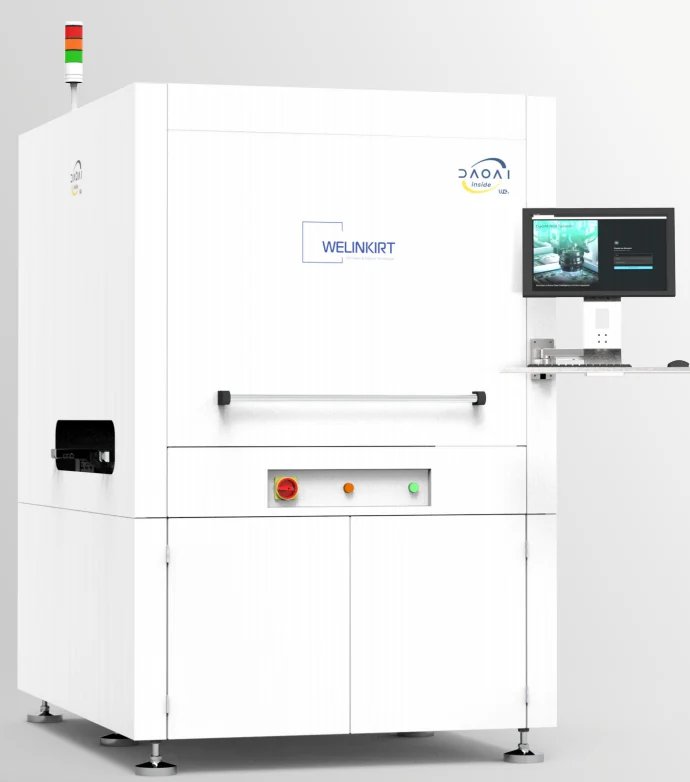
1sampleModel from one good part
NoCADNo geometry/CAD programming
30secPositive-sample setup
8ind.Electronics to pharma & food
100%On-premise deployment
2ndgateOverlay on existing AOI
CORE COMPARISON · DAOAI vs KOH YOUNG
| Dimension | Koh Young | DaoAI |
|---|---|---|
| Paradigm | Measurement-based True 3D (Moiré) | AI-first 3D + few-shot learning |
| Programming / changeover | Geometry / CAD based (KAP) | One good sample, 30s–5min, no CAD |
| Defect samples | Best for known, measurable defects | Positive-sample learning — good-only, catches novel defects |
| Sweet spot | SMT solder paste (SPI), 3D solder metrology, coplanarity | Appearance / texture / formless / novel defects |
| Industry coverage | Electronics / SMT / semiconductor | Electronics, semi, auto, battery, pharma, food, chemical, consumer |
| Form factor | Dedicated hardware (premium) | Software + 2D/3D systems, AI second-gate overlay |
| Deployment / service | Global brand & service network | 100% on-premise + responsive local support |
WHICH TO CHOOSE · HONEST TAKE
Defect samples are scarce, defects are formless (appearance / texture / novel), you run high-mix low-volume with frequent changeovers, you are in battery / pharma / food / chemical, you want an AI second-gate to cut false calls on existing AOI, or you need 100% on-premise deployment.
WHY DAOAI · DIFFERENTIATORS
APDT positive-sample learningDaoAI World modelFew-shot / no defect libraryNo CADOne good sample, 5 minAI second-pass gateFormless / novel defects8 industries100% on-premise
FAQ
What is the biggest difference between DaoAI and Koh Young?
Koh Young is measurement-based True 3D (geometry/metrology first); DaoAI is AI-first 3D with few-shot learning. Koh Young excels at SMT solder paste (SPI) and 3D solder metrology; DaoAI is more flexible for few-shot, formless / novel defects, non-electronics industries and fast changeovers. They are different paradigms for different problems.
When is Koh Young the better choice?
If your core need is SMT solder paste inspection (SPI) or 3D solder metrology, you are electronics / semiconductor focused, and you value a proven measurement-based 3D platform with a global service network, Koh Young is the safe pick — it has led the SPI market worldwide for many years.
When is DaoAI the better fit?
When defect samples are scarce, defects have no fixed shape (appearance / texture / novel defects), you run high-mix low-volume with frequent changeovers, or you are in battery / pharma / food / chemical. It also fits teams that want an AI second-gate to cut false calls on existing AOI and require 100% on-premise deployment with responsive local support.
Does DaoAI need CAD or a large defect dataset?
No. DaoAI models from a single good sample in 30 seconds to 5 minutes — no CAD and no defect library required. APDT positive-sample learning trains on good units only and flags deviations as anomalies, so it catches never-before-seen novel defects too.
Can DaoAI replace an existing Koh Young system?
It is not either/or. DaoAI can run as an AI second-pass gate after existing AOI (including Koh Young), re-judging suspect points and cutting false-call rework; it can also run standalone on non-electronics lines. Whether it replaces depends on your defect types and line goals.