
You have a machine-vision team, value a proven brand and stable deployments, or already run the VisionPro ecosystem and want a controllable deep-learning tool layered into a general-purpose vision platform.
SELECTION GUIDE · DAOAI vs COGNEX ViDi & MVTec HALCON
DaoAI vs Cognex ViDi & HALCONDeep-learning tools, or turnkey AI inspection?
Cognex ViDi is a deep-learning tool inside VisionPro; MVTec HALCON is a powerful machine-vision library. Both are strong — but both are tools/libraries for vision engineers, needing labeled data and integration. We offer turnkey AI inspection: no-code operator training in 5 minutes, few-shot (no labeling), software + hardware delivered together, 100% on-premise. Here is an honest, no-spin selection guide and Cognex / HALCON alternative.
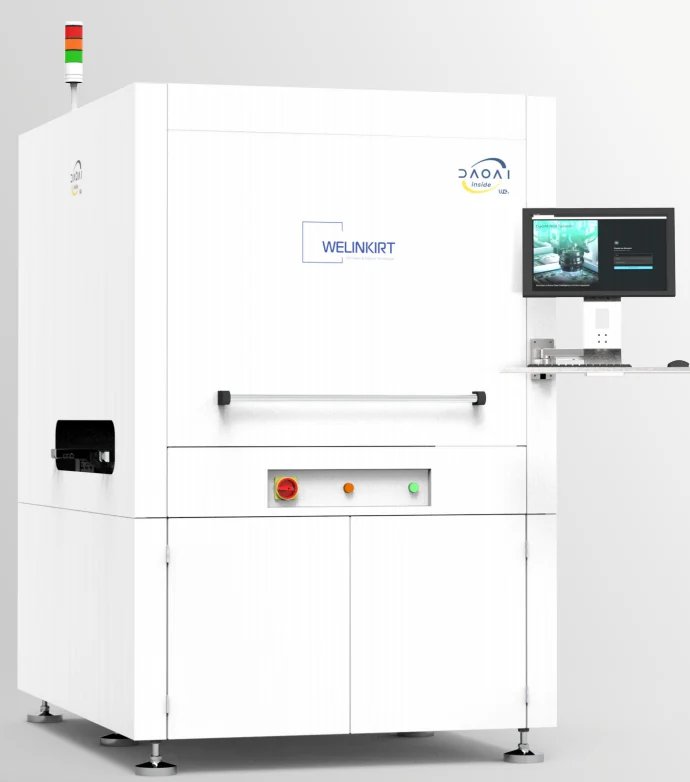
NocodeOperators can train it
5minSelf-train changeover
Few-shotno labelGood-only training
SW+HWSoftware + 2D/3D systems
8ind.Deployed inspection
100%On-premise
CORE COMPARISON · DAOAI vs Cognex ViDi vs MVTec HALCON
| Dimension | Cognex ViDi | MVTec HALCON | DaoAI |
|---|---|---|---|
| Type | Deep-learning tool inside VisionPro | Machine-vision library / SDK | Turnkey AI inspection (SW + HW) |
| Skill needed | Machine-vision engineer | Vision programmer (HDevelop) | Operator, 5-min no-code self-training |
| Training data | Labeled samples | Labeling + custom code | Few-shot / positive-sample, good-only |
| Delivery | Tool license, needs integration | Library license, build your own | Software + 2D/3D systems together |
| Best at | Segmentation / classification / location (build it) | Anything, but you build it | Few-shot · formless / novel defects · AI second-gate |
| Industry deployment | General-purpose vision platform | General-purpose vision library | Electronics, semi, auto, battery, pharma, food, chemical, consumer |
| Deployment / service | Depends on integrator | Depends on your team | 100% on-premise + responsive local support |
WHICH TO CHOOSE · HONEST TAKE
You build highly custom, complex vision algorithms, need a maximally flexible library, and have vision programmers who can master HDevelop — HALCON's capability ceiling is very high.
You have no dedicated vision engineer, defect samples are scarce, you want operators to self-train changeovers in 5 minutes, you need turnkey software + hardware, an AI second-gate to cut false calls on existing lines, and 100% on-premise deployment.
WHY DAOAI · DIFFERENTIATORS
No-code · operator self-trainingAPDT positive-sample learningFew-shot / no mass labelingSoftware + hardware togetherDaoAI World modelAI second-pass gateFormless / novel defects8 industries100% on-premise
FAQ
What is the core difference between DaoAI and Cognex ViDi / MVTec HALCON?
ViDi is a deep-learning tool inside Cognex VisionPro; HALCON is MVTec's machine-vision library. Both are powerful, but both are tools/libraries for vision engineers and programmers — they need labeled data and integration. DaoAI is a turnkey AI inspection product (software + 2D/3D systems): operators self-train in 5 minutes with no code, few-shot with no labeling, delivered as software + hardware.
When is Cognex ViDi or HALCON the better choice?
When you have a machine-vision engineering team, need highly custom general-purpose vision integration, or already run the VisionPro / HALCON ecosystem, they are mature, flexible and controllable. HALCON especially suits building complex custom vision algorithms where a very high capability ceiling is required.
Who is DaoAI a better fit for?
Plants with no dedicated vision engineer, scarce defect samples, that want line operators to self-train changeovers in 5 minutes, need turnkey software + hardware, want an AI second-gate over existing vision / AOI to cut false calls, and require 100% on-premise deployment.
Does DaoAI need a large labeled defect dataset?
No. DaoAI's APDT positive-sample learning trains on good units only — a few or even one good sample is enough to model, with no mass defect labeling, and it flags never-before-seen novel defects as anomalies. That is the key difference from label-trained ViDi / HALCON.
We already use Cognex or HALCON — can we still add DaoAI?
Yes. DaoAI often runs as an AI second-pass gate after existing vision / AOI, re-judging suspect points and cutting false calls; it can also run standalone on the few-shot, non-electronics and formless-defect cases they are weaker at. It is not either/or.