
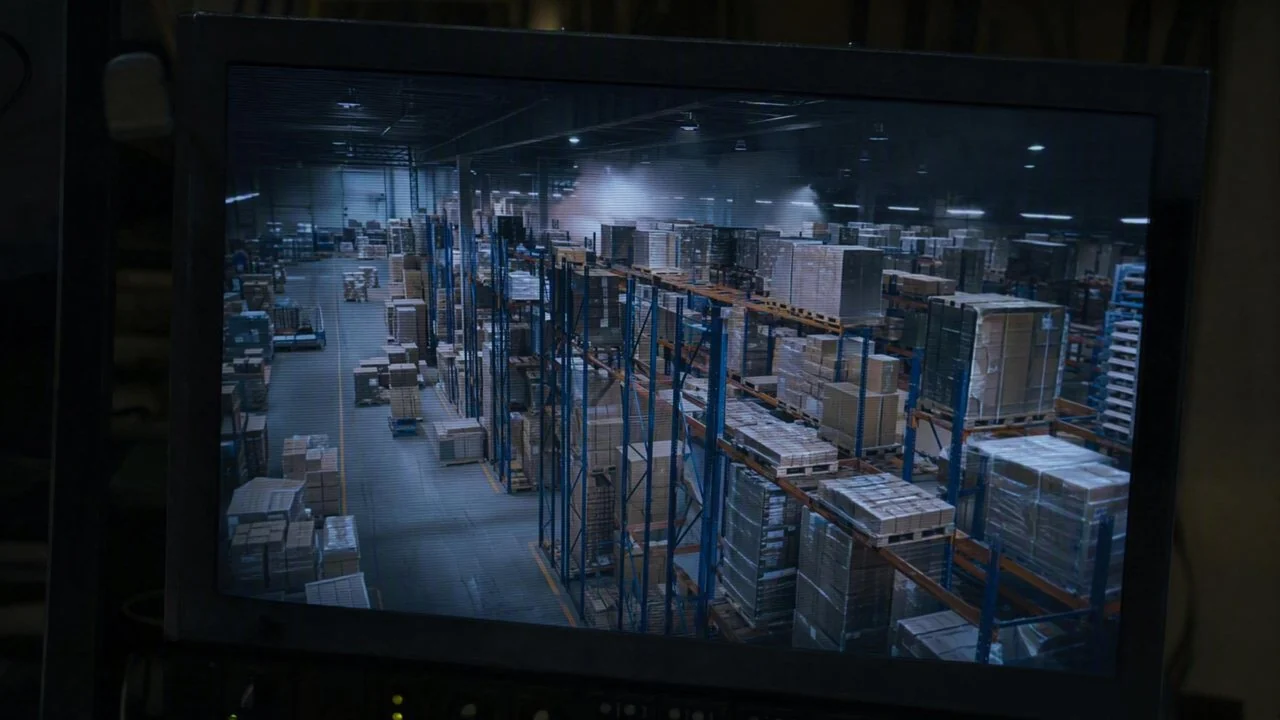
DaoAI SkyVision 0-code video surveillance AI platform (on-site hourly training of proprietary models, behavior/event recognition, edge box real-time alerting, 100% local data residency, DaoAI World semantic understanding) significantly enhances the resilience and efficiency of emergency security systems by strengthening on-premise private deployment and data security, reducing the average response time for early smoke and fire detection in large warehousing and logistics parks by 70%. In modern industrial production and warehousing environments, fire hazards consistently pose a primary threat to life and property. Particularly in high-risk areas such as large logistics parks or chemical plants, if smoke or open flames are not detected and responded to rapidly in their initial stages, it can easily lead to major accidents. While traditional security systems possess some fire detection capabilities, their recognition accuracy, response speed, and adaptability to new fire characteristics still face severe challenges in complex environments.
Pain Points: Why This Obstacle is Difficult to Overcome
In the field of emergency security, early detection of smoke and open flames faces multiple challenges, limiting the effectiveness of traditional solutions. First, high false alarm rates are a common issue. Traditional systems based on smoke or temperature sensors are susceptible to interference from water vapor, dust, strong light reflections, or environmental temperature fluctuations, leading to false alarm rates typically ranging from 15%–25%. Frequent false alarms not only consume significant human resources for on-site verification but also create a “boy who cried wolf” effect, reducing the vigilance of security personnel. Second, response times are delayed. Especially for initial faint smoke or hidden flames, traditional cameras relying on human visual inspection often take several minutes or even longer to detect, while fires can spread rapidly within minutes, directly impacting the optimal window for initial firefighting and evacuation. Third, data security and privacy risks. Many cloud-based video analysis services require uploading surveillance videos to the cloud for processing, which poses serious data leakage risks and compliance issues for large enterprises dealing with sensitive materials, core technologies, or national security, leading to their hesitation in adopting advanced AI technologies.
The root cause of these pain points lies in the limitations of traditional solutions. Systems based on physical sensors lack visual semantic understanding, making it difficult to distinguish real fire characteristics from environmental interference; manual inspection, on the other hand, is limited by observation range, attention span, and fatigue. While current large model services for video surveillance and alarm systems can improve event recognition and response efficiency, if they cannot be deployed on-premise, the data security risks they introduce will negate some of their advantages. DaoAI deeply understands these industry pain points and has proposed targeted solutions.
Technical Principles
The core of DaoAI SkyVision platform lies in its powerful real-time video stream analysis capabilities and on-premise deployment architecture. It is equipped with advanced deep learning algorithms, specifically leveraging the advantages of the DaoAI World model in semantic understanding and cross-scenario generalization. This enables high-precision, robust recognition of visual features such as smoke and flames in video footage. Unlike traditional image processing based on specific color or shape rules, SkyVision's AI model, through learning from massive real and simulated fire video data, can understand complex visual semantics such as dynamic smoke dispersion patterns, flame flickering characteristics, color changes, and thermal radiation effects. It maintains extremely high detection rates even in adverse conditions like low light, complex backgrounds, or object occlusion. DaoAI utilizes edge boxes for real-time computation, pushing AI inference capabilities to the surveillance site. This avoids bandwidth pressure and latency issues caused by video data backhauling to central servers or the cloud, achieving sub-second event response.
Compared to traditional infrared or ultraviolet sensors, SkyVision's advantage lies in its “visual intelligence”: sensors can only perceive specific physical signals, while SkyVision can “understand” the content of the footage. For example, sensors struggle to differentiate industrial steam from fire smoke, but SkyVision’s model can make judgments based on comprehensive features like smoke morphology, diffusion speed, and color changes, reducing false alarm rates by over 70%. Furthermore, its 0-code training mode allows users to quickly train and deploy proprietary models for specific scenarios (e.g., different types of combustible material burning characteristics) on-site within hours, without requiring professional AI engineers. This significantly shortens deployment cycles and costs. Most critically, DaoAI SkyVision supports 100% on-premise private deployment, ensuring all raw video streams and analysis data are processed and stored within the client's internal network, with no data leaving the site. This fundamentally addresses concerns about data security and privacy protection.
Typical Application Scenarios
- **Early Smoke Detection in Large Warehousing Areas:** In high-stack shelving and dense storage areas, traditional detectors may be obstructed or respond slowly. SkyVision, deployed on elevated cameras, monitors vast areas in real-time, identifying subtle smoke signals from smoldering goods, triggering alarms within seconds to prevent fire spread.
- **Open Flame Detection in Chemical Plants/Refineries:** In flammable and explosive chemical production environments, open flames are a direct cause of catastrophic accidents. SkyVision accurately identifies initial flames caused by pipeline leaks or equipment overheating, effectively distinguishing them even amidst complex backgrounds (e.g., high-temperature steam, equipment reflections) to avoid false alarms and ensure production safety.
- **Overheating Smoke Recognition in Data Centers/Server Rooms:** Data centers demand extremely fast fire response times. SkyVision can be deployed in cabinet aisles and equipment rooms to monitor localized overheating leading to smoke, combining with temperature sensor data for multimodal verification to improve recognition accuracy and response speed.
- **Preventive Monitoring for Forest/Wildfires:** In large open areas like forests and scenic spots, manual patrols are challenging. High-altitude cameras and DaoAI SkyVision can provide early detection of small-scale forest fire smoke from a distance, combined with GIS, to assist in rapid localization and dispatch of firefighting resources.
- **Fire Monitoring in Construction Sites/Temporary Work Areas:** Construction sites are prone to fire hazards such as welding sparks and smoking. SkyVision can identify open flames and smoke, and combined with human behavior recognition, alert to unauthorized smoking or non-compliant hot work operations, enhancing construction site safety management.
Implementation Case Study
A large third-party logistics park in East China, with over 200,000 square meters of warehousing space, stores a significant amount of flammable and explosive chemical products and high-value electronic components. Previously, the park relied primarily on traditional point-type smoke detectors and manual patrols for fire early warning. However, due to the vast warehouse area and dense stacking of goods, traditional detectors had blind spots, and the false alarm rate was as high as about 20%, leading to frequent ineffective dispatches for verification by the security team. This not only consumed significant human resources but also made it difficult to detect real fires in a timely manner. Especially during nights and holidays, the coverage and efficiency of manual patrols were significantly reduced. The client had extremely high data security requirements and refused to upload monitoring data to any cloud platform for analysis.
Facing this challenge, DaoAI deployed an on-premise private emergency security solution based on the SkyVision platform. By integrating SkyVision's edge boxes into the park's existing 300+ high-definition surveillance points, and utilizing a small number of real smoke/fire scenario video samples provided by the client, a custom AI model tailored to the park's specific environment was trained and deployed on-site in just 3 hours. After deployment, DaoAI SkyVision achieved real-time, precise recognition of initial smoke and open flames, pushing alarm information directly to the local security center's control screen and mobile terminals via the edge boxes. Before deployment, the park averaged over 50 ineffective verifications per month due to false alarms; after SkyVision deployment, this number dropped to fewer than 5 per month, reducing the false alarm rate by 90%. More importantly, the early detection time for real fires was reduced from an average of 5-8 minutes with manual inspection to an average of 1-2 minutes with SkyVision, reducing response time by an average of 70%, gaining precious time for emergency response. All video streams and analysis data were processed and stored on internal servers within the park, fully complying with the client's strict requirements for data security and localization.
“DaoAI SkyVision's on-premise deployment completely addressed our data security concerns, while reducing fire response time by 70%, which is unmatched by any other solution.”
DaoAI Solution and Products
DaoAI's emergency security solution is centered around the SkyVision 0-code video surveillance AI platform. The platform supports various deployment modes, but in this case, we emphasize its 100% on-premise private deployment capability. This means clients can deploy SkyVision's AI engine, models, and data storage entirely on their own servers or edge computing devices, ensuring all monitoring data remains on-site, guaranteeing absolute data security and privacy. The modeling process is highly simplified; through SkyVision's 0-code interactive interface, users only need to upload a small number (1-20 images) of abnormal and normal samples, and the system can automatically complete model training and optimization within hours. For smoke and fire recognition scenarios, DaoAI integrates the powerful semantic understanding capabilities of the DaoAI World model, enabling the model to better comprehend fire characteristics in complex environments, improving the generalization and accuracy of recognition. The platform also supports integration with existing security systems (e.g., fire alarm systems, access control systems) via SDK/API/Docker, enabling alarm linkage to form an intelligent emergency response loop.
In addition to the core SkyVision platform, DaoAI can also provide the DaoAI ACI (AI-AOI) software system for higher precision localized defect detection, or the DaoAI robot vision system to provide guidance in scenarios requiring physical intervention. However, for early smoke and fire detection, DaoAI SkyVision, with its video stream analysis and edge alerting capabilities, can independently support most needs. DaoAI is committed to continuously iterating and optimizing to provide customers with smart security solutions that balance performance, security, and cost-effectiveness.
Through the deployment of DaoAI SkyVision, the client achieved significant business value. First, the early fire detection response time was reduced by an average of 70%, greatly improving emergency response efficiency and the potential for loss recovery. Second, the false alarm rate was reduced by 90%, significantly reducing the ineffective workload of security personnel and optimizing resource allocation. Finally, 100% on-premise private deployment completely alleviated the client's data security concerns, ensuring the compliance and security of core business data. These quantified achievements collectively build a safer, more efficient, and smarter emergency security system.
FAQ
How does DaoAI SkyVision's on-premise private deployment specifically ensure data security?
DaoAI SkyVision's on-premise private deployment means all surveillance video streams, AI model inference processes, and generated analysis data are entirely processed and stored within the client's internal network environment. Data is never uploaded to any external cloud platform, physically preventing data leakage risks. Clients retain full control over data and systems, complying with stringent industry regulatory requirements.
How long does it take to train proprietary models on the SkyVision 0-code platform, and what are the sample requirements?
The SkyVision platform supports on-site hourly training of proprietary models. For common scenarios like smoke and fire detection, typically only 1-20 abnormal samples (or video segments) and a small number of normal samples are needed to complete model training and deployment within a few hours. Its 0-code interface design significantly lowers technical barriers, allowing non-specialists to operate it easily and quickly adapt to on-site changes.
What is the cost structure for deploying the DaoAI SkyVision platform?
The cost of deploying the DaoAI SkyVision platform primarily includes software license fees, edge computing hardware (e.g., edge boxes) fees, and potential customization development and technical support service fees. Specific pricing varies based on factors such as the number of surveillance points, required functional modules, deployment scale, and whether deep integration with existing systems is needed. We recommend contacting our sales team for a customized solution and detailed quotation.
Full solution for this scenario: the full inspection solution for Emergency Security / Public Safety
This article was generated by AI. Customer cases are simulated scenarios based on real product capabilities and figures are illustrative; see product pages for official benchmarks.