
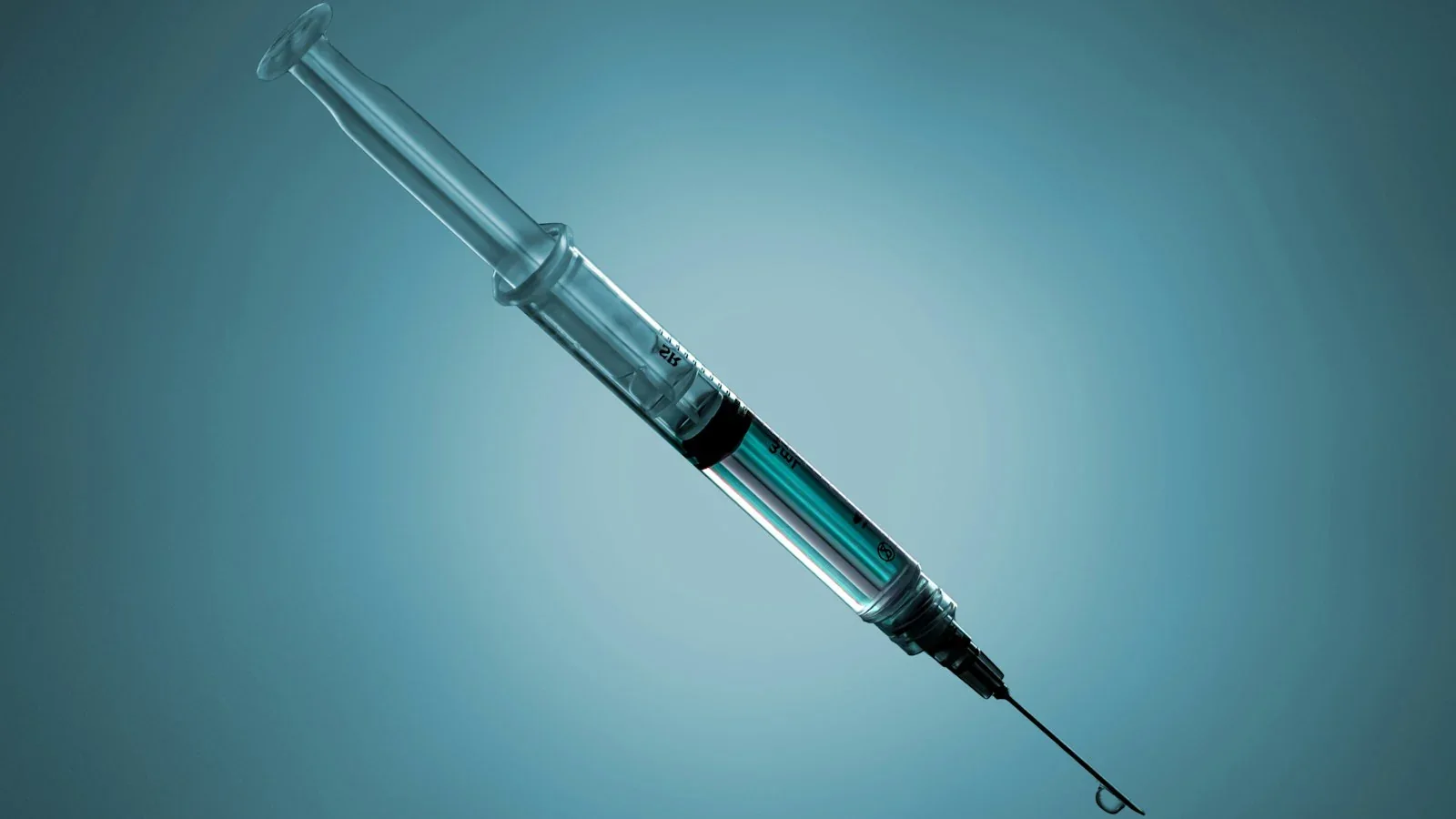
In the production process of sterile injections, it is crucial to conduct strict visual inspections on products to ensure their quality and safety. However, traditional visual inspection methods face many challenges in distinguishing foreign objects from bubbles. DaoAI's innovative solution brings a breakthrough to this difficult problem.
Scenario: Sterile injections are drugs that directly enter the human bloodstream, and their quality and safety are crucial to patients' lives and health. Therefore, pharmacopoeias around the world have almost zero tolerance for visible foreign objects in sterile injections, and strict visual inspections are required during the production process. Visual inspection is to check whether there are foreign objects such as glass chips, fibers, and metal fragments, as well as bubbles in the injections by illuminating with light. At the visual inspection station, operators or equipment need to accurately judge the situation inside each injection bottle in a short time to ensure that the products meet the quality standards. However, traditional visual inspection methods have certain limitations, especially in distinguishing foreign objects from bubbles.
Pain Points: Why Is It Difficult?
From a quantitative perspective, in the traditional visual inspection process of sterile injections, the false rejection rate has always been a headache. The visual inspection line of a sterile injection factory produces hundreds of thousands of products per day. Due to the difficulty of traditional machine vision in accurately distinguishing floating foreign objects such as glass chips from rising bubbles, the false rejection rate remains high, resulting in direct product losses. At the same time, in order to ensure that no possible foreign objects are missed, the sensitivity of the machine is adjusted to an extremely high level. As a result, a large number of normal bubbles and liquid level fluctuations are misjudged as foreign objects, and qualified products are ruthlessly rejected. According to statistics, when the factory uses traditional visual inspection machines, the false rejection rate may be as high as over 30%. This means that a large number of qualified products are treated as waste every day, causing huge economic losses.
In addition, in terms of labor costs, due to a large number of misjudgments, more manpower is needed for re-inspection to ensure that real products with foreign objects are detected and qualified products are not wasted. The re-inspection labor cost of this factory accounts for a relatively large proportion in the traditional visual inspection mode, and with the increase in production volume, the labor cost also continues to rise. More importantly, real samples of defective products with foreign objects are extremely scarce. It is difficult to collect dozens of real samples of foreign objects in a month on a mature production line. This makes the traditional supervised learning method, which requires "feeding a large number of defective images" to build an accurate model, completely unfeasible because there is not enough sample data to train an effective recognition model.
Technical Principle
DaoAI's ACI (AI-AOI) visual inspection system uses deep learning technology, combined with advanced imaging and hardware mechanisms. In terms of imaging, the system is equipped with high-resolution cameras that can clearly capture tiny objects and their movement trajectories inside the injection bottles. In terms of hardware, high-performance processors and algorithm acceleration chips are used to ensure that a large amount of image data can be processed quickly. From an algorithm perspective, the system uses a deep learning model to learn and distinguish the movement trajectories and morphological features of "rising bubbles" and "floating foreign objects". Traditional machine vision methods mainly make judgments based on simple image features such as color and shape, and have weak analysis capabilities for motion and dynamic features. Therefore, they are prone to misjudgments when distinguishing foreign objects and bubbles.
DaoAI's deep learning algorithm can continuously track and analyze the movement trajectories of objects. For example, bubbles usually rise at a uniform speed, while foreign objects may float irregularly. At the same time, in terms of morphological features, foreign objects have more irregular shapes, while bubbles generally appear round or oval. Through comprehensive learning and analysis of these features, the deep learning model can suppress misjudgments from the root cause. In addition, to address the pain point of scarce defective samples, DaoAI uses the APDT positive sample/few-shot learning algorithm. This algorithm only requires a small number of real foreign object samples to build an effective recognition model, greatly reducing the dependence on a large number of defective data and solving the problem that traditional methods cannot effectively model when there are insufficient samples.
Typical Application Scenarios
- Glass chip detection: During the visual inspection process, glass chips may present irregular shapes and float in the liquid. The difficulty lies in that glass chips may be similar in appearance to bubbles sometimes, and traditional machine vision has difficulty accurately distinguishing them. DaoAI's ACI system can accurately identify glass chips by analyzing their movement trajectories and irregular morphological features.
- Fiber detection: Fibers are usually long, thin, and soft, and will float with the flow of the liquid. The difficulty in detection is that fibers may be confused with the light and shadow effects in the liquid, leading to misjudgments. The system improves the detection accuracy by learning and identifying the long and thin shape and unique floating mode of fibers.
- Metal fragment detection: Metal fragments generally have high reflectivity and may produce a flashing effect under light irradiation. However, bubbles may also have a similar reflective phenomenon at certain angles, causing misjudgments. DaoAI's system uses deep learning to analyze the reflective characteristics and unique movement patterns of metal fragments to effectively distinguish them from bubbles.
- Bubble detection: Accurately distinguishing normal bubbles from those that may be misjudged as foreign objects is an important part of visual inspection. Traditional methods are prone to misjudging normal bubbles as foreign objects, while DaoAI's system can accurately judge whether bubbles are normal by analyzing their movement speed, shape, and size.
Implementation Case
A medium-sized sterile injection production factory with a daily production of about 300,000 products on its visual inspection line has been using traditional visual inspection machines for full inspection. However, it has been troubled by the high false rejection rate and high re-inspection labor cost for a long time. After cooperating with DaoAI, the factory launched DaoAI's ACI visual inspection system as a deep-learning re-judgment link after the traditional visual inspection machine. During the launch process, the technical team first conducted a detailed evaluation of the operation of the traditional visual inspection machine to determine the parameters and standards for the initial screening. Then, they collected only dozens of real foreign object samples from the production line and used the APDT few-shot learning algorithm to build a model. After a period of debugging and optimization, the system was officially put into operation.
To distinguish foreign objects from bubbles, it's not about a brighter light, but a model that better understands motion and morphology.
DaoAI's Solution and Product
DaoAI provides a complete solution for the difficult problems in the visual inspection of sterile injections. The core product, the ACI visual inspection system, serves as a re-judgment link and is combined with the traditional visual inspection machine. The traditional equipment is responsible for high-sensitivity initial screening, and all bottles judged as abnormal are handed over to the ACI for secondary judgment. The system uses deep learning technology to accurately distinguish the movement and morphology of bubbles and foreign objects. At the same time, the APDT few-shot modeling technology enables the system to be quickly launched and operate effectively with only a small number of real foreign object samples. In addition, the system also has the function of leaving a complete data trail for the whole process. All detection parameters and judgment results can be audited and traced according to GMP, ensuring that the production process complies with the Good Manufacturing Practice for Drugs.
Quantitative Results: Three months after the implementation of this solution, significant results have been achieved. The detection rate of real foreign objects has increased by about 70% compared with the original traditional visual inspection, rising from a relatively low level to a relatively high proportion, greatly improving the quality and safety of products. The false rejection rate has decreased by about 60%, reducing the situation where a large number of qualified products are misjudged as waste and lowering the production cost. The re-inspection manpower has been reduced by nearly half. Due to the improved accuracy of the system, a large amount of manpower is no longer needed for re-inspection work, effectively reducing labor costs. At the same time, the images, model versions, and thresholds of each judgment are completely archived, and the system has successfully passed the GMP verification audit, ensuring the compliance of the production process.
FAQ
What are the main challenges faced in the visual inspection of sterile injections?
The main challenge in the visual inspection of sterile injections is to 'distinguish' foreign objects from bubbles. Traditional machine vision has difficulty distinguishing floating foreign objects such as glass chips from rising bubbles, resulting in a large number of misjudgments. This leads to the rejection of qualified products, causing direct product losses and increasing the cost of re-inspection manpower. Moreover, real samples of defective products with foreign objects are scarce, making it difficult to model using traditional methods.
How does DaoAI solve the problems in the visual inspection of sterile injections?
DaoAI deploys the ACI visual inspection system as a re-judgment link, combined with the high-sensitivity initial screening of traditional visual inspection machines. It uses APDT few-shot learning, and only a small number of real foreign object samples are needed to build a model. The system distinguishes the movement and morphological features of bubbles and foreign objects through deep learning, fundamentally reducing misjudgments.
What are the effects after the implementation of the DaoAI solution?
Three months after the implementation, the detection rate of real foreign objects has increased by about 70%, effectively ensuring the quality and safety of products. The false rejection rate has decreased by about 60%, reducing the production cost. The re-inspection manpower has been reduced by nearly half, saving labor costs. In addition, the whole-process data is recorded, and the system has successfully passed the GMP verification audit.
This article was generated by AI. Customer cases are simulated scenarios based on real product capabilities and figures are illustrative; see product pages for official benchmarks.