
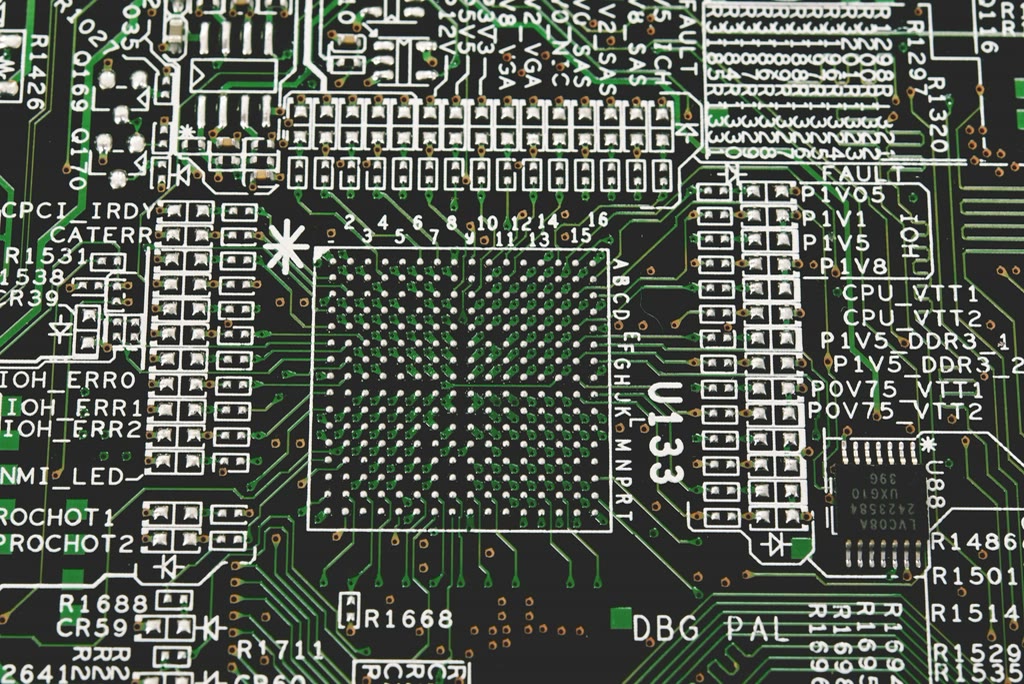
Quality control in the PCBA assembly process is crucial, directly affecting the performance and stability of the whole machine. However, there are many hard-to - detect problems in the manual and semi-automatic assembly process after SMT, and traditional inspection methods can no longer meet the requirements of high-quality production. The emergence of DaoAI ACI (AI-AOI) technology provides an effective solution to this problem.
In the electronics manufacturing industry, PCBA (Printed Circuit Board Assembly) is a key link in the production of electronic products. After the SMT process of industrial control boards, a large number of plug-in and assembly works are still required, such as the installation of components like connectors, pin headers, jumpers, heat sinks, and shielding covers. Most of these works are completed manually or semi-automatically. The entire production process is characterized by a high beat, that is, the production speed is fast and the output per unit time is large. In this high-beat production environment, ensuring the consistency and stability of product quality has become a very challenging task.
Pain Points: Why Is It Difficult?
From a quantitative perspective, the probability of problems such as missing components, incorrect components, and reverse installation in the manual and semi-automatic assembly process cannot be ignored. Statistics show that before the adoption of effective detection means, the incidence of such problems may reach 5%–10%. Once these defects flow into the whole-machine link, the rework cost is extremely high, which may be 10-20 times the rework cost at the board level. Due to the speed limitation of the original manual final inspection, the inspection time for each board may be as long as 1-2 minutes. Affected by attention, only key positions can be randomly checked, and the coverage is less than 30%, which means that a large number of potential defects cannot be found in time.
The root causes of these problems are multi-faceted. On the one hand, manual operations themselves have certain uncertainties. Long-term high-beat work will reduce workers' attention, thereby increasing the probability of errors. On the other hand, some defects may not affect the appearance at the board level. For example, if a connector is not fully inserted, there may be no obvious abnormality on the surface of the board, and these problems will only be exposed during the whole-machine assembly or on-site use, which brings great difficulties to detection. In addition, there are a wide variety of component layouts and types for different board models. Traditional detection methods are difficult to quickly adapt to new board model changes, resulting in low change-over efficiency.
Technical Principle
The DaoAI ACI (AI-AOI) system uses advanced algorithms and imaging technologies. In terms of algorithms, it uses APDT positive-sample learning, and only a small number of good products (1-20 pieces) for each board model are needed to complete the modeling. Through learning from these good products, the system can accurately identify the features of components at each key position, including the presence or absence of components, model, direction and other information. At the same time, the semantic false-alarm filtering technology can avoid misidentifying allowable assembly tolerances as defects, greatly improving the accuracy of detection.
In terms of imaging, the system is equipped with high-precision cameras, which can capture micron-level details and ensure clear imaging of components. Compared with traditional manual detection and semi-automatic detection methods, DaoAI ACI has higher detection speed and accuracy. Traditional methods rely on manual visual judgment, which is easily affected by subjective factors and fatigue, and the detection speed is slow. Although semi-automatic detection methods improve efficiency to a certain extent, they are still difficult to accurately identify complex defects. DaoAI ACI can achieve full inspection in a high-beat production environment through an automated detection process and advanced algorithms, effectively solving the deficiencies of traditional methods.
Typical Application Scenarios
- Connector detection: Detect whether the connectors are missing, whether the model is correct, whether the direction is reversed, and whether they are fully inserted. The difficulty lies in the large variety of connectors with similar shapes, and some connectors are installed in relatively hidden positions, which are not easily noticed by the naked eye. DaoAI ACI can accurately identify different types of connectors and judge their installation status through high-precision imaging and advanced algorithms.
- Pin-header detection: Check whether the pin headers are complete and whether there are any bending or deformation. Pin headers are usually very small, and it is easy to miss them during manual inspection, and it is difficult to judge whether they are installed vertically. The system can clearly detect the status of pin headers by using high-resolution cameras and precise image-analysis technology.
- Jumper detection: Confirm whether the jumpers are connected correctly, without missing or incorrect connections. The wiring of jumpers is relatively complex, and it is easy to get confused during manual inspection. DaoAI ACI can accurately judge the connection status of jumpers through the analysis of line features.
- Heat-sink detection: Check whether the heat sink is installed, whether the installation position is correct, and whether it interferes with other components. The installation quality of the heat sink directly affects the heat-dissipation performance of the product, but it may be difficult to visually judge its installation status at the board level. The system can effectively detect the installation defects of the heat sink through the comprehensive analysis of the shape, position and surrounding environment of the heat sink.
Implementation Case
A medium-sized electronic manufacturing factory mainly produces industrial control boards with an annual production capacity of millions of pieces. Before using the DaoAI ACI system, the factory used manual random inspection for final inspection. The problems of missing components and incorrect installation of connectors occurred frequently. The defect rate of relevant components flowing into the whole-machine link was about 3%–5%. A large amount of manpower was required at the final inspection station, and the risk of missing defects was relatively high.
The implementation of the DaoAI ACI system has brought significant improvements to the factory's quality inspection.
When the factory implemented the DaoAI ACI system, it first customized the system configuration and trained the models according to the characteristics of different board models. The entire implementation process was relatively smooth without causing a large impact on normal production. After the implementation, the system can conduct full inspection of the assembled PCBs under high beat. When switching to a new board model, it only takes 5 minutes to complete the 0-code change-over without stopping the production line for re-configuration.
WeLinkirt's Solution and Product
The DaoAI ACI system launched by WeLinkirt is a solution specifically for the problems of missing components and incorrect installation of connectors in PCBA assembly. Through advanced algorithms and high-precision imaging technology, the system realizes the integrity inspection of assembled PCBs. The system features fast modeling, semantic false-alarm filtering, and high-beat online full inspection, which can effectively improve the detection efficiency and accuracy. At the same time, the 5-minute 0-code change-over function greatly improves the flexibility and adaptability of production and reduces the change-over cost.
In terms of quantitative results, the implementation of the DaoAI ACI system has achieved remarkable results. The comprehensive detection rate of missing components and incorrect installation of connectors has reached over 97%, which means that the relevant defects flowing into the whole-machine link have been significantly reduced. At the same time, online full inspection has replaced manual random inspection, reducing the manpower pressure at the final inspection station by 50%–60% and the risk of missing defects as well. In addition, since defects are intercepted at the board level, the rework cost has been greatly reduced, improving the enterprise's production efficiency and market competitiveness.
FAQ
What problems are likely to occur in manual and semi-automatic assembly after SMT?
Problems such as missing components, incorrect components, and reverse installation are likely to occur in manual and semi-automatic assembly after SMT. These problems may not affect the appearance at the board level and are often only exposed in the whole-machine. The original manual final inspection is slow and has limited coverage, making it difficult to conduct a comprehensive inspection, resulting in high rework costs. The DaoAI ACI system can effectively solve these problems.
What can DaoAI ACI detect?
DaoAI ACI can conduct integrity inspection of the assembled PCBs. Specifically, it covers missing components, such as whether connectors, pin headers, jumpers, and heat-dissipation components are complete; incorrect installation, that is, whether the model, polarity, and direction are correct; and non-full-insertion, that is, whether plug-in components are fully inserted, ensuring the assembly quality of products.
What are the effects after the implementation of DaoAI ACI?
After the implementation of DaoAI ACI, the comprehensive detection rate of missing components and incorrect installation of connectors exceeds 97%, effectively intercepting assembly-related defects at the board level. At the same time, it replaces manual random inspection, reducing the manpower pressure at the final inspection station by 50% 60% and reducing the risk of missing defects, thus improving production efficiency.
Full solution for this scenario: the full inspection solution for Electronics / PCBA
This article was generated by AI. Customer cases are simulated scenarios based on real product capabilities and figures are illustrative; see product pages for official benchmarks.