
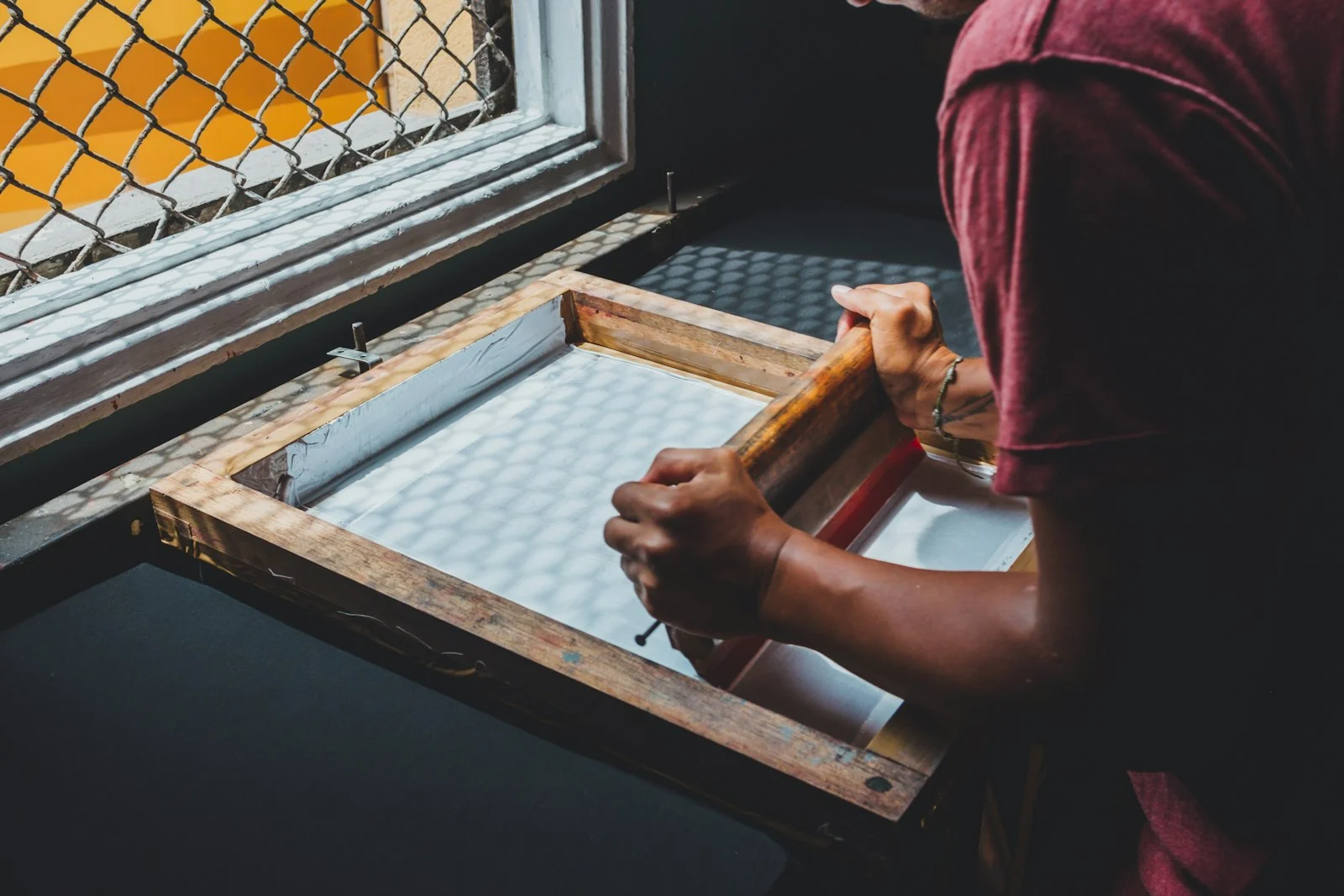
Printing defect detection has always been a difficult problem in the industry. Traditional methods have many drawbacks in sample collection and model maintenance. WeLinkirt's APDT technology provides a brand-new solution to this problem, bringing new vitality to the printing industry with its efficient and accurate detection capabilities.
In today's manufacturing industry, printing processes are widely used in various fields, especially in industries such as home appliances and consumer goods. Information such as brand logos, model silk-screen prints, and safety regulations marks often need to be printed on the panels and shells of products. These printed contents are not only important identifiers of products but also important manifestations of brand images. However, various defects are inevitable in the printing process. The existence of these defects not only affects the appearance quality of products but also may have a negative impact on the brand image. For production enterprises, it is crucial to ensure printing quality, detect and remove defective products in a timely manner. However, due to the ever-changing forms of printing defects, traditional detection methods face huge challenges.
Pain Points: Why Is It Difficult?
From a quantitative perspective, the forms of printing defects are highly divergent. For example, defects such as double-printing, broken-printing, and missing strokes have relatively low probabilities of occurrence, but once they occur, they will affect the product quality. Moreover, the sizes of these defects are very small, many of which are only a few tenths of a millimeter. Under the fast production rhythm, the missed-detection rate of manual inspection may be as high as 30%–40%. Taking a medium-sized home appliance factory as an example, thousands of products are produced every day. Even if the missed-detection rate is only 30%, a large number of defective products will flow into the market, which will have a great impact on the enterprise's brand image and after-sales cost.
From the perspective of sample collection, traditional supervised methods require collecting sufficient samples for each type of defect. However, printing defects occur sporadically and have infinite forms, so it is impossible to exhaust all defect samples. For example, there are countless possibilities for the length, shape of ink trailing, and the direction and distance of position deviation. It is almost impossible to collect all these defect samples. Moreover, every time the printing plate is changed, the printing plate and text content change, and it is necessary to collect samples again and retrain the model. This not only consumes a lot of time and manpower but also leads to slow launch and high maintenance costs.
In terms of production efficiency, manual visual inspection is inefficient under the fast production rhythm. Workers are prone to fatigue during long-term work, and it is difficult to concentrate, resulting in unstable detection efficiency. Moreover, manual visual inspection cannot achieve full-inspection within the production rhythm and can only conduct sampling inspection, which increases the risk of defective products flowing into the market.
Technical Principle
DaoAI APDT adopts the method of positive-sample learning, which forms a sharp contrast with traditional supervised methods. Traditional methods train models by using a large number of defect samples and good samples to let the model learn the characteristics of defects. However, APDT only needs 1-20 good samples of qualified printing to establish a detection benchmark. The system will automatically learn the normal forms of character strokes, logo outlines, and ink distribution. Its imaging mechanism is to collect printed images through high-precision cameras and then analyze the images using advanced algorithms. As long as the printed content in the image deviates from the normal form of good samples, it will be marked as a defect without the need to collect defect samples in advance.
This method is effective because it captures the essence of printing quality, that is, as long as the printed content meets the standards of good samples, it is qualified, and any deviation may be a defect. Compared with traditional methods, APDT is not sensitive to samples and does not require a large number of defect samples, which greatly reduces the time and cost of sample collection and model training. Moreover, after the printing plate is changed, it can quickly reconstruct the benchmark and restore the detection ability, which is incomparable to traditional methods.
Typical Application Scenarios
- Double-printing detection: Double-printing refers to the situation where the same position is printed twice during the printing process. APDT can accurately identify double-printing defects by comparing the character strokes and ink distribution of good samples. The difficulty lies in that the degree of double-printing may vary, and a slight double-printing may only have a deviation of a few tenths of a millimeter, which requires high-precision imaging and algorithms to detect.
- Broken-printing detection: Broken-printing refers to the situation where the printed lines or patterns are interrupted. The system will learn the continuity of the lines of good samples and mark it as a defect when it detects a line interruption. The difficulty lies in that the position and length of broken-printing are uncertain, and some broken-printing may be very subtle and easily overlooked.
- Missing-stroke detection: For text printing, missing strokes are common defects. APDT will analyze the stroke structure of characters and compare it with the strokes of good samples. Once a missing-stroke situation is found, it will be detected in time. The difficulty lies in that the stroke structures of different fonts may be different, and the system needs to have a certain degree of adaptability.
- Ink-trailing detection: Ink-trailing refers to the irregular extension of ink during the printing process. The system identifies ink-trailing defects by analyzing the distribution form of ink. The difficulty lies in that the shape and length of ink-trailing vary widely, and the system needs to be able to accurately judge the normal ink distribution and trailing situation.
- Position-deviation detection: Position-deviation refers to the deviation of printed content from the standard position. APDT will use the position of good samples as a benchmark to detect whether the position of printed content is deviated. The difficulty lies in that the direction and distance of position-deviation may be different, and the system needs to have high positioning accuracy.
Implementation Case
A home appliance factory is a medium-sized production enterprise. The same production line serves multiple brands and regional versions, and the printing plates and text content are frequently changed. Before introducing DaoAI APDT, the factory used manual visual inspection to detect printing defects, with a relatively high missed-detection rate. Moreover, after the printing plate was changed, engineers needed to spend a lot of time on debugging, resulting in low production efficiency.
During the launch process, the factory only needed to provide 1-20 good samples of qualified printing, and the DaoAI APDT system could quickly establish a detection benchmark. The entire launch process was very simple. After simple training, production-line workers could operate it.
After the launch, the printing station achieved full-inspection within the production rhythm. High-frequency defects such as double-printing and missing strokes were stably intercepted before leaving the factory, and the product quality was significantly improved.
WeLinkirt's Solution and Product
WeLinkirt's APDT product provides a comprehensive solution for printing defect detection. This product uses positive-sample learning technology and only needs a small number of good samples to quickly go live, greatly reducing the cost of sample collection and model training. At the same time, the product has a high degree of flexibility. The 0-code operation is adopted for plate-changing, and production-line workers can complete the benchmark switch without relying on engineers. In addition, APDT can stably identify a variety of printing defects, achieve full-inspection within the production rhythm of the printing station, and effectively intercept high-frequency defects.
Quantitative Results
By introducing DaoAI APDT, the detection efficiency of the home appliance factory has been improved by more than 40% compared with the original manual visual inspection. The missed-detection rate has been reduced from the original 30%–40% to 5%–10%, and the false-alarm rate has also been reduced by 20% 30%. The plate-changing time has been shortened from several hours relying on engineer debugging to 5 minutes of on-site quick switch, greatly improving the production efficiency, and the consistency of brand printing has been significantly improved.
FAQ
How does DaoAI APDT solve the problem of the scarcity of printing defect samples?
DaoAI APDT uses positive-sample learning. It only needs 1-20 good samples of qualified printing to establish a detection benchmark. It regards the forms deviating from good samples as suspicious, without the need to exhaust defect samples. It can quickly go live even when samples are scarce, avoiding the slow-launch problem of traditional methods caused by the inability to collect all defect samples.
What are the advantages of APDT compared with traditional supervised methods?
Traditional methods require collecting sufficient samples for each type of defect. When the printing plate is changed, samples and models need to be redone, resulting in slow launch and heavy maintenance. APDT is not sensitive to samples. It uses 0-code operation for plate-changing and can quickly restore the detection ability. The detection efficiency is improved by more than 40% compared with manual visual inspection, greatly reducing the cost and time.
What printing defects can APDT detect?
APDT can stably identify printing defects such as double-printing, broken-printing, missing strokes, ink trailing, position deviation, and uneven color. It can achieve full-inspection within the production rhythm of the printing station and effectively intercept high-frequency defects, ensuring the printing quality of products.
This article was generated by AI. Customer cases are simulated scenarios based on real product capabilities and figures are illustrative; see product pages for official benchmarks.