
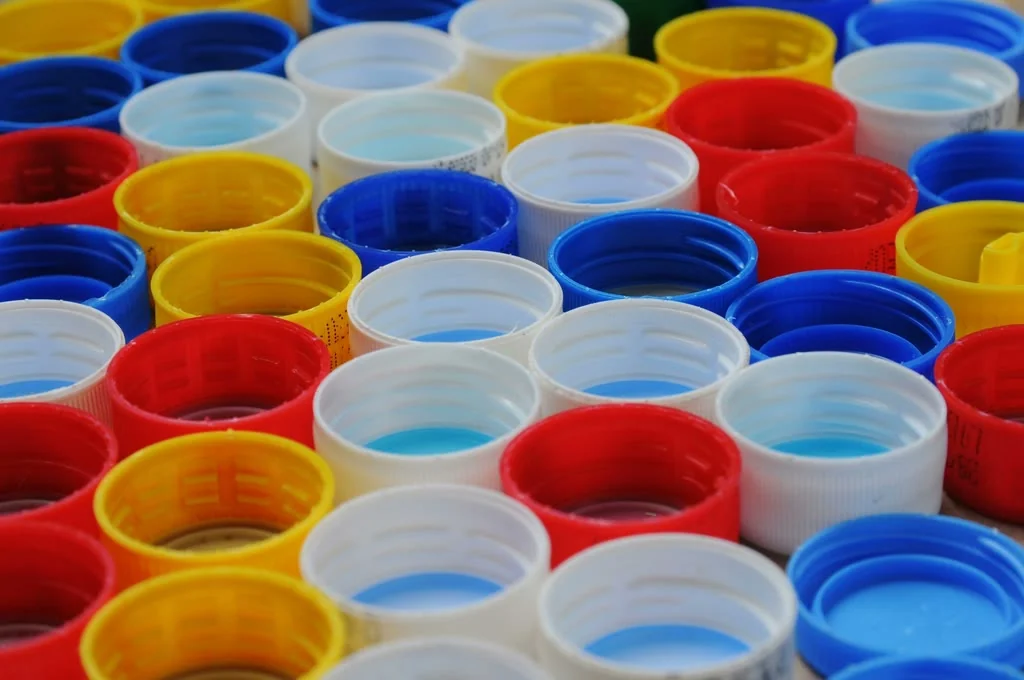
In the field of injection molding part production, appearance inspection is a crucial step to ensure product quality. However, traditional inspection methods face many challenges. WeLinkirt brings a new solution to this industry with its advanced technical solutions.
Scenario: Injection molding parts are widely used in many industries such as home appliances, consumer electronics, and daily necessities, providing shells and structural components for these products. The appearance quality of injection molding parts directly affects the overall quality and market competitiveness of products. There are various types of appearance defects in injection molding parts, including geometric defects such as flashes, shrinkage, and shrink marks, and visual defects such as color differences, flow marks, silver streaks, black spots, and impurities. Moreover, these defects change constantly with different molds, material batches, and colors. In actual production, injection molding part factories often have hundreds of molds, and the same product has multiple color and material batch combinations, which makes the appearance inspection work extremely complex.
Pain Points: Why Is It Difficult?
From a quantitative perspective, first, it is difficult to collect defect samples. Due to the frequent switching of molds and colors, it is almost impossible to collect a complete set of defect samples for each mold and color combination. Statistics show that a medium-sized injection molding part factory may have hundreds of different mold and color combinations. If enough defect samples are to be collected for each combination, the time and labor costs required are extremely high. Second, the maintenance cost of traditional visual inspection methods is high. Traditional methods need to write separate rules for each defect, and the inspection rules need to be readjusted every time a mold is changed. This not only requires professional technicians, but also takes a lot of time for each adjustment. For example, adjusting the inspection rules for a set of complex molds may take several days or even weeks. Third, manual visual inspection is highly subjective. When conducting manual inspection, different inspectors may have different judgment standards for the same defect, especially in color difference determination, which completely depends on personal experience. As a result, the consistency and accuracy of the inspection results are difficult to guarantee. According to surveys, the misjudgment rate of manual visual inspection may be as high as 20%–30%.
The root cause of these problems lies in the complexity of injection molding part production. Different molds will cause changes in the shape and size of injection molding parts. Differences in material batches will affect the performance and appearance of materials. The diversity of colors increases the difficulty of visual inspection. Traditional inspection methods cannot adapt to this complex and changeable production environment and can only deal with it by constantly adjusting the rules, which leads to high maintenance costs and low efficiency. Manual visual inspection is affected by human physiological and psychological factors and is difficult to be completely objective and accurate.
Technical Principles
WeLinkirt's DaoAI solution uses the technology of good-product benchmark + APDT positive-sample learning. Its algorithm mechanism is to establish the inspection standard for each mold/color combination by collecting a small number of good-product samples. The APDT positive-sample learning algorithm enables the system to learn the characteristics of good products, so as to identify multiple types of defects such as flashes, shrinkage, flow marks, and color differences in the same process without exhausting samples for each defect. In terms of imaging, the system uses high-precision imaging equipment to clearly capture the appearance details of injection molding parts and provide accurate data for subsequent inspections. In terms of hardware, it is equipped with high-performance processors and storage devices to ensure that the system can quickly process a large amount of image data.
Compared with traditional methods, this technology is more efficient and flexible. Traditional methods need to write separate rules for each defect, while the DaoAI solution only needs to establish a good-product benchmark and identify defects by learning the characteristics of good products, which greatly reduces the workload of rule writing. At the same time, when changing the model, the good-product benchmark of the corresponding combination can be directly retrieved, realizing a 5-minute 0-code model change and quickly adapting to the switching of molds and colors. Moreover, this solution can standardize and reproduce color difference determination, solving the problem of strong subjectivity in manual visual inspection.
Typical Application Scenarios
- Flash detection: Flashes are common geometric defects in injection molding parts, usually appearing at the parting surface of the mold. During detection, the system identifies the flash parts beyond the normal boundary by comparing with the good-product benchmark. The difficulty lies in that the size and shape of flashes may vary due to different molds and processes, and the system needs to have high adaptability.
- Shrinkage detection: Shrinkage is caused by uneven material shrinkage during the injection molding process. The system analyzes the flatness and gloss of the injection molding part surface to determine whether there is shrinkage. The difficulty lies in that the degree of shrinkage may be relatively slight, and high-precision imaging equipment and sensitive algorithms are required for accurate detection.
- Color difference detection: Color difference is a visual defect that directly affects the appearance quality of products. The system uses color sensors and image analysis technology to compare the color of the injection molding part with the good-product benchmark to determine whether there is a color difference. The difficulty lies in that color perception and judgment are easily affected by ambient light, and the system needs to have good anti-interference ability.
- Flow mark detection: Flow marks are traces produced by uneven plastic flow during the injection molding process. The system analyzes the texture and pattern of the injection molding part surface to identify the position and degree of flow marks. The difficulty lies in that the shape of flow marks may be relatively complex, and the system needs to be able to accurately distinguish normal textures from flow marks.
Implementation Case
An anonymous injection molding part factory supplies shells and structural components for home appliances, consumer electronics, and daily necessities. It has hundreds of molds, and the same product has multiple color and material batch combinations. Before adopting the DaoAI solution, the factory mainly relied on manual visual inspection and traditional visual inspection methods, facing problems such as slow model change, high maintenance costs, high rates of missed detection and misjudgment. During the implementation process, WeLinkirt's technical team first collected a small number of good-product samples to establish inspection standards for each mold/color combination. Then, the production line workers were trained to operate the system proficiently. After the implementation, the efficiency and quality of the injection molding part appearance inspection in the factory were significantly improved.
“The DaoAI solution has transformed our injection molding part appearance inspection from relying on personal experience to a unified and reproducible standard, greatly improving production efficiency and product quality.” —— A person in charge of an injection molding part factory
WeLinkirt's Solutions and Products
WeLinkirt's DaoAI solution provides an efficient and accurate solution for injection molding part appearance inspection with its unique technical advantages. This solution uses good-product benchmark + APDT positive-sample learning to establish the inspection standard for each mold/color combination with a small number (1-20) of good products. The system can identify multiple types of appearance defects in the same process. When changing the model, production line workers can complete the mold/color switching in 5 minutes with 0 code, archive the inspection benchmarks according to molds and colors, and achieve rapid go-live for multiple varieties and small batches.
Quantitative Results: After the implementation of the DaoAI solution, significant quantitative results have been achieved. In terms of defect detection, the detection rate of the system has reached over 99%, and the missed detection rate has been reduced to below 1%. The false alarm rate has also decreased significantly, by more than 30% compared with traditional methods. The model change time has been shortened from several days or even weeks to 5 minutes, greatly improving production efficiency. At the same time, the injection molding part appearance inspection has changed from relying on personal experience to a unified and reproducible standard. There are objective judgments for controversial defects such as color differences and shrinkage, and the production line maintains stable appearance quality under small-batch and multi-variety production.
FAQ
What are the characteristics of injection molding part appearance defects, and what problems do traditional inspection methods have?
Injection molding part appearance defects include geometric and visual types, which change constantly with molds, material batches, and colors. Traditional inspection methods establish rules for each defect, need to be readjusted when changing molds, have high maintenance costs, and cannot keep up with the model-change rhythm. Manual visual inspection is highly subjective, and it is difficult to unify the standards. Color difference determination especially depends on personal experience.
How does the DaoAI solution solve the problem of injection molding part appearance inspection?
The DaoAI solution uses good-product benchmark + APDT positive-sample learning. It establishes inspection standards with a small number of good products, identifies multiple types of defects in a unified way without exhausting samples. When changing the model, it can be switched in 5 minutes with 0 code, archives inspection benchmarks according to molds and colors, and realizes rapid go-live for multiple varieties and small batches.
What are the effects after the implementation of the DaoAI solution?
After implementation, the injection molding part appearance inspection has a unified and reproducible standard, and there are objective judgments for controversial defects. The model change is fast, the missed detection and misjudgment rates decrease. The production line maintains stable appearance quality under small-batch and multi-variety production, improving production efficiency and product quality.
This article was generated by AI. Customer cases are simulated scenarios based on real product capabilities and figures are illustrative; see product pages for official benchmarks.